

U.S. stock market today: Tech selloff deepens as investors seek safer assets

Wall Street’s tech-led sell-off is deepening as AI valuation fears collide with trade uncertainty and expectations of another Fed rate hike. With Nasdaq futures down 2%, investors are rotating into healthcare and Treasuries, while further losses remain possible if key index support levels fail.
Tech weakness widens the gap between US indexes
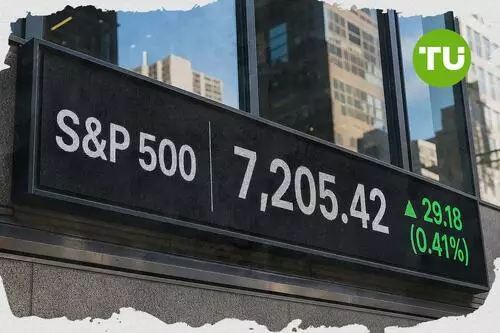
By the close on November 24, the S&P 500 was down 0.5% at 7,201, and the Nasdaq Composite dropped 1.5% to end the day at 23,733. Meanwhile, the Dow Jones Industrial Average was up 0.9% at 50,018, and the Russell 2000 index increased by 0.6%. It is clear from this data that the problems are mostly in the technology sector.
The sell-off continued prior to the opening of the market on November 25. The Nasdaq-100 futures were down about 2%, the S&P 500 futures fell 1%, and the Dow Jones futures dropped 0.4%. The semiconductor stocks were among the biggest losers.
AI bubble fears, geopolitical tensions and Fed expectations drive selling
Investors are increasingly questioning whether the massive sums being poured into AI will actually generate the returns that technology companies have promised. Jensen Huang’s return gave the sector a brief boost, but it did little to change the broader picture. Doubts over the economics of AI investment remain.
Trade tensions are adding to the uncertainty. Washington is preparing new import tariffs targeting 16 trading partners, including China, Taiwan, South Korea and the EU. The rates have yet to be announced, but the threat of additional restrictions is already creating concern among semiconductor manufacturers and companies reliant on global supply chains.
The rate outlook is hardly helping. CME FedWatch puts the probability of a Fed rate hike on December 9 at approximately 95.6%.
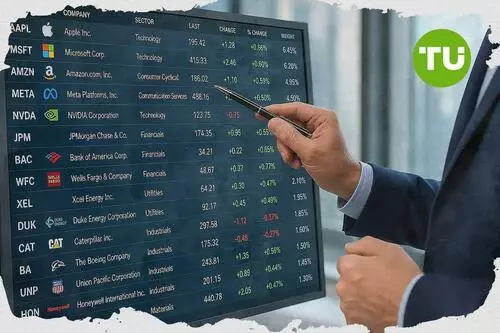
There is also a concentration problem on Wall Street. Technology stocks account for 35.7% of the S&P 500. Just five companies contributed 52% of the index’s gains during the first nine months of 2026, while the top ten accounted for 65%. This leaves the broader market heavily exposed to movements in a relatively small group of large companies, particularly those linked to AI.
Capital rotates into healthcare and US Treasuries as dollar stays firm

Not all sectors are following technology stocks lower. Healthcare has been attracting buyers as investors look for alternatives to increasingly expensive AI-related stocks. Over November 23–24, the XLV healthcare ETF gained approximately 4.2%, while XLK has fallen nearly 16% since the beginning of the month.
The contrast points to a shift in investor preferences: money is moving away from technology and toward more defensive areas of the market.
The dollar provides another indication of defensive demand. The DXY is trading near 104.1 after recently climbing to 104.5.
Demand for safety is also evident in the bond market. On the morning of November 25, the yield on 10-year U.S. Treasuries fell to approximately 4.86%, down 8 basis points during the session. Lower yields indicate rising bond prices and are consistent with increased demand for U.S. government debt.
S&P 500 and Nasdaq-100 face further downside risks

It is impossible to predict how long the panic selling will continue. If markets fail to stabilize, the next potential downside zone for the S&P 500 lies between 6,300 and 6,150 points. However, the index would first need to establish itself below 6,730.
For the Nasdaq-100, the potential downside target is around 22,650 points.
These are bearish scenarios that could materialize if widespread selling persists. To establish a more sustainable base, the indices would need to enter a consolidation phase lasting approximately one month. Such a period would help determine whether genuine buying demand is returning and whether conditions are developing for a potential local market bottom.
Fed policy remains the next major market catalyst
Investor attention is now turning to U.S. GDP and PCE inflation data, followed by the Federal Reserve's December 9 meeting. The policy decision will influence borrowing costs and largely determine the direction of risk assets.
For now, markets are dealing with a combination of AI valuation concerns, trade uncertainty and increasingly hawkish rate expectations. Against this backdrop, even strong individual corporate results may prove insufficient to restore broad-based demand for technology stocks.






Latest S&P 500 News


-
 Afghanistan
-
 Albania
-
 Algeria
-
 Angola
-
 Argentina
-
 Armenia
-
 Australia
-
 Austria
-
 Azerbaijan
-
 Bahamas
-
 Bahrain
-
 Bangladesh
-
 Belarus
-
 Belgium
-
 Bolivia
-
 Botswana
-
 Brazil
-
 Brunei
-
 Bulgaria
-
 Cambodia
-
 Cameroon
-
 Canada
-
 Chile
-
 China
-
 Colombia
-
 Congo
-
 Costa Rica
-
 Cote d'Ivoire
-
 Croatia
-
 Cuba
-
 Cyprus
-
 Czechia
-
 DR Congo
-
 Denmark
-
 Dominican Republic
-
 Ecuador
-
 Egypt
-
 El Salvador
-
 Estonia
-
 Eswatini
-
 Ethiopia
-
 Finland
-
 France
-
 Georgia
-
 Germany
-
 Ghana
-
 Greece
-
 Haiti
-
 Hong Kong
-
 Hungary
-
 India
-
 Indonesia
-
 Iran, Islamic republic
-
 Iraq
-
 Ireland
-
 Israel
-
 Italy
-
 Jamaica
-
 Japan
-
 Jordan
-
 Kazakhstan
-
 Kenya
-
 Korea
-
 Kuwait
-
 Kyrgyzstan
-
 Laos
-
 Latvia
-
 Lebanon
-
 Lesotho
-
 Libya
-
 Lithuania
-
 Luxembourg
-
 Madagascar
-
 Malaysia
-
 Malta
-
 Mauritius
-
 Mexico
-
 Moldova
-
 Mongolia
-
 Montenegro
-
 Morocco
-
 Mozambique
-
 Myanmar
-
 Namibia
-
 Nepal
-
 Netherlands
-
 New Zealand
-
 Nigeria
-
 North Macedonia
-
 Norway
-
 Oman
-
 Pakistan
-
 Palestine
-
 Panama
-
 Papua New Guinea
-
 Paraguay
-
 Peru
-
 Philippines
-
 Poland
-
 Portugal
-
 Puerto Rico
-
 Qatar
-
 Reunion
-
 Romania
-
 Rwanda
-
 Saudi Arabia
-
 Serbia
-
 Singapore
-
 Slovakia
-
 Slovenia
-
 Somalia
-
 South Africa
-
 Spain
-
 Sri Lanka
-
 Sweden
-
 Switzerland
-
 Syria
-
 Taiwan
-
 Tajikistan
-
 Tanzania
-
 Thailand
-
 Trinidad and Tobago
-
 Tunisia
-
 Turkey
-
 UAE
-
 Uganda
-
 Ukraine
-
 United Kingdom
-
United States
-
 Uruguay
-
 Uzbekistan
-
 Venezuela
-
 Vietnam
-
 Yemen
-
 Zambia
-
 Zimbabwe
- Forex
- Crypto












