

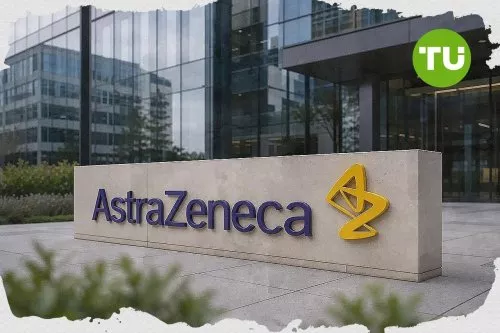
AstraZeneca strikes AI drug discovery deal with insitro worth up to $1.5 billion

AstraZeneca is expanding its use of artificial intelligence in early-stage research through a new collaboration with insitro focused on hard-to-treat liver and heart diseases. The agreement includes a $40 million upfront payment, with the biotech partner eligible for about $1.46 billion in milestone payments and future royalties.
Highlights
- AstraZeneca and insitro announced a multi-year AI-driven drug discovery partnership targeting MASH and cardiomyopathies, with deal terms worth up to $1.5 billion.
- Insitro's Virtual Human AI platform will identify biological targets and advance them to the development-candidate stage, while AstraZeneca will conduct and fund future clinical trials.
- The collaboration demonstrates AstraZeneca's commitment to AI integration in R&D and expands insitro's pharma partnerships, following recent deals with Bristol Myers Squibb and Eli Lilly.
Collaboration targets liver and heart diseases
As reported by Reuters, the multi-year partnership centers on metabolic dysfunction-associated steatohepatitis, or MASH, and cardiomyopathies, two disease areas where drug developers have historically struggled to identify the underlying biological causes well enough to produce effective therapies.Insitro is using its "Virtual Human" AI platform, which combines lab-grown cell models with machine learning, to identify causal disease biology and move AstraZeneca-nominated targets from discovery through the development-candidate stage. AstraZeneca then runs and funds any future clinical trials under the agreement.
Sharon Barr, executive vice president of biopharmaceuticals R&D at AstraZeneca, says selecting new targets for the company’s discovery pipeline is one of the most difficult parts of research and development. She says finding unique biological connections early, before they become widely known in scientific literature, can give the company an advantage in building its pipeline.
AI partnerships deepen across drug research
Barr says combining AI tools with experienced scientists helps AstraZeneca test fewer molecules in the lab, reduce guesswork and accelerate the search for effective medicines. The collaboration reflects a broader push across the pharmaceutical industry to use AI to improve target selection and speed early drug discovery.For insitro, the AstraZeneca agreement adds to a growing list of pharmaceutical partnerships. The California-based biotech recently expanded its work with Bristol Myers Squibb on a broader portfolio of amyotrophic lateral sclerosis targets, and it has also partnered with Eli Lilly to build AI models designed to predict the pharmacological properties of small molecules in living organisms.
Our earlier article on AI venture mega-rounds explained how funding is concentrating into fewer, much larger rounds, forcing investors to commit bigger cheques to a smaller number of start-ups. We noted that this shift is reshaping venture strategies and intensifying competition as well-capitalized players crowd into top AI deals, increasing concentration risk for smaller funds.








-
 Afghanistan
-
 Albania
-
 Algeria
-
 Angola
-
 Argentina
-
 Armenia
-
 Australia
-
 Austria
-
 Azerbaijan
-
 Bahamas
-
 Bahrain
-
 Bangladesh
-
 Belarus
-
 Belgium
-
 Bolivia
-
 Botswana
-
 Brazil
-
 Brunei
-
 Bulgaria
-
 Cambodia
-
 Cameroon
-
 Canada
-
 Chile
Chile
-
 China
China
-
 Colombia
-
 Congo
Congo
-
 Costa Rica
-
 Cote d'Ivoire
-
 Croatia
-
 Cuba
Cuba
-
 Cyprus
-
 Czechia
-
 DR Congo
-
 Denmark
-
 Dominican Republic
-
 Ecuador
-
 Egypt
Egypt
-
 El Salvador
-
 Estonia
-
 Eswatini
-
 Ethiopia
-
 Finland
-
 France
-
 Georgia
-
 Germany
-
 Ghana
Ghana
-
 Greece
-
 Haiti
Haiti
-
 Hong Kong
-
 Hungary
-
 India
India
-
 Indonesia
-
 Iran, Islamic republic
-
 Iraq
Iraq
-
 Ireland
-
 Israel
-
 Italy
Italy
-
 Jamaica
-
 Japan
Japan
-
 Jordan
-
 Kazakhstan
-
 Kenya
Kenya
-
 Korea
Korea
-
 Kuwait
-
 Kyrgyzstan
-
 Laos
Laos
-
 Latvia
-
 Lebanon
-
 Lesotho
-
 Libya
Libya
-
 Lithuania
-
 Luxembourg
-
 Madagascar
-
 Malaysia
-
 Malta
Malta
-
 Mauritius
-
 Mexico
-
 Moldova
-
 Mongolia
-
 Montenegro
-
 Morocco
-
 Mozambique
-
 Myanmar
-
 Namibia
-
 Nepal
Nepal
-
 Netherlands
-
 New Zealand
-
 Nigeria
-
 North Macedonia
-
 Norway
-
 Oman
Oman
-
 Pakistan
-
 Palestine
-
 Panama
-
 Papua New Guinea
-
 Paraguay
-
 Peru
Peru
-
 Philippines
-
 Poland
-
 Portugal
-
 Puerto Rico
-
 Qatar
Qatar
-
 Reunion
-
 Romania
-
 Rwanda
-
 Saudi Arabia
-
 Serbia
-
 Singapore
-
 Slovakia
-
 Slovenia
-
 Somalia
-
 South Africa
-
 Spain
Spain
-
 Sri Lanka
-
 Sweden
-
 Switzerland
-
 Syria
Syria
-
 Taiwan
-
 Tajikistan
-
 Tanzania
-
 Thailand
-
 Trinidad and Tobago
-
 Tunisia
-
 Turkey
-
 UAE
UAE
-
 Uganda
-
 Ukraine
-
 United Kingdom
-
United States
-
 Uruguay
-
 Uzbekistan
-
 Venezuela
-
 Vietnam
-
 Yemen
Yemen
-
 Zambia
-
 Zimbabwe
- Forex
- Crypto












