The tweet was deleted by the author.
But we saved everything 🙂.

Barclays analysts believe Elon Musk could announce a merger between Tesla and SpaceX in the coming months. The two companies have a combined estimated value of approximately $3.6 trillion. But why would the billionaire want to merge two businesses that already work closely together?
A potential merger between Tesla and SpaceX could be announced before Tesla's annual shareholder meeting, which must take place no later than December 6, 2026. According to Barclays, October would be the most suitable time to announce the deal, as the companies would need time to prepare for a shareholder vote.
View post on X Loading...
Back in January, SpaceX considered a possible merger with Tesla. However, Musk ultimately chose a different path, with SpaceX acquiring his AI startup xAI, the developer of the Grok chatbot.
Barclays is also considering a scenario in which the merger announcement would not be tied to Tesla's annual shareholder meeting. In that case, analysts expect news of a potential deal within the next 6–12 months.
Barclays considers the most likely scenario to be SpaceX acquiring Tesla through an all-stock transaction, with no cash payments. SpaceX is currently valued at approximately $2.1 trillion, while Tesla is worth around $1.5 trillion. This puts the combined valuation of the two companies at $3.6 trillion.
Tesla and SpaceX operate in different industries, but their projects are becoming increasingly interconnected. Tesla is developing self-driving vehicles and Optimus humanoid robots. Following its acquisition of xAI, SpaceX gained control of the Grok chatbot and other artificial intelligence technologies.
View post on X Loading...
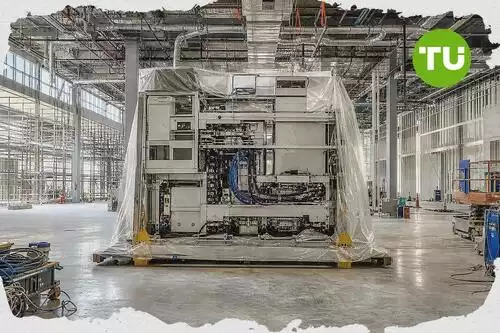
One of their largest joint projects is Terafab, a semiconductor manufacturing facility. Musk aims to establish chip production for both companies to reduce their dependence on external suppliers. Part of the manufacturing capacity is also expected to be used to produce processors designed to operate aboard orbital satellites.
However, cooperation between the companies is complicated by their separate boards of directors, budgets, and shareholders. Even though Musk leads both businesses, major investments and transactions between them require separate approvals. This is particularly important when it comes to sharing the costs of expensive development projects.
According to Barclays analysts, a merger would help eliminate these obstacles. Instead of separate negotiations and approval processes, the companies could make decisions under a unified management structure. Analysts believe that accelerating project development would deliver greater benefits than potential savings on operating expenses.
Another reason for a potential merger is Musk's desire to strengthen his control over his businesses. The billionaire previously said he wanted to own approximately 25% of Tesla to have sufficient influence over the development of artificial intelligence and robotics. However, a merger with SpaceX could give him considerably more control.
According to Barclays' calculations, if SpaceX acquires Tesla, Musk would own approximately 37% of the combined company while retaining around 56% of the voting power. This would be possible because of SpaceX's share structure, in which different classes of shares carry different voting rights. Musk currently owns about 48% of SpaceX but controls approximately 82% of the votes.
The financial stakes for Musk are also enormous. According to Forbes, his net worth climbed back to $1 trillion in October following gains in Tesla and SpaceX shares. Since a substantial portion of his wealth is tied to these companies, the terms of a potential merger would directly affect his personal fortune.
View post on X Loading...
However, the merger would require approval from Tesla and SpaceX shareholders, as well as antitrust regulators. One of the main issues would be the terms of the share exchange, as investors in both companies would need to agree on fair valuations. Musk's leadership roles at both companies could create additional complications.
A potential deal between Tesla and SpaceX could become one of the largest corporate mergers in history. However, its success would depend not only on Musk's plans but also on whether the companies could demonstrate the economic benefits of the transaction to their shareholders.
For now, Tesla and SpaceX continue to develop joint projects without formally merging. Investors will therefore need to assess whether a single company could operate more efficiently than two independent businesses and whether those benefits would justify the costs and risks of a multitrillion-dollar deal.


 Afghanistan
 Albania
 Algeria
 Angola
 Argentina
 Armenia
 Australia
 Austria
 Azerbaijan
 Bahamas
 Bahrain
 Bangladesh
 Belarus
 Belgium
 Bolivia
 Botswana
 Brazil
 Brunei
 Bulgaria
 Cambodia
 Cameroon
 Canada
 Chile
 China
 Colombia
 Congo
 Costa Rica
 Cote d'Ivoire
 Croatia
 Cuba
 Cyprus
 Czechia
 DR Congo
 Denmark
 Dominican Republic
 Ecuador
 Egypt
 El Salvador
 Estonia
 Eswatini
 Ethiopia
 Finland
 France
 Georgia
 Germany
 Ghana
 Greece
 Haiti
 Hong Kong
 Hungary
 India
 Indonesia
 Iran, Islamic republic
 Iraq
 Ireland
 Israel
 Italy
 Jamaica
 Japan
 Jordan
 Kazakhstan
 Kenya
 Korea
 Kuwait
 Kyrgyzstan
 Laos
 Latvia
 Lebanon
 Lesotho
 Libya
 Lithuania
 Luxembourg
 Madagascar
 Malaysia
 Malta
 Mauritius
 Mexico
 Moldova
 Mongolia
 Montenegro
 Morocco
 Mozambique
 Myanmar
 Namibia
 Nepal
 Netherlands
 New Zealand
 Nigeria
 North Macedonia
 Norway
 Oman
 Pakistan
 Palestine
 Panama
 Papua New Guinea
 Paraguay
 Peru
 Philippines
 Poland
 Portugal
 Puerto Rico
 Qatar
 Reunion
 Romania
 Rwanda
 Saudi Arabia
 Serbia
 Singapore
 Slovakia
 Slovenia
 Somalia
 South Africa
 Spain
 Sri Lanka
 Sweden
 Switzerland
 Syria
 Taiwan
 Tajikistan
 Tanzania
 Thailand
 Trinidad and Tobago
 Tunisia
 Turkey
 UAE
 Uganda
 Ukraine
 United Kingdom
United States
 Uruguay
 Uzbekistan
 Venezuela
 Vietnam
 Yemen
 Zambia
 Zimbabwe