The tweet was deleted by the author.
But we saved everything 🙂.

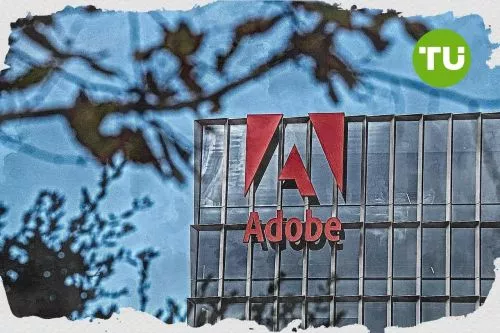
Adobe shares have fallen 30% this year. Wells Fargo and HSBC cut ratings as free and generative AI tools may diminish demand for Photoshop and Creative Cloud. New annual recurring revenue additions dropped 36%, although revenue still grew 13%. So can Adobe still defend its creative software positions when new AI alternatives threaten the sustainability of its subscription model?
Sentiment toward Adobe has never been more negative. Wells Fargo’s Michael Turrin double-downgraded the shares to Underweight from Overweight in October and cut the price target to $225 from $270. “Came away more cautious” on front-office and creative software, Turrin wrote. The firm survey of chief information officers indicated that Adobe was a clear loser of budget share in the AI evaluation cycle. Twenty-two percent of respondents were negative on Adobe’s IT budget share, while only 2% saw positive tendencies.
View post on X Loading...
One day later, HSBC’s Stephen Bersey lowered his rating to Hold from Buy as he reduced his expectations to $267 from $310. He described Adobe as “a realistic candidate for AI-led disruption.” Overall, there are at least 15 downgrades this year. Most analysts now predict a share price between $260 and $270, thus seeing only a limited potential for growth from the recent level of $245.
Adobe still delivered solid financial results. Fiscal third-quarter revenue reached a record $6.76 billion, and this is up 13% over the year. Total ending annual recurring revenue was $27.50 billion, an 11.2% increase. AI-first ARR exceeded $650 million, and it is 150% compared with a year earlier. Monthly active users across the portfolio reached one billion. However, net new ARR additions fell 36% to 38% on an annual basis, and it may cause concerns for long-term investors.
View post on X Loading...
Remaining performance obligations grew only 8%, the minimum rate in many years. Management has prioritized freemium user acquisition and deferred core Creative Cloud price increases. But this strategy delays monetization, so immediate financial flows may not change. Wells Fargo models negative growth in new ARR for fiscal 2027 and total ARR growth of 7%, thus doubting the consensus expectations of 8%.
The competitive threat has become more serious. Bersey mentioned a small developer ArtCraft that released a free and AI-generated clone of Adobe’s Creative Cloud suite. It means that users may have access to versions of Photoshop, Illustrator, Premiere, Lightroom, Acrobat, After Effects, and InDesign for free. The project aims for “100% feature parity” within a month.
“We note that whereas professional ‘vibe coding’ is more of a human/model partnership where code is co-developed and the human reviews/knows/understands what is being written before committing, auto-coding is more of giving full control to the model,” Bersey admitted.
View post on X Loading...
He warned of “many dangers attached to auto-coding projects from a security, legal, going concern, and maintenance perspective” and said the impact for now is limited to freemium and open-source projects. Adobe has responded with its AI investments, such as an expanded partnership with Nvidia that applies RTX Spark and Nemotron models across different products to accelerate workflows. Firefly and related AI-first offerings remain a small fraction of total ARR.
Changes in the company’s management contribute to Adobe’s challenges in the medium term. Anil Chakravarthy is scheduled to become chief executive on December 1, as he will succeed a longtime leader, Shantanu Narayen. Adobe is also searching for a permanent chief financial officer at the moment. Turrin classified the dual transition as a risk to the preliminary fiscal 2027 outlook.
View post on X Loading...
Chakravarthy previously ran the company’s Customer Experience Orchestration business. Investors will monitor whether the new team can convert the expanding freemium base into higher-value paid users. Moreover, it is crucial to maintain the operating margins that are Adobe’s traditional sttrengths.
At current levels, Adobe shares trade at nine times the estimated 2027 non-GAAP earnings. This is a considerable discount to the software sector median of 21 times. Bulls argue the multiple already prices are in significant disruption. The company’s operating cash flow of $2.52 billion in the third quarter and share-repurchase program could provide a floor. However, bears claim that the freemium-to-paid conversion remains unproven and that AI alternatives will continue to pressure pricing power and seat growth.
View post on X Loading...
Overall, Adobe should prove that its vast installed base and proprietary data advantages will outweigh the emerging benefits of free and low-cost generative tools. But until net ARR stabilizes and AI monetization scales, most analysts and experts may remain cautious of the company’s financial future.



 Afghanistan
 Albania
 Algeria
 Angola
 Argentina
 Armenia
 Australia
 Austria
 Azerbaijan
 Bahamas
 Bahrain
 Bangladesh
 Belarus
 Belgium
 Bolivia
 Botswana
 Brazil
 Brunei
 Bulgaria
 Cambodia
 Cameroon
 Canada
 Chile
 China
 Colombia
 Congo
 Costa Rica
 Cote d'Ivoire
 Croatia
 Cuba
 Cyprus
 Czechia
 DR Congo
 Denmark
 Dominican Republic
 Ecuador
 Egypt
 El Salvador
 Estonia
 Eswatini
 Ethiopia
 Finland
 France
 Georgia
 Germany
 Ghana
 Greece
 Haiti
 Hong Kong
 Hungary
 India
 Indonesia
 Iran, Islamic republic
 Iraq
 Ireland
 Israel
 Italy
 Jamaica
 Japan
 Jordan
 Kazakhstan
 Kenya
 Korea
 Kuwait
 Kyrgyzstan
 Laos
 Latvia
 Lebanon
 Lesotho
 Libya
 Lithuania
 Luxembourg
 Madagascar
 Malaysia
 Malta
 Mauritius
 Mexico
 Moldova
 Mongolia
 Montenegro
 Morocco
 Mozambique
 Myanmar
 Namibia
 Nepal
 Netherlands
 New Zealand
 Nigeria
 North Macedonia
 Norway
 Oman
 Pakistan
 Palestine
 Panama
 Papua New Guinea
 Paraguay
 Peru
 Philippines
 Poland
 Portugal
 Puerto Rico
 Qatar
 Reunion
 Romania
 Rwanda
 Saudi Arabia
 Serbia
 Singapore
 Slovakia
 Slovenia
 Somalia
 South Africa
 Spain
 Sri Lanka
 Sweden
 Switzerland
 Syria
 Taiwan
 Tajikistan
 Tanzania
 Thailand
 Trinidad and Tobago
 Tunisia
 Turkey
 UAE
 Uganda
 Ukraine
 United Kingdom
United States
 Uruguay
 Uzbekistan
 Venezuela
 Vietnam
 Yemen
 Zambia
 Zimbabwe