

Microsoft rises as warning on Chinese optical hardware ban fuels AI investment concern

Microsoft (MSFT) stock is trading higher, with supply chain risks in focus after management highlighted geopolitical uncertainty affecting key hardware components. The main driver comes from Microsoft's recent warning about U.S. policy developments that could threaten its AI data center ambitions. Traders are monitoring potential decisions on trade restrictions and early signs of investment delays affecting AI infrastructure buildouts.
 509.00
526.49
Highlights
- Microsoft warns that a U.S. ban on Chinese optical transceivers could disrupt AI infrastructure buildout and increase hardware costs.
- Data center investments are vulnerable to supply chain constraints during a period of ambitious U.S. AI expansion.
- Shares of Microsoft face technical resistance near $520, with mixed momentum and confirmed sell signals limiting upside; $444 is key support.
Risk to AI expansion from potential U.S. hardware restrictions
According to Investing.com, on November 10, 2026 Microsoft alerted the U.S. government that a proposed ban on Chinese-made optical transceivers could undermine efforts to expand the nation's artificial intelligence infrastructure, as growing data center investment leaves the industry sensitive to hardware supply limitations.
This warning draws attention to the pivotal role of Chinese-manufactured optical transceivers in supporting the large-scale deployment of AI technologies within U.S. data centers. If such a ban were enacted, Microsoft could face capital expenditure delays or increased costs as hardware sourcing shifts, potentially impacting operational efficiency and the pace of infrastructure expansion.
The scenario remains a risk rather than a confirmed disruption, with ongoing government decisions set to determine whether restrictions are implemented. For now, the situation highlights a key supply chain vulnerability during a period of ambitious AI investment.
Mixed signals as price struggles below resistance amid macro risk
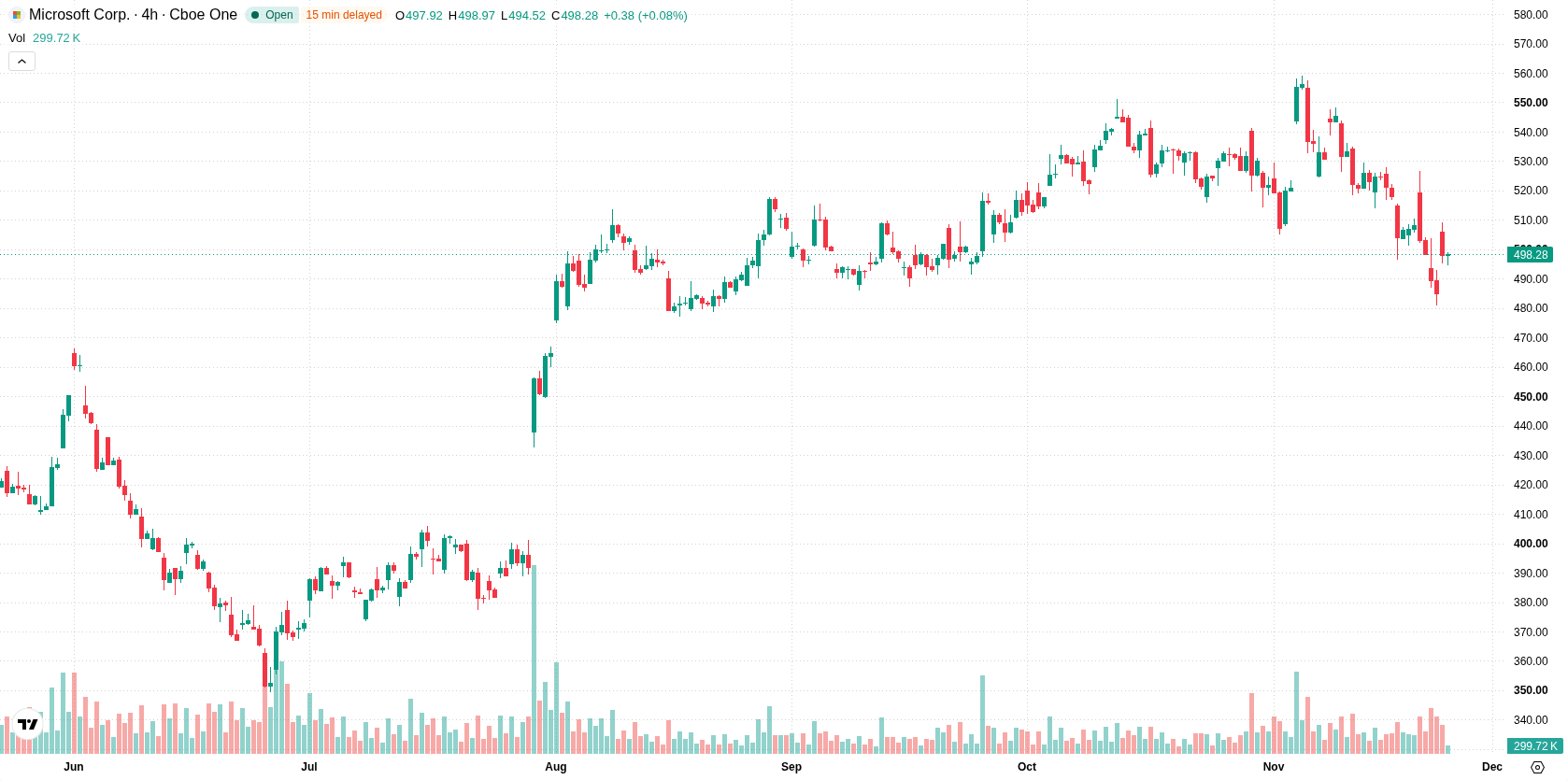
Technically, the latest 4H readings reflect mixed momentum against the macro risk backdrop. The daily chart shows MSFT trading below the D1 SMA-50 at $519.9, while remaining above the D1 SMA-200 at $443.6.
Short-term momentum has failed to reclaim the H4 SMA-20 at $514.75. The MACD and ADX both signal a sell bias, while the H4 Kijun at $520.09 acts as overhead resistance.
Supply chain policy and $520 resistance shape outlook
The main risk scenario for MSFT is a U.S. government move to restrict access to Chinese-made hardware, which could prompt downgrades to AI project timelines or capital commitments. Technical resistance is clustered around the $520 region, while the $444 area serves as key support. Signals of supply chain relief or stabilization above resistance would reduce external pressure, while outright confirmation of trade restrictions would reinforce downside risk.
Earlier, analysts noted that Microsoft faced ongoing challenges balancing the expansion of its AI capabilities with the need to address security concerns and navigate technical corrections. The current focus on geopolitical risks to key hardware supplies adds a critical new dimension, with future share performance likely dependent on the outcome of U.S. trade policy decisions affecting AI infrastructure.










-
 Afghanistan
-
 Albania
-
 Algeria
-
 Angola
-
 Argentina
-
 Armenia
-
 Australia
-
 Austria
-
 Azerbaijan
-
 Bahamas
-
 Bahrain
-
 Bangladesh
-
 Belarus
-
 Belgium
-
 Bolivia
-
 Botswana
-
 Brazil
-
 Brunei
-
 Bulgaria
-
 Cambodia
-
 Cameroon
-
 Canada
-
 Chile
-
 China
-
 Colombia
-
 Congo
-
 Costa Rica
-
 Cote d'Ivoire
-
 Croatia
-
 Cuba
-
 Cyprus
-
 Czechia
-
 DR Congo
-
 Denmark
-
 Dominican Republic
-
 Ecuador
-
 Egypt
-
 El Salvador
-
 Estonia
-
 Eswatini
-
 Ethiopia
-
 Finland
-
 France
-
 Georgia
-
 Germany
-
 Ghana
-
 Greece
-
 Haiti
-
 Hong Kong
-
 Hungary
-
 India
-
 Indonesia
-
 Iran, Islamic republic
-
 Iraq
-
 Ireland
-
 Israel
-
 Italy
-
 Jamaica
-
 Japan
-
 Jordan
-
 Kazakhstan
-
 Kenya
-
 Korea
-
 Kuwait
-
 Kyrgyzstan
-
 Laos
-
 Latvia
-
 Lebanon
-
 Lesotho
-
 Libya
-
 Lithuania
-
 Luxembourg
-
 Madagascar
-
 Malaysia
-
 Malta
-
 Mauritius
-
 Mexico
-
 Moldova
-
 Mongolia
-
 Montenegro
-
 Morocco
-
 Mozambique
-
 Myanmar
-
 Namibia
-
 Nepal
-
 Netherlands
-
 New Zealand
-
 Nigeria
-
 North Macedonia
-
 Norway
-
 Oman
-
 Pakistan
-
 Palestine
-
 Panama
-
 Papua New Guinea
-
 Paraguay
-
 Peru
-
 Philippines
-
 Poland
-
 Portugal
-
 Puerto Rico
-
 Qatar
-
 Reunion
-
 Romania
-
 Rwanda
-
 Saudi Arabia
-
 Serbia
-
 Singapore
-
 Slovakia
-
 Slovenia
-
 Somalia
-
 South Africa
-
 Spain
-
 Sri Lanka
-
 Sweden
-
 Switzerland
-
 Syria
-
 Taiwan
-
 Tajikistan
-
 Tanzania
-
 Thailand
-
 Trinidad and Tobago
-
 Tunisia
-
 Turkey
-
 UAE
-
 Uganda
-
 Ukraine
-
 United Kingdom
-
United States
-
 Uruguay
-
 Uzbekistan
-
 Venezuela
-
 Vietnam
-
 Yemen
-
 Zambia
-
 Zimbabwe
- Forex
- Crypto












