The tweet was deleted by the author.
But we saved everything 🙂.


Coinbase Global, Inc. (COIN) is trading at $107.53, down sharply from the previous close, reflecting a multi-day decline with pronounced selling pressure. Intraday, COIN has rebounded from a low of $94.88 after opening at $98.12, recovering nearly 12.7% from the session bottom but still registering a net daily loss. The drop is primarily attributed to sustained technical weakness, with the asset remaining below all major moving averages and facing continued bearish momentum. While Brian Armstrong’s positive mention of Coinbase payments for businesses provides supportive sentiment, current pricing is driven by technical selling and recent lows rather than tweet-driven demand.
 108.90
111.40
Brian Armstrong highlighted on Black Friday that merchants pay 2-3% in card transaction fees and emphasized that Coinbase’s business offering helps reduce these costs for small businesses. This positive message is aimed at driving adoption of Coinbase payment solutions, which could support future revenue growth. However, despite the encouraging outlook from Armstrong, the market remains more focused on technical weakness and pressure from COIN’s recent approach to 52-week lows. The company’s ongoing share buyback under its expanded $4 billion authorization is also relevant, but has not offset prevailing selling pressure.
View post on X Loading...
COIN is trading well below its MA-20 ($127.20), MA-50 ($159.52), and MA-200 ($171.54), signaling pronounced bearishness on all timeframes. The nearest support is at the $100 level, with immediate resistance at the Ichimoku Kijun of $137.67. Momentum indicators, including MACD and RSI (28.71), reinforce a dominant bearish trend, though intraday action shows volatility and a modest rebound. The expected five-day price range is $98 to $117, but the unconfirmed nature of Armstrong’s optimistic signal keeps forecast risks skewed to the downside.
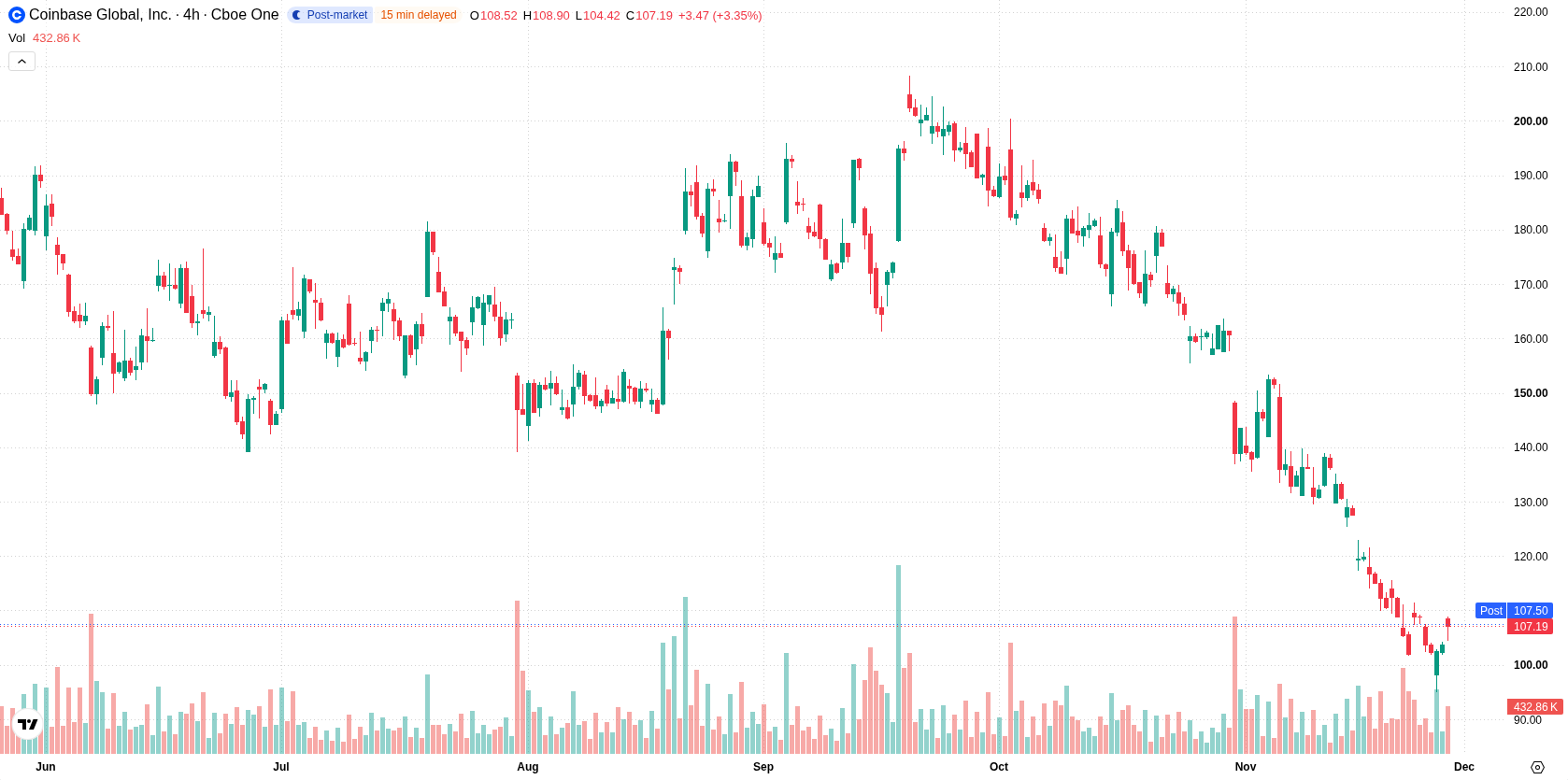
In a recent review, analysts highlighted mixed momentum and persistent volatility for Coinbase, with consolidation favored over a near-term breakout. The current assessment builds on that outlook and advises traders to watch for shifts in momentum that could define the prevailing scenario in the sessions ahead.



 Afghanistan
 Albania
 Algeria
 Angola
 Argentina
 Armenia
 Australia
 Austria
 Azerbaijan
 Bahamas
 Bahrain
 Bangladesh
 Belarus
 Belgium
 Bolivia
 Botswana
 Brazil
 Brunei
 Bulgaria
 Cambodia
 Cameroon
 Canada
 Chile
 China
 Colombia
 Congo
 Costa Rica
 Cote d'Ivoire
 Croatia
 Cuba
 Cyprus
 Czechia
 DR Congo
 Denmark
 Dominican Republic
 Ecuador
 Egypt
 El Salvador
 Estonia
 Eswatini
 Ethiopia
 Finland
 France
 Georgia
 Germany
 Ghana
 Greece
 Haiti
 Hong Kong
 Hungary
 India
 Indonesia
 Iran, Islamic republic
 Iraq
 Ireland
 Israel
 Italy
 Jamaica
 Japan
 Jordan
 Kazakhstan
 Kenya
 Korea
 Kuwait
 Kyrgyzstan
 Laos
 Latvia
 Lebanon
 Lesotho
 Libya
 Lithuania
 Luxembourg
 Madagascar
 Malaysia
 Malta
 Mauritius
 Mexico
 Moldova
 Mongolia
 Montenegro
 Morocco
 Mozambique
 Myanmar
 Namibia
 Nepal
 Netherlands
 New Zealand
 Nigeria
 North Macedonia
 Norway
 Oman
 Pakistan
 Palestine
 Panama
 Papua New Guinea
 Paraguay
 Peru
 Philippines
 Poland
 Portugal
 Puerto Rico
 Qatar
 Reunion
 Romania
 Rwanda
 Saudi Arabia
 Serbia
 Singapore
 Slovakia
 Slovenia
 Somalia
 South Africa
 Spain
 Sri Lanka
 Sweden
 Switzerland
 Syria
 Taiwan
 Tajikistan
 Tanzania
 Thailand
 Trinidad and Tobago
 Tunisia
 Turkey
 UAE
 Uganda
 Ukraine
 United Kingdom
United States
 Uruguay
 Uzbekistan
 Venezuela
 Vietnam
 Yemen
 Zambia
 Zimbabwe