
John Thain Biography, Career, Net Worth, and Key Insight


John Thain’s Profile Summary
|
Company
|
Pine Island Capital Partners |
|---|---|
|
Position
|
Chairman and Co-Founder of Pine Island Capital Partners, a private equity firm, where he remains active as an investment professional after his extensive career in financial services. |
|
Source of wealth
|
John Thain's wealth primarily stems from his executive roles at Goldman Sachs, NYSE, Merrill Lynch, and CIT Group, as well as his current investments through Pine Island Capital Partners |
|
Also known as
|
Corporate board member, philanthropist, political fundraiser. |
|
Age
|
71 |
|
Education
|
Massachusetts Institute of Technology - Bachelor's degree in Electrical Engineering, Harvard Business School - MBA |
|
Citizenship
|
United States |
|
Residence
|
New York City, United States |
|
Family
|
John Thain is married to Carmen Thain, and they have four children: two daughters and two sons. |
|
Website, Social Media
|
https://pineislandcp.com/ |
Biography
John Thain, born on May 26, 1955, in Antioch, Illinois, is a prominent American businessman and financial executive known for his leadership roles in several major financial institutions. He earned a degree in Electrical Engineering from MIT and an MBA from Harvard Business School. Thain’s career began at Goldman Sachs, where he rose to the position of President and COO. He later became CEO of the New York Stock Exchange (NYSE), leading its transformation into a public company and overseeing its merger with Euronext. In 2007, Thain became CEO of Merrill Lynch, where he played a pivotal role during the 2008 financial crisis, navigating its sale to Bank of America. Thain also led CIT Group from 2010 until his retirement as CEO in 2016, though he continued as chairman. In addition to his business achievements, Thain has been involved in various philanthropic efforts and serves on the boards of several educational and cultural institutions.-
How did John Thain make money?
John Thain makes money in the following areas:
John Thain's wealth primarily stems from his executive roles at Goldman Sachs, NYSE, Merrill Lynch, and CIT Group, as well as his current investments through Pine Island Capital Partners
-
What is John Thain net worth?
As of 2026, John Thain’s net worth is estimated to be $100M.
What is John Thain also known as?
John Thain has made significant contributions as a corporate board member, philanthropist, and political fundraiser. He has served on the boards of numerous institutions, including the New York Botanical Garden, INSEAD, and the New York-Presbyterian Hospital. Thain is known for his charitable efforts, particularly supporting education and healthcare, such as his involvement in the restoration of the Thain Family Forest at the New York Botanical Garden. Additionally, he was a key political fundraiser, especially for the Republican Party, supporting candidates like John McCain during the 2008 U.S. presidential campaignProminent achievements
John Thain’s notable achievements include leading the transformation of the New York Stock Exchange into a public company, overseeing the merger with Euronext, and managing the sale of Merrill Lynch to Bank of America during the 2008 financial crisis. He was also appointed CEO of CIT Group, where he successfully navigated the company through post-bankruptcy recovery. He has served on the boards of multiple prestigious institutions and remains an influential figure in both finance and philanthropyWhat are John Thain’s key insights?
John Thain’s business philosophy emphasizes innovation, strategic leadership, and long-term value creation. Known for leading transformations, such as the modernization of the New York Stock Exchange, he also navigated major financial crises with a focus on stability and recovery. He has a reputation for making difficult decisions during turbulent times, such as his role in selling Merrill Lynch during the 2008 financial crisis, prioritizing the long-term survival of institutions
Personal life
John Thain’s family consists of his wife, Carmen Thain, with whom he has four children—two daughters, Victoria and another unnamed daughter, and two sons. The family has been active in philanthropy, particularly in supporting education and environmental conservation projects, such as their contributions to the New York Botanical Garden
Useful insights
Advanced investment strategies

For those who have mastered the basics, the next step is exploring advanced investment strategies. These books delve into the complexities of portfolio management and alternative asset classes, offering sophisticated approaches to building wealth.
-
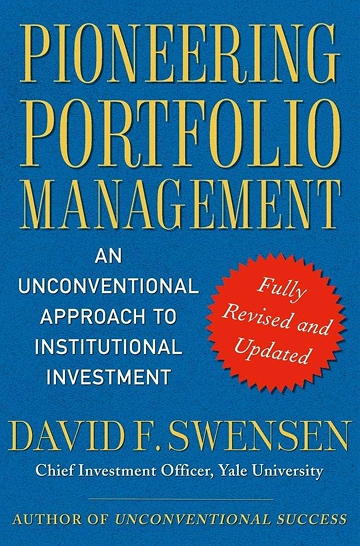
David Swensen - "Pioneering Portfolio Management"
-
Summary:
In this book, Swensen, who successfully managed Yale's endowment fund, outlines his investment philosophy, emphasizing diversification, a long-term perspective, and the inclusion of alternative asset classes such as hedge funds, private equity, and real estate. This approach aims to balance risk and reward to maximize returns for institutional investors.
-
Why read it:
Swensen’s methods are widely regarded as groundbreaking and have been adopted by many large institutional investors. His book is essential for anyone looking to build a robust, diversified portfolio with a focus on steady, long-term growth.
-
-
Joel Greenblatt - "The Little Book That Still Beats the Market"

-
Summary:
Greenblatt presents a simple yet effective formula for investing in value stocks. His "magic formula" identifies companies that are both undervalued and have high earnings yields, providing a clear strategy for beating the market. Greenblatt simplifies complex financial concepts for individual investors, making the book accessible to both beginners and experienced traders.
-
Why read it:
Greenblatt’s formula has consistently outperformed the market, making this book a practical guide for investors looking for a straightforward, effective strategy. It’s particularly useful for those who prefer a hands-on approach to stock selection without the need for deep financial expertise.
-
Other profiles in category
Popular Financial Guides
Editors' Top Picks and Insights






Latest Financial News

Ibovespa falls nearly 3% as heavy selling persists after Lula re-election

Ibovespa extends decline after Lula re-election: IBOV remains under pressure

Investor uncertainty and technical breakdown drives Ibovespa lower by about 14.5%

-
 Afghanistan
-
 Albania
-
 Algeria
-
 Angola
-
 Argentina
-
 Armenia
-
 Australia
-
 Austria
-
 Azerbaijan
-
 Bahamas
-
 Bahrain
-
 Bangladesh
-
 Belarus
-
 Belgium
-
 Bolivia
-
 Botswana
-
 Brazil
-
 Brunei
-
 Bulgaria
-
 Cambodia
-
 Cameroon
-
 Canada
-
 Chile
-
 China
-
 Colombia
-
 Congo
-
 Costa Rica
-
 Cote d'Ivoire
-
 Croatia
-
 Cuba
-
 Cyprus
-
 Czechia
-
 DR Congo
-
 Denmark
-
 Dominican Republic
-
 Ecuador
-
 Egypt
-
 El Salvador
-
 Estonia
-
 Eswatini
-
 Ethiopia
-
 Finland
-
 France
-
 Georgia
-
 Germany
-
 Ghana
-
 Greece
-
 Haiti
-
 Hong Kong
-
 Hungary
-
 India
-
 Indonesia
-
 Iran, Islamic republic
-
 Iraq
-
 Ireland
-
 Israel
-
 Italy
-
 Jamaica
-
 Japan
-
 Jordan
-
 Kazakhstan
-
 Kenya
-
 Korea
-
 Kuwait
-
 Kyrgyzstan
-
 Laos
-
 Latvia
-
 Lebanon
-
 Lesotho
-
 Libya
-
 Lithuania
-
 Luxembourg
-
 Madagascar
-
 Malaysia
-
 Malta
-
 Mauritius
-
 Mexico
-
 Moldova
-
 Mongolia
-
 Montenegro
-
 Morocco
-
 Mozambique
-
 Myanmar
-
 Namibia
-
 Nepal
-
 Netherlands
-
 New Zealand
-
 Nigeria
-
 North Macedonia
-
 Norway
-
 Oman
-
 Pakistan
-
 Palestine
-
 Panama
-
 Papua New Guinea
-
 Paraguay
-
 Peru
-
 Philippines
-
 Poland
-
 Portugal
-
 Puerto Rico
-
 Qatar
-
 Reunion
-
 Romania
-
 Rwanda
-
 Saudi Arabia
-
 Serbia
-
 Singapore
-
 Slovakia
-
 Slovenia
-
 Somalia
-
 South Africa
-
 Spain
-
 Sri Lanka
-
 Sweden
-
 Switzerland
-
 Syria
-
 Taiwan
-
 Tajikistan
-
 Tanzania
-
 Thailand
-
 Trinidad and Tobago
-
 Tunisia
-
 Turkey
-
 UAE
-
 Uganda
-
 Ukraine
-
 United Kingdom
-
United States
-
 Uruguay
-
 Uzbekistan
-
 Venezuela
-
 Vietnam
-
 Yemen
-
 Zambia
-
 Zimbabwe
- Forex
- Crypto












