
DAO Maker Launchpad: How It Works And How To Join


Editorial Note: While we adhere to strict Editorial Integrity, this post may contain references to products from our partners. Here's an explanation for How We Make Money. None of the data and information on this webpage constitutes investment advice according to our Disclaimer.
The DAO Maker launchpad is a platform that gives investors access to early stage crypto projects through models such as SHO and DYCO. To join, users create an account, complete KYC on DAO Maker, connect a wallet, and stake DAO tokens to earn DAO Power. DAO Power determines allocation eligibility in token sales.
The DAO Maker launchpad is a platform that helps blockchain startups raise funds while giving investors access to early stage token sales. Users join by creating an account, completing DAO Maker KYC, and staking DAO tokens to earn DAO Power. This power determines eligibility in models such as SHO and DYCO. The platform combines project screening, structured fundraising models, and investor protections to create a secure environment for early crypto offerings.
Risk warning: Cryptocurrency markets are highly volatile, with sharp price swings and regulatory uncertainties. Research indicates that 75-90% of traders face losses. Only invest discretionary funds and consult an experienced financial advisor.
What is the DAO Maker launchpad
The DAO Maker launchpad is a platform that helps blockchain startups raise funds while giving investors access to early stage crypto projects. Launched in 2019, it focuses on offering secure fundraising models that reduce risk and support long-term growth. The DAO Maker platform connects promising ventures with a wide investor base and ensures that funding takes place through transparent and structured processes.

Core objectives and fundraising models
The main goal of DAO Maker is to make fundraising efficient for startups while protecting investor capital. The DAO Maker launchpad’s official site provides full details on the platform’s models, which include:
Strong Holder Offering (SHO). This model selects investors based on activity and engagement. It helps projects attract committed holders instead of short term traders. SHO eligibility depends on a user’s level within the DAO Maker tiers, which reflect how many DAO tokens are staked.
Dynamic Coin Offering (DYCO). DYCO allows investors to reclaim part of their funds if the project does not meet expectations. This gives users added protection and supports long-term stability.
Support for startups and investors
DAO Maker offers structured support to both project teams and investors.
For startups. Teams gain access to retail investors, marketing guidance, strategic planning, and incubation services. Projects must meet the requirements of DAO Maker launchpad, including documentation and security checks.
For investors. DAO Maker performs due diligence on all projects and provides clear participation rules. Funding models like SHO and DYCO, along with staking requirements, help users reduce risk. Knowing how to participate in DAO Maker launchpad helps investors navigate KYC, staking, and allocation phases.
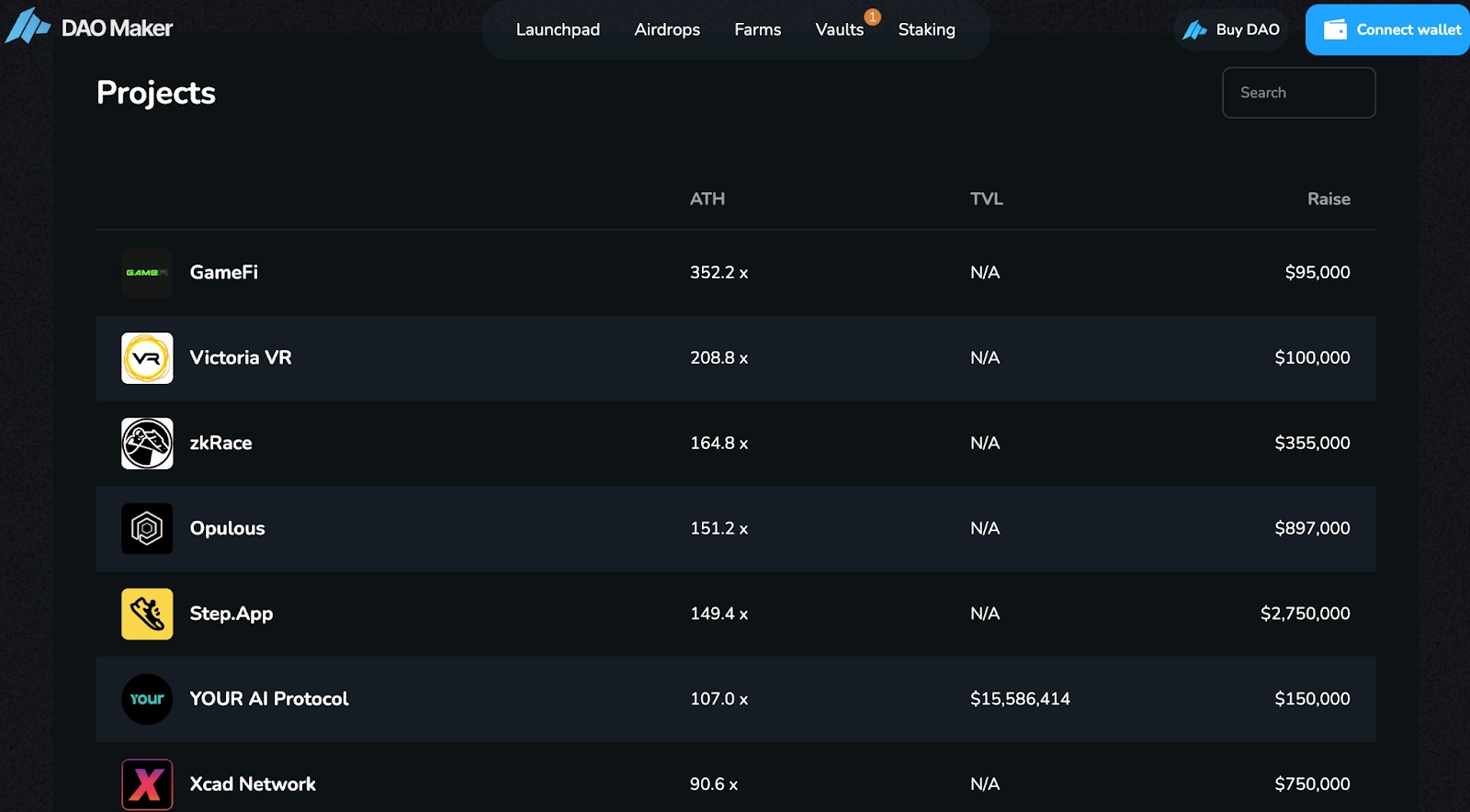
Advantages of using DAO Maker Launchpad
Several features make the DAO Maker launchpad a preferred option for both investors and blockchain startups. Many users learn about these benefits through the DAO Maker launchpad’s official site, which outlines the platform's tools and models.
High transparency and security. DAO Maker reviews every project through strict verification and audit checks. These steps reduce the chance of scams and ensure only credible startups pass the DAO Maker launchpad requirements.
Flexible investment options. Models like SHO and DYCO give users capital protection while still offering growth potential. Access to these models depends on a user’s position within the tiers on DAO Maker, which is based on staked DAO tokens.
Balanced environment for growth. The platform combines investor protection with opportunities for early participation in promising ventures. Many investors use the DAO Maker app to manage staking, KYC, and project tracking in one place.
How DAO Maker launchpad works
The DAO Maker launchpad helps blockchain startups raise funds while giving investors structured access to early stage projects. New users often begin by learning how to participate in DAO Maker launchpad, which explains registration, staking, and allocation steps. The platform supports projects through incubation, due diligence, and unique fundraising models.

Project incubation and support
DAO Maker offers incubation services that help startups prepare for launch. These services include:
community building and communication support;
marketing planning and advisory assistance;
guidance on token structure, funding strategy, and roadmap development;
technical support for audits, security reviews, and product alignment.
Startups can review detailed guidelines on the DAO Maker launchpad’s official site, which outlines best practices and documentation requirements.
Investor participation
Investors follow a clear process when joining offerings on the platform:
create an account and connect a wallet;
complete KYC on DAO Maker;
stake DAO tokens to gain DAO Power;
join allocation rounds based on their level inside the tiers on DAO Maker;
track participation, staking, and eligibility through the DAO Maker app.
DAO Power determines how likely a user is to receive an allocation, and all participation steps follow rules published by the DAO Maker platform.
Security and compliance
DAO Maker maintains a secure investment environment by:
requiring audits and documentation for every project;
enforcing KYC for all investors;
using transparent participation rules that reduce risk.
These measures help protect contributors and ensure responsible fundraising.
Role of the DAO token in the ecosystem

The DAO token is central to the DAO Maker launchpad and supports both investor access and platform governance. It powers the system that determines participation rights and allocation levels across funding rounds.
Key functions of the DAO token
Access to investment opportunities. Holding DAO tokens is required to join SHO and other early stage offerings. Eligibility depends on the user's staking level inside the tiers on DAO Maker.
DAO Power through staking. Staking DAO tokens generates DAO Power, which increases allocation chances. Users can track staking and rewards in real time through the DAO Maker app.
Governance and voting. DAO token holders influence platform decisions, such as updates and project approvals, creating a more community driven environment.
Rewards and incentives. Stakers can receive benefits such as reduced fees, higher allocation limits, and access to exclusive rounds on the DAO Maker platform.
The DAO token links investor activity, platform governance, and allocation mechanics, making it a core component of how the system operates.
How to join DAO Maker Launchpad
To access investment opportunities on the DAO Maker launchpad, users must complete a few steps. These requirements are explained in detail on the DAO Maker launchpad’s official site, but the core process is simple:
Create an account
Register on the platform and connect a compatible wallet such as MetaMask. Account verification is required before joining any token sale.

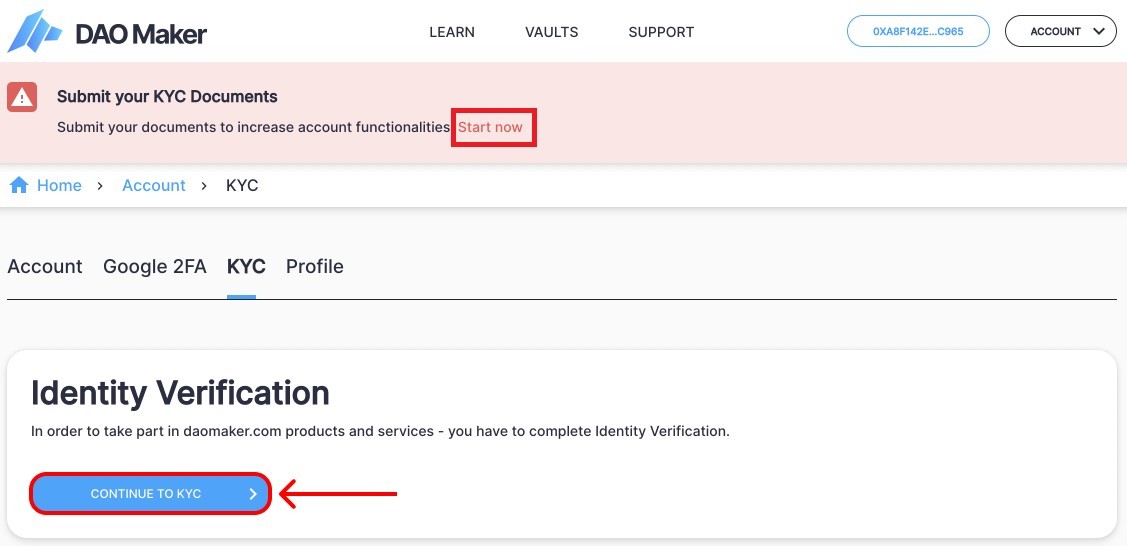
Complete KYC verification
The DAO Maker KYC process is mandatory. Users must upload identity documents and confirm their personal information to meet compliance rules.
Stake DAO tokens
Staking determines your DAO Power level. Higher DAO Power improves eligibility in offerings. Staking is a key part of the requirements on DAO Maker launchpad.
Meet minimum rules for each sale
Private SHO rounds require staking at least 250 DAO tokens. Public SHO rounds require a minimum of $500 in wallet assets.
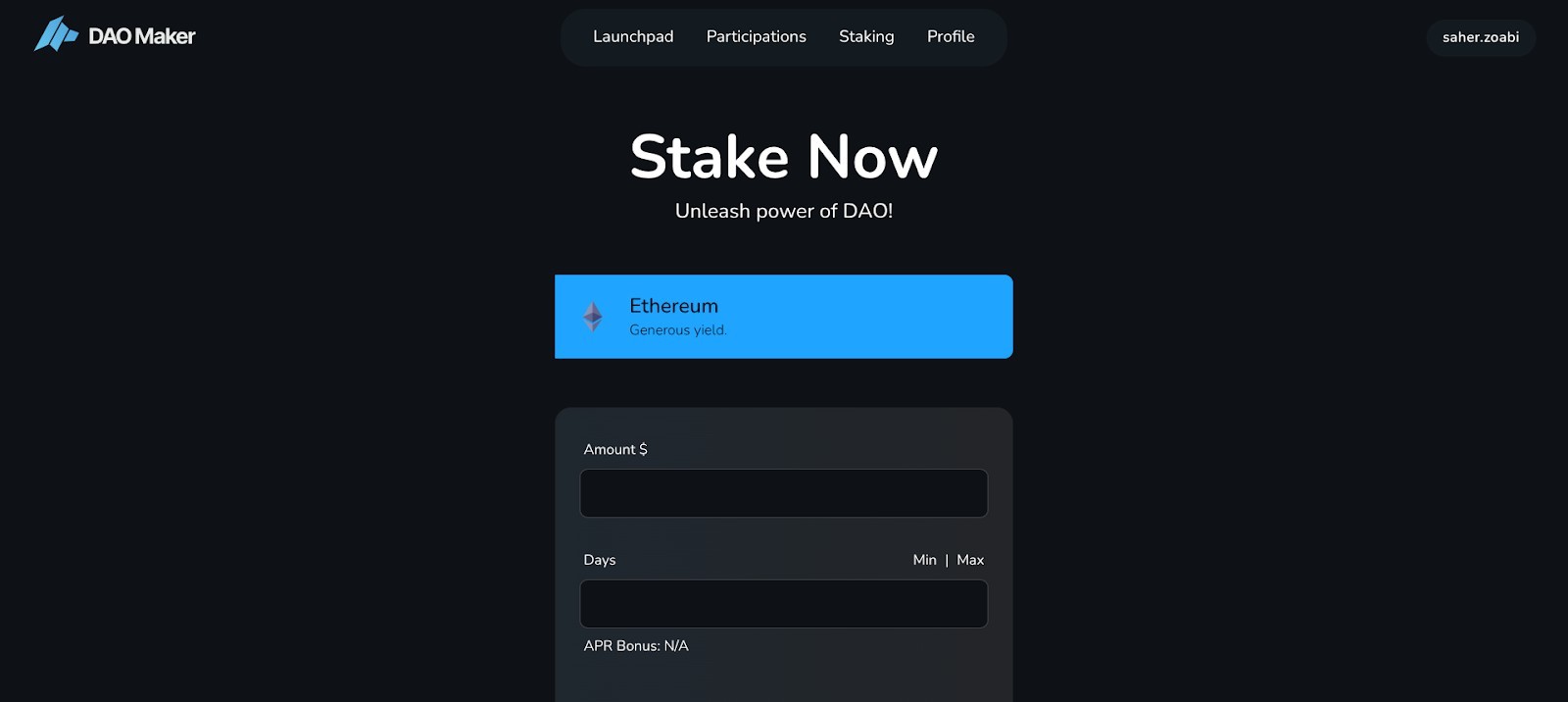
For private SHO participation, users must stake at least 250 DAO tokens. Public SHO requires a minimum of $500 in wallet assets.
How to access investment opportunities
Once users complete registration, KYC, and staking, they can explore active and upcoming offerings directly on the DAO Maker launchpad. Each project page shows key details such as sale dates, eligibility rules, accepted assets, and contribution limits. This helps investors decide whether the opportunity aligns with their goals.
New projects appear in the dashboard on the DAO Maker platform, where users can review requirements and track their readiness. The DAO Maker app also helps investors monitor their status and stay aware of upcoming rounds they may qualify for.
Joining a sale is done through the project’s dedicated page. Investors follow the listed steps, which may include meeting a minimum balance, confirming participation, or satisfying snapshot conditions. When the sale opens, they commit funds through their connected wallet and wait for distribution according to the project’s timeline.
Participation can be managed through the user dashboard, where investors can check their commitments, claim tokens, and review overall eligibility. Updates on timing, claims, and sale rules are provided through the DAO Maker launchpad’s official site, ensuring users always have access to the latest information.
Potential risks and precautions
Investing through the DAO Maker launchpad involves several risks that users should assess before joining any sale.
High price volatility. Token values may rise or fall quickly after listing, and market swings can affect short term returns.
Limited liquidity. Many projects use vesting schedules that delay token release, which can reduce flexibility and limit early exit options.
Regulatory restrictions. Rules vary across regions, and some users may face limits on participation depending on local laws.
Project execution risk. Even vetted projects may fail to meet roadmap goals, which can affect token performance.
User responsibility. Investors must review each project’s documents, tokenomics, and release schedule and ensure they meet all requirements on DAO Maker launchpad before committing funds.
Example of a successful project on DAO Maker Launchpad
DAO Maker Launchpad has helped several blockchain startups secure funding and gain traction in the market. Some of these projects have gone on to establish a strong presence in the industry.
One successful project is Orion Protocol (ORN), which enables decentralized access to liquidity across multiple exchanges. It attracted significant investor interest and quickly built a solid market position.
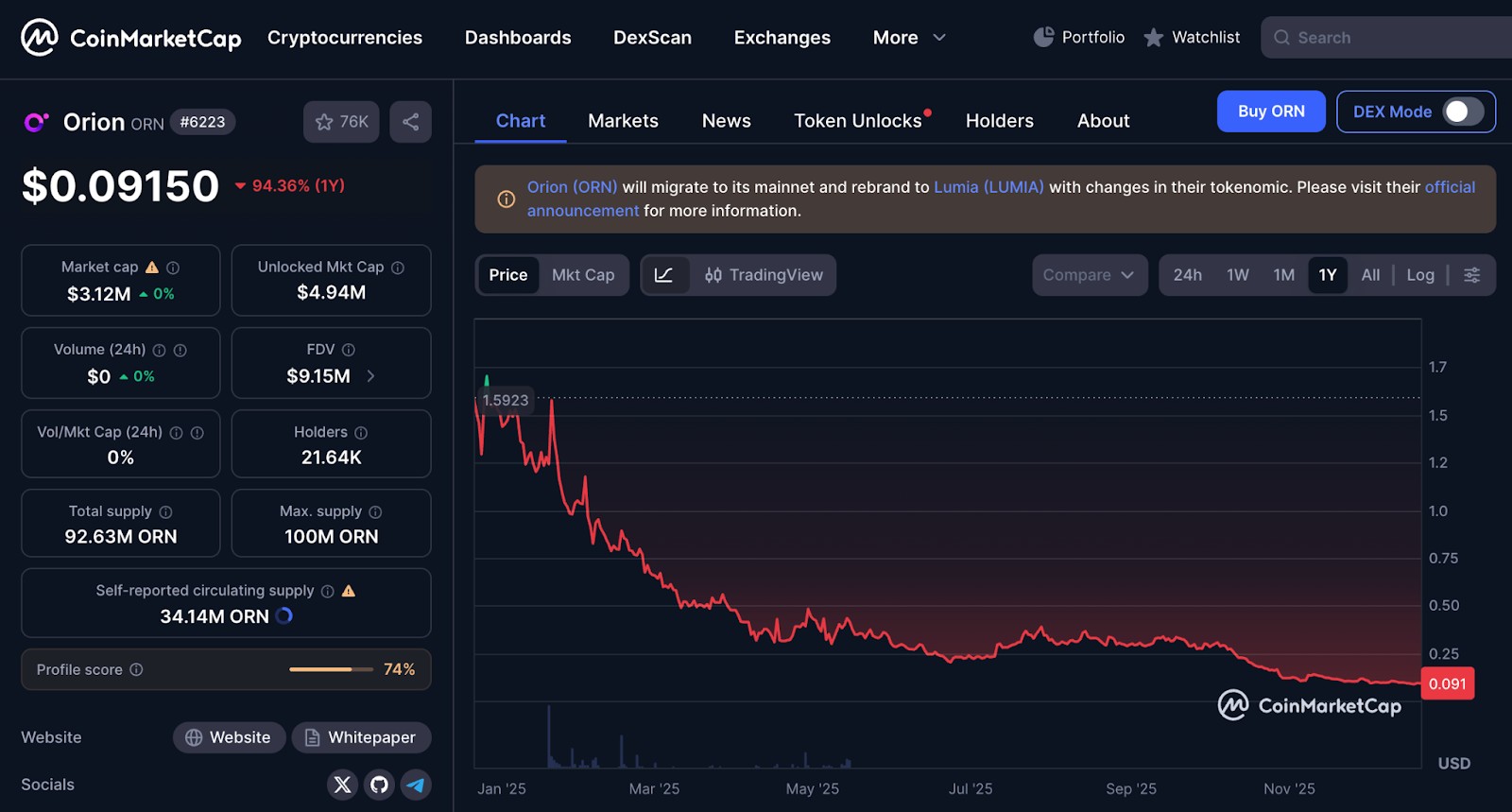
DAO Maker Launchpad continues to support blockchain startups, helping them raise funds and develop innovative solutions in the industry.
Investment returns and risk analysis
Investment results on the DAO Maker launchpad vary widely. Some projects have delivered strong returns after listing, with certain launches reaching average gains near 13x and rare peaks above 300x (NF). These outcomes, however, are not guaranteed, as returns depend on market conditions, investor sentiment, and the project team’s execution.
Many projects on the DAO Maker platform use vesting schedules to reduce early selling pressure. While this supports long-term stability, it can restrict liquidity and delay token access. Price swings are common when unlocks occur during market downturns, which can affect potential gains. Regulatory changes across different regions may also limit who can participate and which assets are available.
Because of these factors, investors should evaluate tokenomics, release schedules, and roadmap progress before joining any sale. Ongoing monitoring and understanding personal risk tolerance remain essential when considering opportunities on the DAO Maker launchpad.
Where to track new launches
Investors can follow upcoming offerings on the DAO Maker launchpad through the official website, where new projects and participation details are posted regularly. Updates are also shared across DAO Maker’s social media channels, which provide reminders about registration deadlines, snapshot dates, and token claim periods.
Independent platforms such as CoinLaunch and ChainBroker track activity on the DAO Maker platform, offering summaries, performance data, and comparisons with other launchpads. These resources help investors evaluate project potential, plan their staking strategy, and stay informed about new opportunities.
After receiving tokens from a DAO Maker sale, many investors look for a practical place to hold, track, or trade them once transfers are enabled. At this point, checking the best crypto exchanges in your region helps you see which platforms support those tokens and fit local access rules, without changing how participation on the DAO Maker launchpad itself works.
| OKX | Coinbase | Crypto.com | Cryptohopper | BTCC | |
|---|---|---|---|---|---|
|
Min. Deposit, $ |
10 | 10 | 1 | No | 10 |
|
Coins Supported |
600+ | 400+ | 400+ | 1000 | 399 |
|
Spot Taker fee, % |
0.1 | 0.5 | 0.5 | 0 | 0.3 |
|
Spot Maker Fee, % |
0.08 | 0.5 | 0.25 | 0 | 0.2 |
|
Alerts |
Yes | Yes | Yes | Yes | No |
|
Copy trading |
Yes | No | No | Yes | Yes |
|
TU overall score |
8.48 | 7.84 | 7.8 | 7.76 | 7.6 |
|
Open an account |
Go to broker Your capital is at risk. |
Go to broker Your capital is at risk. |
Go to broker Your capital is at risk. |
Go to broker Your capital is at risk. |
Go to broker Your capital is at risk.
|
Study tokenomics carefully and understand your true allocation odds

When I evaluate projects on the DAO Maker launchpad, I look closely at tokenomics before anything else. Many investors focus only on potential returns, but the real risk often sits in the vesting schedule. A project may list well, yet if large token unlocks happen early, the price can drop long before investors receive their full allocation. I always check the release structure on the DAO Maker launchpad’s official site and compare it with market conditions to make sure the timeline makes sense.
I also pay attention to competition within SHO rounds. Meeting the minimum staking requirement does not mean your allocation chances are strong. What matters is how your DAO Power compares with others in the same round. Before joining, I review past sales and use data in the DAO Maker app to understand whether my position is competitive. This helps set realistic expectations and avoid unnecessary risk.
Conclusion
The DAO Maker launchpad stands out as a platform that blends early access to promising crypto projects with strong investor protection through models like SHO and DYCO. By requiring KYC, thorough project vetting, and staking DAO tokens to earn allocation chances, it aims to create a secure and transparent fundraising environment for both startups and investors. Success stories such as Orion Protocol highlight the platform’s potential, yet investors must carefully analyze tokenomics and vesting schedules to manage their risk. Ultimately, thoughtful participation and strategic research are key to thriving in DAO Maker’s dynamic crypto landscape.
FAQs
What types of investor protections are built into the DAO Maker Launchpad funding models?
How does tiered staking affect allocation eligibility on DAO Maker Launchpad?
Are there regional or legal restrictions for participating on the DAO Maker Launchpad?
What tools are available to help users monitor upcoming sales and manage their participation?
Editors' Top Picks and Insights





Related Articles
Team that worked on the article
Ciaran Ryan is a veteran financial journalist based in South Africa, where he covers cryptocurrency, mining, stock markets, and governance for Moneyweb. He also hosts the weekly Moneyweb Crypto Podcast.
Dan Blystone began his trading career in 1998 as an arbitrage clerk on the floor of the Chicago Mercantile Exchange (CME). He later traded bond and Eurex futures at proprietary firms such as Altea Trading, gaining valuable experience in high-frequency trading and risk management.
Chinmay Soni is a financial analyst with more than 5 years of experience in working with stocks, Forex, derivatives, and other assets. As a founder of a boutique research firm and an active researcher, he covers various industries and fields, providing insights backed by statistical data.
Risk management is a risk management model that involves controlling potential losses while maximizing profits. The main risk management tools are stop loss, take profit, calculation of position volume taking into account leverage and pip value.
Crypto trading involves the buying and selling of cryptocurrencies, such as Bitcoin, Ethereum, or other digital assets, with the aim of making a profit from price fluctuations.
CFD is a contract between an investor/trader and seller that demonstrates that the trader will need to pay the price difference between the current value of the asset and its value at the time of contract to the seller.
Index in trading is the measure of the performance of a group of stocks, which can include the assets and securities in it.
Cryptocurrency is a type of digital or virtual currency that relies on cryptography for security. Unlike traditional currencies issued by governments (fiat currencies), cryptocurrencies operate on decentralized networks, typically based on blockchain technology.

-
 Afghanistan
-
 Albania
-
 Algeria
-
 Angola
-
 Argentina
-
 Armenia
-
 Australia
-
 Austria
-
 Azerbaijan
-
 Bahamas
-
 Bahrain
-
 Bangladesh
-
 Belarus
-
 Belgium
-
 Bolivia
-
 Botswana
-
 Brazil
-
 Brunei
-
 Bulgaria
-
 Cambodia
-
 Cameroon
-
 Canada
-
 Chile
Chile
-
 China
China
-
 Colombia
-
 Congo
Congo
-
 Costa Rica
-
 Cote d'Ivoire
-
 Croatia
-
 Cuba
Cuba
-
 Cyprus
-
 Czechia
-
 DR Congo
-
 Denmark
-
 Dominican Republic
-
 Ecuador
-
 Egypt
Egypt
-
 El Salvador
-
 Estonia
-
 Eswatini
-
 Ethiopia
-
 Finland
-
 France
-
 Georgia
-
 Germany
-
 Ghana
Ghana
-
 Greece
-
 Haiti
Haiti
-
 Hong Kong
-
 Hungary
-
 India
India
-
 Indonesia
-
 Iran, Islamic republic
-
 Iraq
Iraq
-
 Ireland
-
 Israel
-
 Italy
Italy
-
 Jamaica
-
 Japan
Japan
-
 Jordan
-
 Kazakhstan
-
 Kenya
Kenya
-
 Korea
Korea
-
 Kuwait
-
 Kyrgyzstan
-
 Laos
Laos
-
 Latvia
-
 Lebanon
-
 Lesotho
-
 Libya
Libya
-
 Lithuania
-
 Luxembourg
-
 Madagascar
-
 Malaysia
-
 Malta
Malta
-
 Mauritius
-
 Mexico
-
 Moldova
-
 Mongolia
-
 Montenegro
-
 Morocco
-
 Mozambique
-
 Myanmar
-
 Namibia
-
 Nepal
Nepal
-
 Netherlands
-
 New Zealand
-
 Nigeria
-
 North Macedonia
-
 Norway
-
 Oman
Oman
-
 Pakistan
-
 Palestine
-
 Panama
-
 Papua New Guinea
-
 Paraguay
-
 Peru
Peru
-
 Philippines
-
 Poland
-
 Portugal
-
 Puerto Rico
-
 Qatar
Qatar
-
 Reunion
-
 Romania
-
 Rwanda
-
 Saudi Arabia
-
 Serbia
-
 Singapore
-
 Slovakia
-
 Slovenia
-
 Somalia
-
 South Africa
-
 Spain
Spain
-
 Sri Lanka
-
 Sweden
-
 Switzerland
-
 Syria
Syria
-
 Taiwan
-
 Tajikistan
-
 Tanzania
-
 Thailand
-
 Trinidad and Tobago
-
 Tunisia
-
 Turkey
-
 UAE
UAE
-
 Uganda
-
 Ukraine
-
 United Kingdom
-
United States
-
 Uruguay
-
 Uzbekistan
-
 Venezuela
-
 Vietnam
-
 Yemen
Yemen
-
 Zambia
-
 Zimbabwe
- Forex
- Crypto










- What is the DAO Maker launchpad
- How DAO Maker launchpad works
- Role of the DAO token in the ecosystem
- How to join DAO Maker Launchpad
- How to access investment opportunities
- Potential risks and precautions
- Example of a successful project on DAO Maker Launchpad
- Investment returns and risk analysis
- Where to track new launches
- Expert opinion
- Conclusion
- FAQs


