
Best Peer-to-Peer Lending Platforms



Editorial Note: While we adhere to strict Editorial Integrity, this post may contain references to products from our partners. Here's an explanation for How We Make Money. None of the data and information on this webpage constitutes investment advice according to our Disclaimer.
Best peer-to-peer lending platforms:
Lenme - No min credit score. Loans $50-$5000.
SoFi - Student-loans focused. Min credit score 680. Loans $500-$100k.
Prosper - Fair credit, min credit score 560. Loans $2k-$50k.
Upstart - AI-driven assessment. Loans $1k-$50k.
LendingClub - Min credit 600. Loans $1k-$40k.
Debitum Investments – EU peer-to-business platform. Minimum investment €10. Annual returns up to ~15%.
P2P lending apps offer a convenient solution for obtaining personal loans for urgent financial needs such as paying off debt, large purchases, or medical expenses. These platforms provide quick access to funds with favorable terms, even for those with lower credit scores. Borrowers can secure loan amounts of up to $50,000 or more, featuring a fixed repayment period and competitive interest rates. The chances of loan approval are enhanced as P2P platforms connect borrowers with a network of investors who are ready to fund individuals and businesses. Check out our review to find the top peer-to-peer lending apps available today.
Best P2P lending platforms
P2P lending is a service that connects borrowers and lenders. Users can register as borrowers or lenders. The platforms act as intermediaries, providing access to loans based on credit scores and other factors. In this context, services like ClickFreeScore can be useful for borrowers who want to monitor their credit score and reports in advance, as these factors often influence loan approval and interest rates on P2P lending platforms.
Terms of service and interest rates vary among lenders. This allows borrowers to calculate monthly payments in advance. Loans are issued on fixed terms, making it easier to plan payments.
P2P lending is growing in popularity due to its less stringent requirements than traditional banks. However, interest rates and fees can be higher. Therefore, carefully study the terms before entering into a loan agreement.
Before choosing a platform for P2P lending, you should compare the terms of different services. This is necessary in order to choose the most suitable option taking into account your financial situation and loan requirements.
| Platform | Min.-max. loan amount | Term length | Credit score requirement | Estimated APR |
|---|---|---|---|---|
| Lenme | $50 - $5000 | 12 months | - | 3% |
| SoFi | $500 - $100,000 | 84 months | 680 | 5.99% - 18.64% |
| Prosper | $2000 - $50,000 | 3 years | 560 | 6.99% - 35.99% |
| Upstart | $1000 - $50,000 | 5 years | - | 6.50% - 35.99% |
| LendingClub | $1000 - $40,000 | 36 - 60 months | 600+ | 8.30% - 36% |
| Debitum Investments | €50,000 – €5,000,000 (business loans) | 3 – 36 months | Not consumer-based | ~10% – 15% investor yield |
Lenme
Lenme is a peer-to-peer lending app that connects borrowers with investors for small personal loans. To qualify, borrowers need to provide proof of a Social Security number, an active bank account, and a government-issued ID.

Once the basic requirements are met, approved borrowers can expect to receive funds in their bank accounts within 1-2 business days. This platform is designed to facilitate quick and efficient lending, making it a convenient choice for those in need of fast financial solutions.
SoFi
SoFi (Social Finance) offers different types of loans, but it focuses on refinancing student loans. They are well-known for offering no-fee loans, which is why they are among the best P2P lenders for student loans. SoFi is also a top P2P site where you can request auto and student loan refinancing, home loans, and small-business financing.

The SoFi app allows investors to manage all of their investments, including stocks, exchange-traded funds (ETFs), and cryptocurrency, in a single location.
SoFi offers same-day funding approval, but it can also take up to a week to receive funds.
Prosper
Since 2005, Prosper, a peer-to-peer lending service, has facilitated different loans, from debt consolidation to medical expenses. It accepts applicants with fair credit and provides a variety of loan amounts. Two borrowers can submit a joint application through Prosper's platform. Having a co-borrower with better credit can increase your chances of receiving a loan or one with a more favorable annual percentage rate.
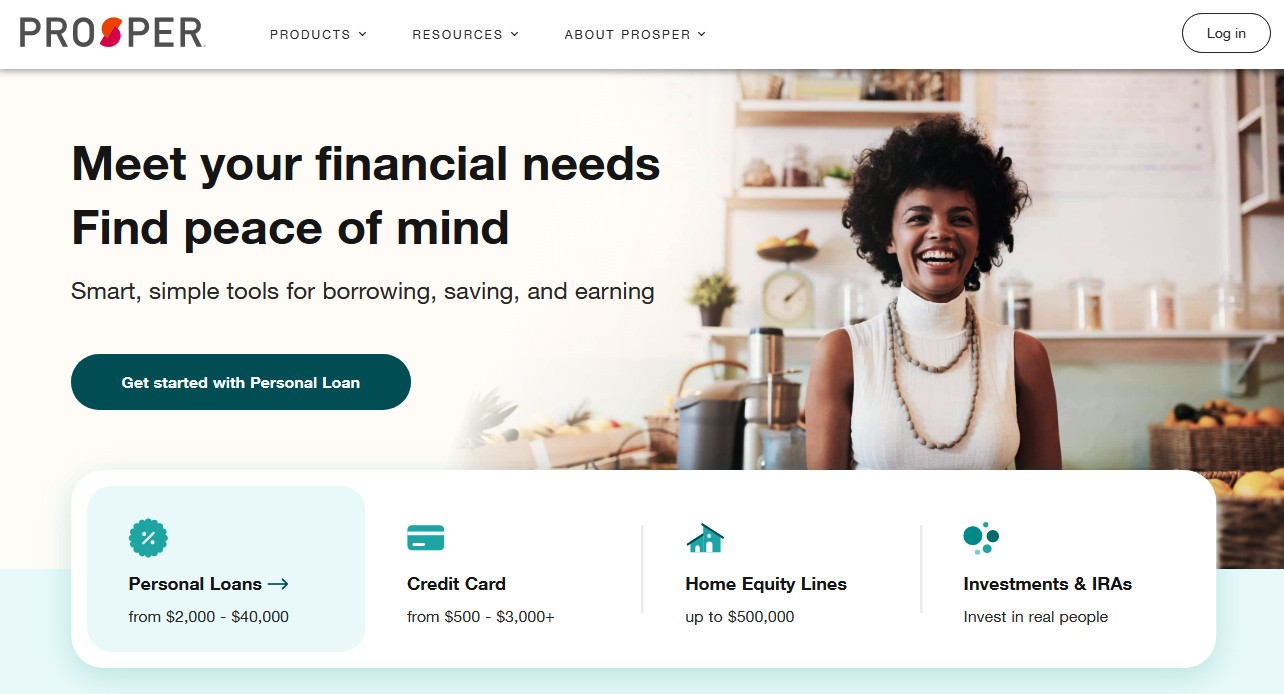
If approved, borrowers will receive the loans in their bank account in 1-3 business days.
Upstart
The Upstart peer-to-peer lending app is a well-known platform because of its novel method of borrower assessment. Upstart's services are transparent and faultless, thanks to the AI-driven algorithm it uses to evaluate applications.
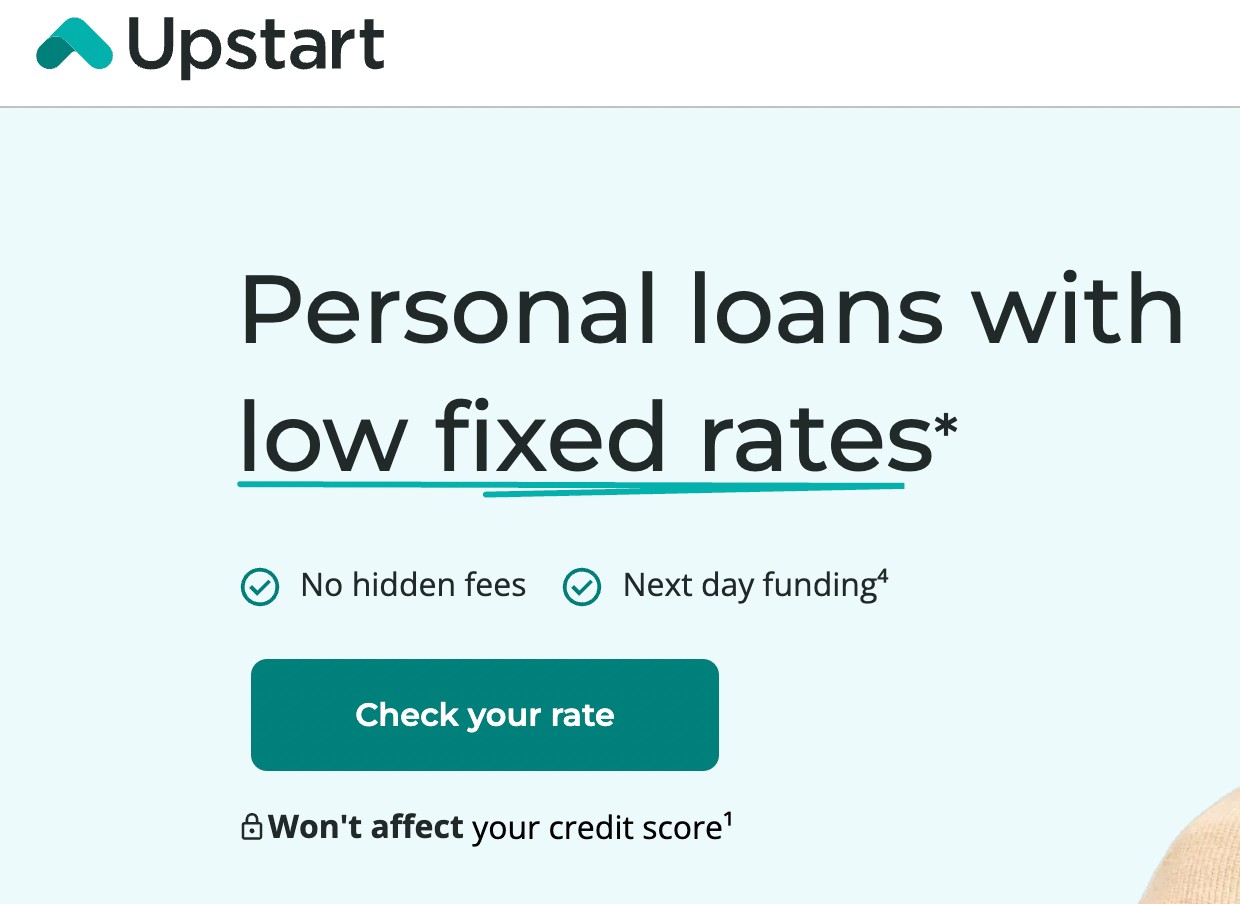
To reduce the risk of borrowers defaulting on their loans, Upstart enables you to diversify your loans across various risk profiles.
If a borrower is approved for these loans, they will receive the requested amount in their bank account within one business day.
LendingClub
One of the most well-known peer-to-peer lending services in the US is LendingClub. They are also the first bank to connect investors and borrowers. LendingClub is the best option for borrowers with fair credit who might otherwise have few borrowing options.
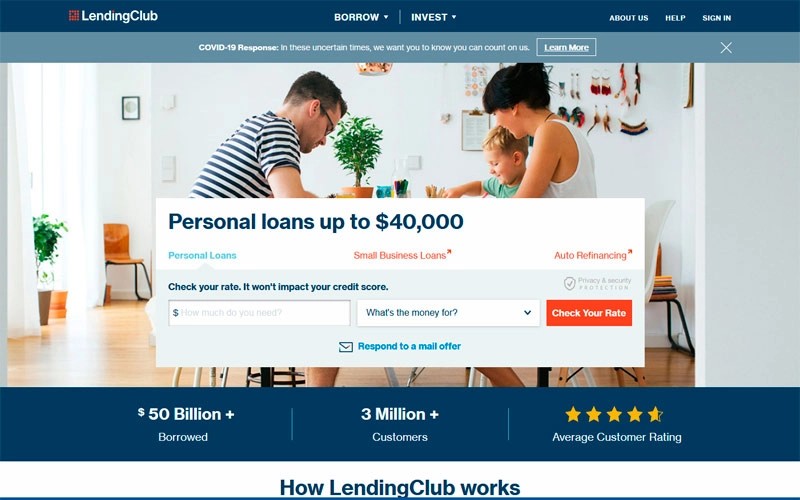
After a hard credit inquiry by LendingClub, the borrower receives the loan funds in their bank account within five business days.
Debitum Investments

Debitum Investments is a peer-to-business lending platform specializing in financing small and medium-sized enterprises across Europe. Unlike consumer P2P platforms, Debitum connects investors with asset-backed business loans, including inventory, invoice, and equipment financing. The platform operates under EU financial regulation, adding a compliance layer for investors.
Debitum Investments places a strong focus on risk management by offering loans with collateral and buyback obligations on many listings. Investors can diversify capital across multiple borrowers, loan originators, and maturities, typically ranging from 3 to 36 months.
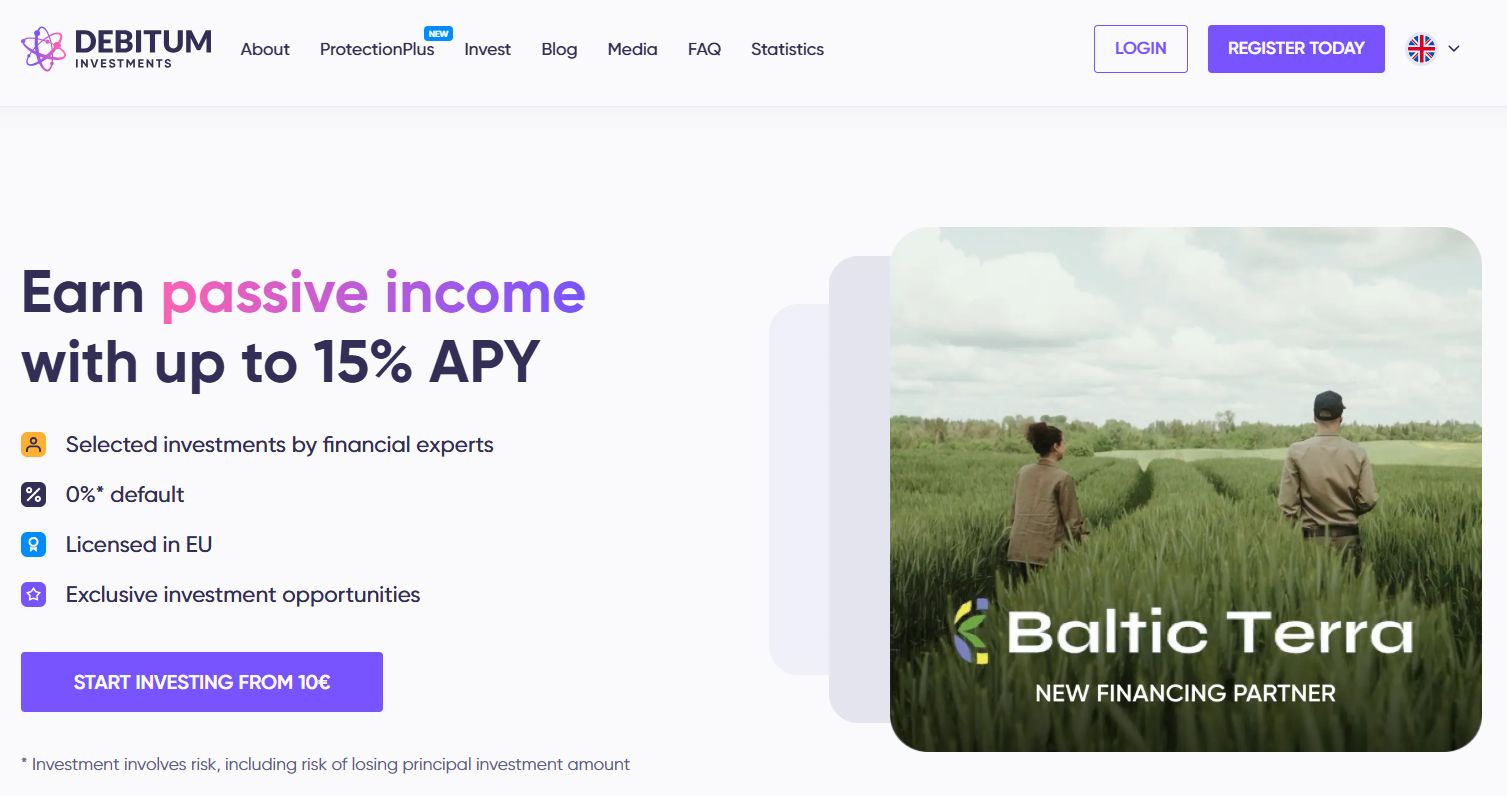
Once an investment is made, interest accrues according to the loan schedule, with returns commonly paid monthly. This structure makes Debitum Investments suitable for investors seeking predictable cash flow rather than short-term trading exposure.
How to choose the right P2P lending platform
Choosing the right peer-to-peer (P2P) lending platform is important for borrowers and investors to secure favorable terms and minimize risks. Here’s what to look for:
Platform reputation and track record
Established history. Choose platforms with a strong track record and positive reviews. For example, Prosper, founded in 2005, has facilitated billions in loans, showing reliability and experience.
User feedback. Check user experiences to understand satisfaction levels and identify potential concerns.
Regulatory compliance
Licensing. Make sure the platform is regulated and holds the necessary licenses.
Transparency. The platform should clearly explain its operations, fees, and terms.
Loan offerings and terms
Loan amounts. Confirm that the platform offers the loan sizes you need, as some go up to $50,000 or more.
Interest rates. Compare rates to find competitive options.
Repayment terms. Choose platforms with flexible repayment schedules that fit your needs.
Fees and charges
Origination fees. Check for any processing fees associated with the loan.
Late fees. Understand any penalties for late payments to avoid extra costs.
Investor returns and risk management
Return rates. Investors should look at the platform’s past return rates.
Risk assessment. Ensure the platform has a strong process for assessing borrower risk and preventing defaults.
User experience and support
Interface. A user-friendly design makes using the platform easier.
Customer support. Good customer service is key for getting help when needed.
Geographic availability
Regional access. Make sure the platform operates in your area, as some may only serve certain locations.
How do peer to peer lending companies work?
Peer-to-peer (P2P) lending platforms connect borrowers directly with individual lenders, bypassing traditional financial institutions. Here's how they operate:
Application and listing. Borrowers submit loan applications on the P2P platform, providing details like loan amount, purpose, and financial background. The platform assesses the borrower's creditworthiness and assigns a risk grade, which influences the interest rate. Approved loan requests are then listed for potential investors to review.
Investment by lenders. Individual lenders browse available loan listings and choose to invest in those that align with their risk tolerance and return expectations. Investors can fund portions of multiple loans to diversify their portfolios and mitigate risk.
Loan funding and disbursement. Once a loan is fully funded by investors, the platform consolidates the funds and disburses the total loan amount to the borrower.
Repayment and returns. Borrowers repay the loan over a predetermined period, typically with fixed monthly payments that include principal and interest. The platform collects these payments and distributes the appropriate share to each investor, usually after deducting a servicing fee.
Borrower risks
A careful assessment of risk factors helps to minimize potential losses. Therefore, it is worth carefully familiarizing yourself with the possible risks in P2P lending.
Borrower risk is the probability of default on a loan or the terms of an agreement. To assess creditworthiness, the borrower's business profile is analyzed, including financial statements for the past three years, to assess the stability of its activities.
Credit risk is assessed by five parameters:
Credit history. The borrower's track record in meeting financial obligations.
Solvency. The borrower's capacity to service the debt.
Capital. The assets available to cover the debt.
Credit terms. Details of the loan, including amount and conditions.
Collateral. Assets pledged as security or other guarantees.
How to make money with P2P lending
Investing through P2P lending platforms allows you to earn income in the form of interest. P2P lending is risky, but you can control the process within the terms offered. To get started, you need to:
Research the platforms. Choose sites that match your investment strategies and requirements. Debitum Investments may be suitable for investors seeking regulated exposure to SME lending with predictable returns and clearly defined risk parameters.
Create an account. Register on the platform of your choice to access available lending options.
Choose investments. You can manually select loans or trust the platform to automatically distribute funds.
Income. Payments are made in the form of EMIs (equivalent monthly installments), which include principal and interest.
Manage funds. The platforms transfer payments to your account. You can withdraw funds or reinvest them.
Alternatives to P2P lending
If the risks of P2P lending do not suit you, you can consider other options:
PAMM accounts. Investors' funds are pooled in one account, which is managed by the trader. Profit is distributed proportionally to the invested funds.
Business loans. For borrowers who need structured financing rather than peer-based lending, business loan providers such as Cardiff USA offer an alternative approach. Unlike P2P platforms, these services work directly with businesses, providing tailored funding solutions.
Copy trading. Experienced traders' trades are automatically duplicated in your account, allowing you to repeat their results.
Trading signals. You receive notifications about signals for certain assets and use them to open trades.
We have also compiled a list of reliable brokers with favorable conditions for investing.
| Copy trading | Managed | PAMM | Signals (alerts) | Open an account | |
|---|---|---|---|---|---|
| Yes | No | No | Yes | Go to broker Your capital is at risk.
|
|
| No | No | No | Yes | Go to broker 80% of retail CFD accounts lose money. |
|
| Yes | No | No | Yes | Go to broker Your capital is at risk. |
|
| No | No | No | Yes | Go to broker Your capital is at risk. |
|
| Yes | No | No | Yes | Study review |
Choose platforms with collateral and distribute investments among several borrowers

The effectiveness of using P2P platforms directly depends on a thorough analysis of the borrower's financial conditions and the choice of the platform itself. If you are considering such investments, pay attention to the default rates that platforms usually publish in their reports. The percentage of unpaid loans varies on average from 1% to 5%, and this can significantly affect your profitability. Compare this indicator between different platforms to choose the most reliable one.
Another aspect that is often overlooked by novice investors is diversification. Distribute your investments between several loans, rather than investing the entire amount in one project. Even a small distribution among 20-30 borrowers can reduce the overall risk of the portfolio and smooth out potential losses. Many platforms offer automatic distribution, which can be customized to your criteria.
For those who want to minimize risks, I recommend paying attention to platforms that provide loans with collateral. In the event of default, the collateral can be sold to cover the debt. This is especially relevant for investors who are looking for more secure investments while still maintaining the ability to earn high returns.
Conclusion
Peer-to-peer lending platforms have revolutionized the investment landscape, offering individuals direct access to alternative income streams and portfolio diversification. By understanding how P2P lending works and employing sound risk management strategies, investors can effectively leverage platforms such as LendingClub and Prosper for consistent returns. The key takeaway is that informed decision-making and diligent due diligence are essential when navigating this dynamic market. Ultimately, the future of P2P lending belongs to those who are proactive and adaptable, seizing the opportunities provided by technological innovation and financial democratization.
FAQs
What are typical repayment terms and loan amounts available on peer-to-peer lending platforms?
How quickly can borrowers expect to receive funds from peer-to-peer lending platforms?
What types of collateral or guarantees are used in peer-to-peer lending to reduce risk?
How can borrowers or investors compare the suitability of different peer-to-peer lending platforms?
Editors' Top Picks and Insights

SpaceX falls out of orbit: Does anyone still want Musk’s stock?

The crypto IPO problem: How high-profile listings became investor traps

U.S. Bitcoin reserve: Trump’s unrealized crypto promise

Aiming for leadership: Payment giants prepare a new stablecoin

Proof of Reserves: the new standard for cryptocurrency exchanges

Three trends that could reshape the crypto market over the next decade
Related Articles
Team that worked on the article
Oleg Tkachenko is an economic analyst and risk manager having more than 14 years of experience in working with systemically important banks, investment companies, and analytical platforms. He has been a Traders Union analyst since 2018.
Chinmay Soni is a financial analyst with more than 5 years of experience in working with stocks, Forex, derivatives, and other assets. As a founder of a boutique research firm and an active researcher, he covers various industries and fields, providing insights backed by statistical data.
Mirjan Hipolito is a journalist and news editor at Traders Union. She is an expert crypto writer with five years of experience in the financial markets.
Bitcoin is a decentralized digital cryptocurrency that was created in 2009 by an anonymous individual or group using the pseudonym Satoshi Nakamoto. It operates on a technology called blockchain, which is a distributed ledger that records all transactions across a network of computers.
An investor is an individual, who invests money in an asset with the expectation that its value would appreciate in the future. The asset can be anything, including a bond, debenture, mutual fund, equity, gold, silver, exchange-traded funds (ETFs), and real-estate property.
Risk management is a risk management model that involves controlling potential losses while maximizing profits. The main risk management tools are stop loss, take profit, calculation of position volume taking into account leverage and pip value.
Forex trading, short for foreign exchange trading, is the practice of buying and selling currencies in the global foreign exchange market with the aim of profiting from fluctuations in exchange rates. Traders speculate on whether one currency will rise or fall in value relative to another currency and make trading decisions accordingly. However, beware that trading carries risks, and you can lose your whole capital.
Forex leverage is a tool enabling traders to control larger positions with a relatively small amount of capital, amplifying potential profits and losses based on the chosen leverage ratio.

-
 Afghanistan
-
 Albania
-
 Algeria
-
 Angola
-
 Argentina
-
 Armenia
-
 Australia
-
 Austria
-
 Azerbaijan
-
 Bahamas
-
 Bahrain
-
 Bangladesh
-
 Belarus
-
 Belgium
-
 Bolivia
-
 Botswana
-
 Brazil
-
 Brunei
-
 Bulgaria
-
 Cambodia
-
 Cameroon
-
 Canada
-
 Chile
Chile
-
 China
China
-
 Colombia
-
 Congo
Congo
-
 Costa Rica
-
 Cote d'Ivoire
-
 Croatia
-
 Cuba
Cuba
-
 Cyprus
-
 Czechia
-
 DR Congo
-
 Denmark
-
 Dominican Republic
-
 Ecuador
-
 Egypt
Egypt
-
 El Salvador
-
 Estonia
-
 Eswatini
-
 Ethiopia
-
 Finland
-
 France
-
 Georgia
-
 Germany
-
 Ghana
Ghana
-
 Greece
-
 Haiti
Haiti
-
 Hong Kong
-
 Hungary
-
 India
India
-
 Indonesia
-
 Iran, Islamic republic
-
 Iraq
Iraq
-
 Ireland
-
 Israel
-
 Italy
Italy
-
 Jamaica
-
 Japan
Japan
-
 Jordan
-
 Kazakhstan
-
 Kenya
Kenya
-
 Korea
Korea
-
 Kuwait
-
 Kyrgyzstan
-
 Laos
Laos
-
 Latvia
-
 Lebanon
-
 Lesotho
-
 Libya
Libya
-
 Lithuania
-
 Luxembourg
-
 Madagascar
-
 Malaysia
-
 Malta
Malta
-
 Mauritius
-
 Mexico
-
 Moldova
-
 Mongolia
-
 Montenegro
-
 Morocco
-
 Mozambique
-
 Myanmar
-
 Namibia
-
 Nepal
Nepal
-
 Netherlands
-
 New Zealand
-
 Nigeria
-
 North Macedonia
-
 Norway
-
 Oman
Oman
-
 Pakistan
-
 Palestine
-
 Panama
-
 Papua New Guinea
-
 Paraguay
-
 Peru
Peru
-
 Philippines
-
 Poland
-
 Portugal
-
 Puerto Rico
-
 Qatar
Qatar
-
 Reunion
-
 Romania
-
 Rwanda
-
 Saudi Arabia
-
 Serbia
-
 Singapore
-
 Slovakia
-
 Slovenia
-
 Somalia
-
 South Africa
-
 Spain
Spain
-
 Sri Lanka
-
 Sweden
-
 Switzerland
-
 Syria
Syria
-
 Taiwan
-
 Tajikistan
-
 Tanzania
-
 Thailand
-
 Trinidad and Tobago
-
 Tunisia
-
 Turkey
-
 UAE
UAE
-
 Uganda
-
 Ukraine
-
 United Kingdom
-
United States
-
 Uruguay
-
 Uzbekistan
-
 Venezuela
-
 Vietnam
-
 Yemen
Yemen
-
 Zambia
-
 Zimbabwe
- Forex
- Crypto











