
Best Free Stock Alerts 2026



Editorial Note: While we adhere to strict Editorial Integrity, this post may contain references to products from our partners. Here's an explanation for How We Make Money. None of the data and information on this webpage constitutes investment advice according to our Disclaimer.
Best Free Stock Alerts:
eToro - the best for automatically copying trades
Market Chameleon - best for experienced traders
MarketWatch - convenient stock monitoring
M1 Finance - the best for beginners
CNBC - favorable conditions for alerts
Stock alert services are in high demand among both beginner and experienced traders. These tools can be either free or paid, with many platforms such as Market Chameleon and CNBC offering basic features at no cost.This article reviews some of the most popular alert services, evaluating factors such as signal reliability and accuracy, functionality, and ease of use to help you choose the most suitable tool for monitoring financial markets.
Best platforms with free stock alerts
We have selected the 5 best platforms with free stock alerts.
| Stock Alerts Provider | Alert channel | Term of use | Pros | Cons |
|---|---|---|---|---|
Push, Email | Free | 1. Free stock alerts and notifications 2. Real-time updates on selected stocks 3. Integration with eToro trading platform | 1. Limited customization options 2. Limited range of alert channels 3. May require an eToro account to access | |
Push, Email | Service Level: - Starter - $0 - Stock Trader - $39/month - Options Trader - $69/month - Earnings Trader - $79/month - Total Access - $99/month | 1. Free stock alerts and notifications 2. Variety of alert channels 3. Customizable alert settings | 1. Limited features compared to paid plans 2. Advanced features available only in paid plans | |
MarketWatch | Email or test message alerts | Free | - Commission free - A great news source - Real-time stock market data, financial investment news, and market dynamics analyses are available | - The platform has lots of distracting ads - The platform isn’t easy to navigate |
Email or text alerts | Free | - Commission free - Automated functions available - Customizable investing - Accessible credit line | Not ideal for active traders | |
CNBC | Email, streaming content, or text alerts | Free version and pro-version for $29.99 per month | - After-hours and pre-market trading data available - Global market data and real-time market quotes on stock - Live streaming content on business and finance - iPhone, Android, and iPad-enabled | The free version has limited capabilities |
eToro


eToro presents itself as a dependable stock alert service that offers traders a robust set of features and a user-friendly interface. It serves as an excellent option for those seeking accurate and timely alerts to make well-informed trading decisions. The platform fosters a vibrant community of traders who actively share insights and ideas, ensuring that traders never operate in isolation.
eToro's alerts can be personalized to suit individual preferences, enabling traders to receive notifications regarding projected economic events that may impact prices, whether they rise or fall. Furthermore, their alerts seamlessly integrate with traders' trading platforms, ensuring they stay updated on the latest market trends. Distinguishing itself from other alert services, eToro's alerts are grounded in both technical and fundamental analysis, offering traders a comprehensive market perspective. With its wide range of features, eToro empowers traders to stay ahead of the curve and maximize their potential profits.
Market Chameleon

Market Chameleon stands out as a comprehensive platform for options research, offering traders a wide range of information and tools to stay ahead in the market. The platform provides real-time data on options trading, historical stock prices, and extensive market analysis, equipping traders with valuable insights to make informed decisions. Market Chameleon caters specifically to options traders, offering intraday and end-of-day market data, press releases, earnings reports, and dividend information.
Please note:
The data on large options positions in major market assets, which can be received regularly via Market Chameleon newsletters, will be useful for regular forex traders as well.
The platform provides comprehensive data and analysis through direct download, including historical options trading data, volatility trends, upcoming earnings and dividend events, and daily stock market activity. With its vast resources, Market Chameleon serves as a valuable source of trading ideas, featuring a variety of trading ideas such as earnings alerts and options strategies.
MarketWatch
The MarketWatch platform is a Dow Jones Inc. venture, which provides in-depth analysis of the stock or Forex market. It also provides an accurate presentation of the present and projected future market trends as well as timely and accurate trade alert details pertaining to stocks of interest or other investment options. Apart from presenting important market alerts and in-depth analyses, MarketWatch also offers a wide array of informative articles on trading, money, and the Forex and stock markets.
M1 Finance

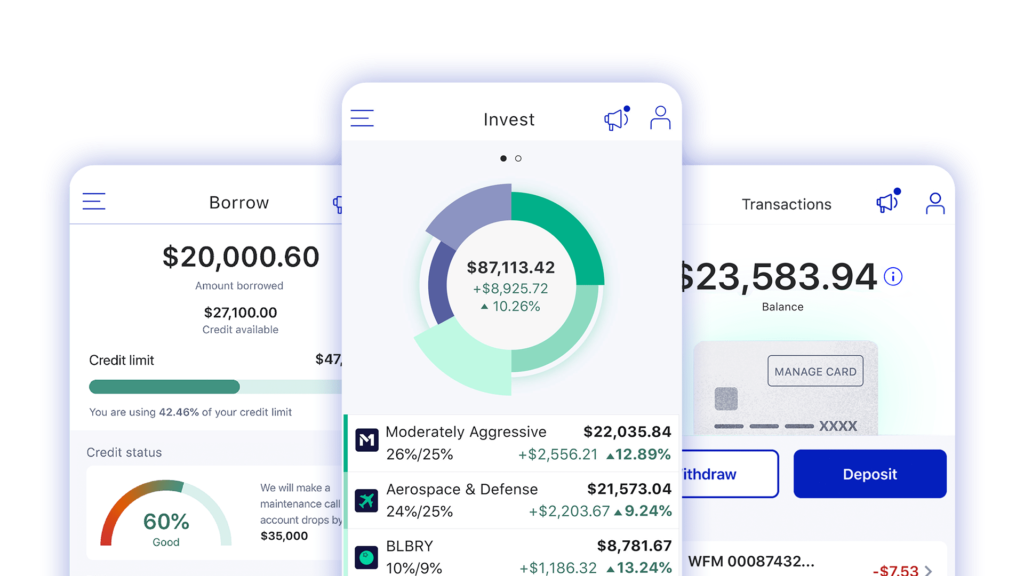
Do you like freebies? Well, most people do! M1 is one of these freebies in the stock trading industry. M1 is a trading platform that serves as a free portfolio, stock tracker, and trade management online platform. The platform also provides stock price alerts, and essential advice on selling and trading tactics. The platform belongs to M1 Financial services company established in 2015.
M1 doesn’t charge any fee for using its services on any Forex market or trading option. The platform is ideal for new traders who’re trying to grasp market and trading basics. It’s for this reason that it’s perhaps one of the best 2026 stock price alert platforms that helps starters in learning the ropes.
M1 also has useful content on Forex trade accounts, trading, and market details. Opening an account on M1’s platform is easy. All you have to do is sign up, provide personal details, and verification documents to get your account approval. Thereafter, you can deposit funds and start trading.
 M1 Finance
The above highlighted stock alert services provide a wide array of services that improve your trading prospects by providing insights that may help you make prudent decisions that may reduce risk and increase profits.
Read on to learn more about the seven top stock alert services that traders use to reap profits in the trading and forex markets while reducing their trading risk and possible losses.
CNBC
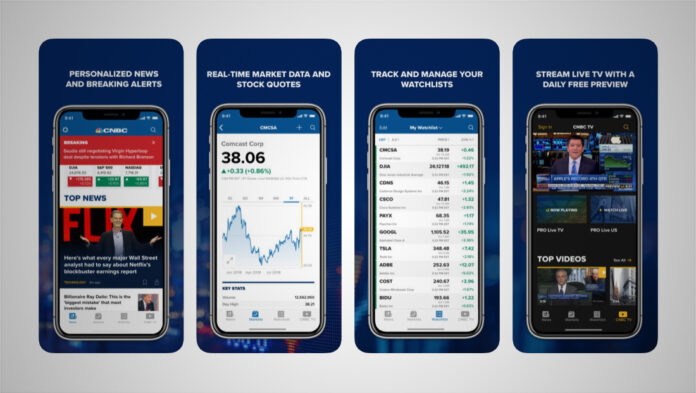
You know the CNBC for real-time financial market and business news coverage, but you may not have known that it’s part of the best stock price alerts platform in 2026. NBC is the main investor in the CNBC stock price alert platform.
CNBC’s platform presents stock projection estimates, real-time stock quotations, and projections of stock/forex market trends. All this information is given free of charge via the CNBC app and its online platform. In addition, you may also get access to popular CNBC shows on money matters, including “American Greed,” and “Mad Money.”
 CNBC
CNBCHow to use free stock market alerts?
Here is a simple step-by-step guide to using free stock market alerts:
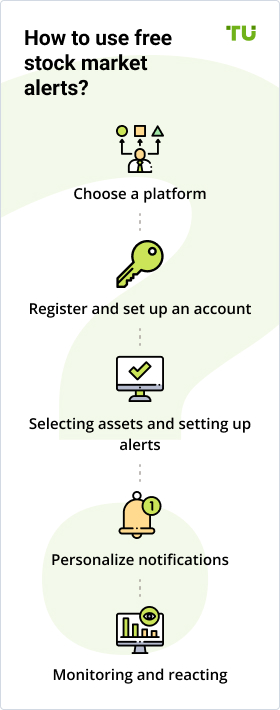
Step 1: Choose a platform
Start by researching platforms that offer free stock alerts, such as Yahoo Finance, CNBC, MarketWatch, and others. Choose a service that aligns with your trading style, preferred assets, and notification preferences.
Step 2: Register and set up an account
Register on the chosen platform, according to the instructions on the website or in the application, create a profile and log in to the account.
Step 3: Selecting assets and setting up alerts
Next, you need to identify stocks to track and set up alerts in accordance with your investment strategy: specify the price or percentage change, when reached which alerts will be sent, if necessary and possible - set alerts based on technical analysis.
Step 4: Personalize notifications
Here you should select the methods of receiving alerts (e-mail, SMS, mobile application, etc.), specify the frequency and time of receiving alerts.
Step 5: Monitoring and reacting
It is important for active traders to regularly check the alerts they receive and analyze changes in the market to make informed decisions about buying, selling or holding assets.
Step 6: Update your strategy
Periodically, it is advisable to review the investment strategy based on the results and experience of using alerts and make adjustments to their settings.
By following this algorithm, a trader will be able to effectively use free stock alerts to manage an investment portfolio on the financial markets.
Best stock brokers
To make the most of stock alerts, it’s important to use a reliable broker that offers fast execution, intuitive platforms, and built-in alert features. The brokers listed below provide strong trading conditions and tools that can help you act quickly on market signals.
| eToro USA | Plus500 | eOption | Revolut | Interactive Brokers | Fidelity | |
|---|---|---|---|---|---|---|
|
Foundation year |
2007 | 2008 | 2007 | 2015 | 1978 | 1946 |
|
Account min. |
50 | EUR500 | No | No | No | No |
|
Interest rate |
3,75 | No | 8.95% | 0%-4% | 4.83% | 4.97% |
|
Basic stock/ETF fee |
No | $0.006 | $0 | 0.12%-0.25% | 0-0,0035% | No |
|
Min. stock/ETF fee |
No | Not specified | $0 | £1.00/€1.00 | $1,00 | No |
|
Basic futures fee |
Not specified | Not specified | Not specified | No | $0,25 | Varies |
|
Min. futures fee |
Not specified | Not specified | Not specified | No | $0,25 | Varies |
|
Open an account |
Go to broker Your capital is at risk. |
Go to broker 80% of retail CFD accounts lose money. |
Study review | Study review | Study review | Study review |
Free stock alerts types
There are several types of alerts, each with its own benefits. We have reviewed the main types of free stock alerts and their features.
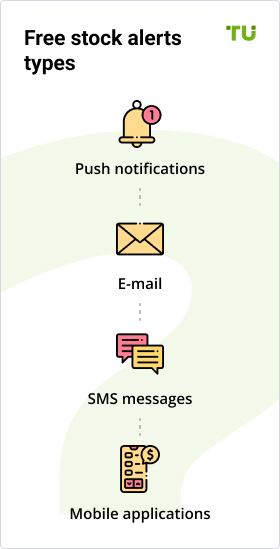
1. Push notifications
These are instant and one of the most effective ways to get market information. They appear directly on your mobile device or computer screen as a pop-up message, even if the corresponding app is closed. As a result of push notifications, you can receive information instantly and react to market changes quickly.
2. E-mail
E-mail is a more traditional but still sought-after way to receive free stock alerts. Investors can set up email notifications to receive information about significant stock price changes, company news, and other market events. The pros of such notifications are the ability to save messages for later analysis and the organization of information.
3. SMS messages
These are text messages sent to investors' cell phones. This method of notification provides fast and direct delivery of market information, which makes it convenient for those who want to stay informed even without access to the Internet or mobile applications. The disadvantages of such information include the fact that not all operators offer free SMS.
4. Mobile applications
Many investment platforms offer mobile apps with built-in notification features. These applications allow customizing notifications according to the user's investment strategy and include different types of alert (price changes, technical signals, news updates, etc.). Traders receive alerts directly to their gadgets.
When choosing the type of alerts, it is worth considering its convenience, speed of information delivery and compatibility with investment needs.
Do free stock alerts provide the same features as paid versions?
When choosing alerts, the question arises - are free alerts so beneficial to the trader? Is it possible to miss something important by neglecting paid versions? We have considered the pros and cons of paid and free versions and summarized them in the table.
The advantages of free alerts, except for the zero cost itself, are the simplicity of the interface and the minimum of settings, which is convenient for beginners. Basic functions, as a rule, are enough for novice investors or those who just want to stay informed about market events. The disadvantages include limitations on the number of alerts and frequency of their sending, as well as an incomplete list of customization functions and a lack of analytics.
| Functions | Free alerts | Paid alerts |
|---|---|---|
Cost | Zero | Depends on the platform and tariff |
Setup options and tools | Limited set | Expanded set |
Data availability | Basic data level | Access to exclusive data |
Quantity | Can be limited | Not limited |
Support | Not always complete | Priority |
Tips for using stock market alerts
To get the most out of "stock alerts", you need to apply them correctly and avoid overloading them. In order to use alerts wisely (especially for beginners), we recommend:
1. Set proper goals
Before you start using Stock Alerts, you should define your investment goals and what exactly you need the alert for. This will help you choose the most appropriate types of alerts.
2. Customize alerts according to your strategy
It is necessary to clearly define the types of alerts that are most appropriate for the chosen trading plan. And then correctly set prices, percentage changes or other parameters of alerts.
3. Limit the number of alerts
This is a very important point. You should avoid information overload by setting a limited number of notifications. You should be able to focus on specific parameters that directly affect your investment portfolio.
4. Analyze the information
It is worth not just reacting to alerts, but also analyzing the information received. You need to understand what events and factors affect stock prices and how they may affect your portfolio.
5. Proceed with caution
You don't have to react to every alert instantly. Before deciding to buy or sell a stock, it is advisable to be sure to do some additional analysis and risk assessment.
By utilizing these tips, beginners can get the most out of stock market alerts and manage their investments effectively.
Use alerts as a signal, not a decision-maker

Stock alerts can be a valuable tool for staying informed about market movements, especially for beginners. However, they should not be used as a standalone basis for trading decisions. Alerts simply highlight potential opportunities, but it’s essential to analyze the broader market context, confirm signals, and align them with your strategy. Traders who rely solely on alerts without additional research risk making impulsive or poorly informed decisions.
Conclusion
Choosing the right free stock alert service can significantly improve your market awareness and investment decision-making, whether you’re a beginner or seasoned trader. While platforms like eToro and Market Chameleon offer robust features and real-time updates, it's crucial to use alerts as informational tools rather than sole decision-makers. Customizing and limiting alerts to match your strategy helps you avoid information overload and maintain focus on your financial goals. Ultimately, stock alerts are most powerful when combined with your own research and a clear investment strategy—allowing you to seize timely opportunities while minimizing impulsive trades.
FAQs
What types of traders benefit most from free stock alerts?
How do real-time stock alerts help manage investment risk?
What customization options are typically available with free stock alerts?
Can stock alerts be integrated with mobile applications for on-the-go trading?
Editors' Top Picks and Insights

Bitcoin mining is getting greener, but the debate isn't over

Asia's largest IPO: How CXMT became China's most valuable company

Global fintech in 2026: Three trends that matter

From Jesus Christ to aliens: Polymarket's most absurd prediction markets

Hunting crypto owners: Why criminals have gone offline

BitMEX is shutting down: Why Trump could not save the exchange
Related Articles
Team that worked on the article
Winnifred Emmanuel is a freelance financial analyst and writer with years of experience in working with financial websites and businesses. Her expertise spans various areas, including commodities, Forex, stocks, and cryptocurrency.
Dr. BJ Johnson is a PhD in English Language and an editor with over 15 years of experience. He earned his degree in English Language in the U.S and the UK.
Mirjan Hipolito is a journalist and news editor at Traders Union. She is an expert crypto writer with five years of experience in the financial markets.
Fundamental analysis is a method or tool that investors use that seeks to determine the intrinsic value of a security by examining economic and financial factors. It considers macroeconomic factors such as the state of the economy and industry conditions.
In the Forex market, a “trend” is the label used to describe the general direction that the prices of currency pairs are moving in, over a specific period of time. Trends are basically the pattern that a currency pair appears to be following and can help traders determine when to enter and exit a trade.
Index in trading is the measure of the performance of a group of stocks, which can include the assets and securities in it.
Options trading is a financial derivative strategy that involves the buying and selling of options contracts, which give traders the right (but not the obligation) to buy or sell an underlying asset at a specified price, known as the strike price, before or on a predetermined expiration date. There are two main types of options: call options, which allow the holder to buy the underlying asset, and put options, which allow the holder to sell the underlying asset.
An investor is an individual, who invests money in an asset with the expectation that its value would appreciate in the future. The asset can be anything, including a bond, debenture, mutual fund, equity, gold, silver, exchange-traded funds (ETFs), and real-estate property.
-
 Afghanistan
-
 Albania
-
 Algeria
-
 Angola
-
 Argentina
-
 Armenia
-
 Australia
-
 Austria
-
 Azerbaijan
-
 Bahamas
-
 Bahrain
-
 Bangladesh
-
 Belarus
-
 Belgium
-
 Bolivia
-
 Botswana
-
 Brazil
-
 Brunei
-
 Bulgaria
-
 Cambodia
-
 Cameroon
-
 Canada
-
 Chile
Chile
-
 China
China
-
 Colombia
-
 Congo
Congo
-
 Costa Rica
-
 Cote d'Ivoire
-
 Croatia
-
 Cuba
Cuba
-
 Cyprus
-
 Czechia
-
 DR Congo
-
 Denmark
-
 Dominican Republic
-
 Ecuador
-
 Egypt
Egypt
-
 El Salvador
-
 Estonia
-
 Eswatini
-
 Ethiopia
-
 Finland
-
 France
-
 Georgia
-
 Germany
-
 Ghana
Ghana
-
 Greece
-
 Haiti
Haiti
-
 Hong Kong
-
 Hungary
-
 India
India
-
 Indonesia
-
 Iran, Islamic republic
-
 Iraq
Iraq
-
 Ireland
-
 Israel
-
 Italy
Italy
-
 Jamaica
-
 Japan
Japan
-
 Jordan
-
 Kazakhstan
-
 Kenya
Kenya
-
 Korea
Korea
-
 Kuwait
-
 Kyrgyzstan
-
 Laos
Laos
-
 Latvia
-
 Lebanon
-
 Lesotho
-
 Libya
Libya
-
 Lithuania
-
 Luxembourg
-
 Madagascar
-
 Malaysia
-
 Malta
Malta
-
 Mauritius
-
 Mexico
-
 Moldova
-
 Mongolia
-
 Montenegro
-
 Morocco
-
 Mozambique
-
 Myanmar
-
 Namibia
-
 Nepal
Nepal
-
 Netherlands
-
 New Zealand
-
 Nigeria
-
 North Macedonia
-
 Norway
-
 Oman
Oman
-
 Pakistan
-
 Palestine
-
 Panama
-
 Papua New Guinea
-
 Paraguay
-
 Peru
Peru
-
 Philippines
-
 Poland
-
 Portugal
-
 Puerto Rico
-
 Qatar
Qatar
-
 Reunion
-
 Romania
-
 Rwanda
-
 Saudi Arabia
-
 Serbia
-
 Singapore
-
 Slovakia
-
 Slovenia
-
 Somalia
-
 South Africa
-
 Spain
Spain
-
 Sri Lanka
-
 Sweden
-
 Switzerland
-
 Syria
Syria
-
 Taiwan
-
 Tajikistan
-
 Tanzania
-
 Thailand
-
 Trinidad and Tobago
-
 Tunisia
-
 Turkey
-
 UAE
UAE
-
 Uganda
-
 Ukraine
-
 United Kingdom
-
United States
-
 Uruguay
-
 Uzbekistan
-
 Venezuela
-
 Vietnam
-
 Yemen
Yemen
-
 Zambia
-
 Zimbabwe
- Forex
- Crypto












