
How To Earn On Stablecoins


Editorial Note: While we adhere to strict Editorial Integrity, this post may contain references to products from our partners. Here's an explanation for How We Make Money. None of the data and information on this webpage constitutes investment advice according to our Disclaimer.
The main ways to earn money on stablecoins are:
Savings products on exchanges: interest for storing stablecoins in a crypto exchange wallet.
Fixed deposits: increased interest for temporarily locking stablecoins.
Staking: income from locking cryptocurrencies to support the blockchain or participating in DeFi protocols.
Lending: interest income from lending stablecoins.
Farming: income from placing stablecoins in liquidity pools.
Trading: profit from trading strategies using stablecoins.
Earning on stablecoins appeals to investors who want income without exposure to strong market volatility. Because stablecoins are pegged to fiat currencies, they are commonly used for interest-based strategies rather than price speculation. This guide explains how to make money with stablecoins, which methods are used to earn interest on stablecoins, and what factors determine whether stablecoin income is stable or risky.
Risk warning: Cryptocurrency markets are highly volatile, with sharp price swings and regulatory uncertainties. Research indicates that 75-90% of traders face losses. Only invest discretionary funds and consult an experienced financial advisor.
How to earn on stablecoins: main methods
Stablecoins generate income not through price growth, but through how they are used within financial platforms. When users earn on stablecoins, they are usually providing liquidity, capital, or utility to exchanges, protocols, or other market participants in exchange for interest or rewards.
All stablecoin earning methods fall into two broad categories:
Passive interest-based methods, where income is generated with minimal involvement.
Active or protocol-based methods, where returns depend on market conditions, user actions, or technical mechanisms.
Below are the main ways investors earn income on stablecoins, each with a different balance of simplicity, control, and risk.
Savings products on exchanges
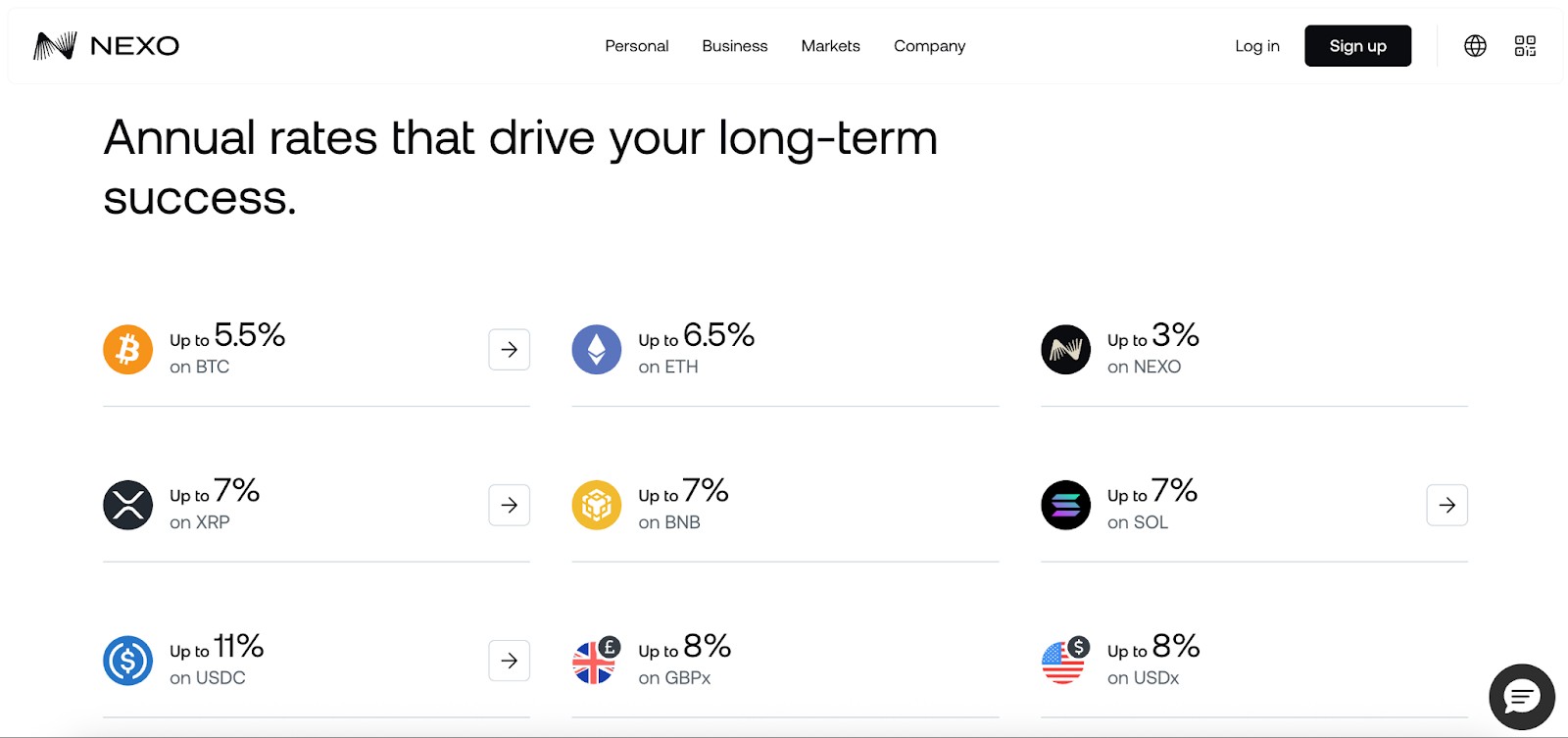
Savings products are the most accessible way to earn interest on stablecoins. Users deposit funds on centralized exchanges, and the platform pays interest for holding those assets. The exchange typically allocates funds internally through lending or liquidity management.
Typical returns: ~2%–11% APY.
Many major exchanges offer simple earn products where stablecoin deposits generate low-to-mid single-digit yields. These are among the most accessible stablecoin income methods. This method suits beginners and users who prefer simplicity and minimal involvement.
Fixed-term deposits
Fixed-term deposits require locking stablecoins for a predefined period, such as 30, 60, or 90 days. In exchange for reduced liquidity, platforms offer higher interest rates.
Typical returns: ~4%–10% APY.
Lock-ups often provide better returns, especially during promotional periods. Returns vary by platform and duration. This option works best for users who plan liquidity in advance and do not need immediate access to funds.

Staking / Yield accounts
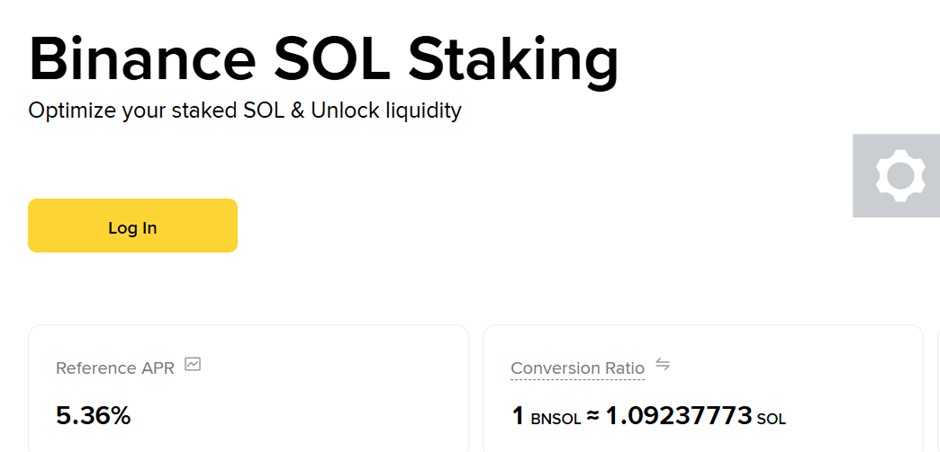
Some platforms and products market stablecoin staking or yield accounts. These work like savings but may include additional rewards or use DeFi mechanisms.
Typical returns: ~2%–10% APY.
CeFi platforms generally offer stable yields on USDC, USDT, or DAI, while DeFi protocols can push yields higher when liquidity demand and incentives align.
Lending
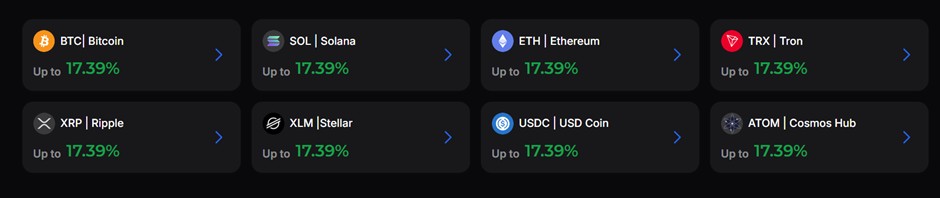
Lending stablecoins means supplying them to borrowers via CeFi or DeFi services. Borrowers pay interest, part of which accrues to you.
Typical returns: ~3%–16% APY.
Lending yields can vary widely. Centralized lending often sits in the lower range, while decentralized protocols sometimes offer higher rates, especially during periods of strong demand.
Farming
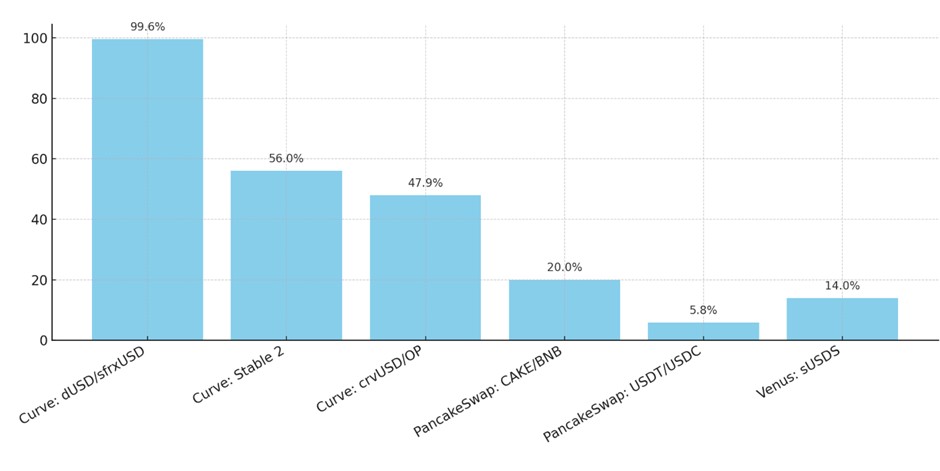
Liquidity farming involves depositing stablecoins into decentralized liquidity pools. You earn a share of trading fees and sometimes additional token incentives.
Typical returns: ~5%–20% APY.
Some pools can reach higher yields, particularly when incentive rewards are included. However, rewards are variable and depend on trading volume, pool composition, and token incentives.
Trading
With stablecoins as the base asset, some traders use arbitrage, rate differences between platforms, or rebalancing strategies to generate income.
Typical returns: Not fixed; depends on strategy.
This is not a passive interest product. Profits stem from execution, timing, and market conditions. There is upside potential but also risk of losses.
Comparison of stablecoin earning methods
The choice of a specific method depends on investment goals, time horizon, and willingness to accept risk. Below is a comparison of the main ways to earn on stablecoins based on yield, risk level, and complexity.
| Method | Potential return, % | Risk level | Suitable for beginners |
|---|---|---|---|
| Savings products | 2–11 | Low | Yes |
| Fixed deposits | 4–10 | Low / Medium | Yes |
| Staking | 2–10 | Medium | Yes |
| Lending | 3–16 | Medium | Mostly yes |
| Farming | 5–20 | High | Mostly no |
| Trading | Not fixed | High | No |
What stablecoin yields depend on
Stablecoin yields are not fixed and do not come from the asset itself. Returns depend on how and where stablecoins are used. Even when holding the same stablecoin, income can vary significantly based on several factors.
Platform and product structure
Centralized platforms usually offer lower but more predictable returns. Decentralized protocols can provide higher yields, but returns change more often and depend on protocol mechanics, incentives, and liquidity conditions.
Lock-up conditions
Products that require locking funds typically offer higher interest. Flexible products allow withdrawals at any time but usually pay less. The trade-off between liquidity and yield is one of the main drivers of stablecoin income.
Market demand for liquidity
Stablecoin yields rise when demand for borrowing or trading increases. During periods of high market activity, platforms can offer higher interest rates. When demand declines, yields usually fall across all methods.
Risk exposure
Higher returns usually come with higher risk. Smart contract exposure, counterparty risk, and protocol reliability all affect how much yield a platform can realistically offer. Stablecoin price stability does not eliminate these risks.
Chosen earning strategy
Passive strategies focus on simplicity and capital preservation. More active strategies require monitoring, adjustments, and deeper understanding, but may deliver higher returns. Yield depends not only on the method, but on how it is used.
Understanding these factors helps explain how much money you can make from stablecoins in practice and why chasing the highest advertised APY often leads to disappointment.
How to choose a stablecoin earning method
Choosing how to earn on stablecoins is not about finding the highest APY. It is about matching the method to your risk tolerance, experience, and time commitment. A realistic approach leads to more stable results over time.
Assess your risk tolerance
Different methods expose users to different risks. Farming and trading involve higher technical and market risks, while savings products, deposits, and basic lending are generally more stable. Understanding how much risk you are willing to accept is the first step.
Consider your level of experience
Decentralized protocols require basic knowledge of wallets, smart contracts, and transaction fees. Users without prior experience usually benefit from starting with centralized platforms, where processes and conditions are simpler and more transparent.
Evaluate time involvement
Some methods require little attention, while others demand active management. Savings products and fixed deposits are mostly passive. Lending and farming may require monitoring. Trading requires constant attention and disciplined execution.
Define your income goal
If your priority is steady, predictable income, conservative methods are more appropriate. If you are willing to accept variability and additional risk for higher potential returns, more active strategies may fit better.
Review control and custody preferences
Centralized platforms manage assets on your behalf, which reduces complexity but introduces counterparty risk. Decentralized solutions offer more control over funds but place responsibility for security entirely on the user.
Account for entry requirements and fees
Minimum deposit amounts, platform fees, and network costs can significantly affect returns, especially with smaller capital. These factors should be evaluated before committing funds.
Making a balanced choice helps investors understand how to invest in stablecoins responsibly and avoid common mistakes driven by short-term yield expectations. This framework also applies to broader ways to make money with crypto, where long-term sustainability depends more on aligning strategy with personal circumstances than on chasing the highest advertised returns.
For many people, earning on stablecoins starts with choosing where those funds will be held and managed. Before using savings products, deposits, or lending options, it is useful to compare crypto exchanges that operate in your region. The exchange suggestions shown alongside this guide give a practical overview of common platforms users rely on to purchase stablecoins. This helps place the earning methods discussed above into a real platform context before committing funds.
| OKX | Coinbase | Crypto.com | Cryptohopper | BTCC | |
|---|---|---|---|---|---|
|
Min. Deposit, $ |
10 | 10 | 1 | No | 10 |
|
Coins Supported |
600+ | 400+ | 400+ | 1000 | 399 |
|
Spot Taker fee, % |
0.1 | 0.5 | 0.5 | 0 | 0.3 |
|
Spot Maker Fee, % |
0.08 | 0.5 | 0.25 | 0 | 0.2 |
|
Alerts |
Yes | Yes | Yes | Yes | No |
|
Copy trading |
Yes | No | No | Yes | Yes |
|
TU overall score |
8.48 | 7.84 | 7.8 | 7.76 | 7.6 |
|
Open an account |
Go to broker Your capital is at risk. |
Go to broker Your capital is at risk. |
Go to broker Your capital is at risk. |
Go to broker Your capital is at risk. |
Go to broker Your capital is at risk.
|
Which stablecoins are suitable for passive income
Not all stablecoins are equally suited for earning income. Liquidity, platform support, transparency, and adoption determine how easily a stablecoin can be used in lending, savings, or DeFi strategies.
Tether (USDT)
USDT is the most widely used stablecoin by volume. Its deep liquidity makes it available across almost all centralized platforms and many DeFi protocols.
USDT is commonly used in:
savings and fixed-term deposits;
lending products;
liquidity pools.
High availability makes USDT convenient, but users should consider issuer and regulatory factors when allocating large amounts.
USD Coin (USDC)
USDC is known for transparency and regular reserve reporting. It is widely supported by exchanges, lending platforms, and DeFi protocols.
USDC is often preferred for:
conservative savings products;
institutional-style lending;
DeFi strategies with lower protocol risk.
It is commonly chosen by users prioritizing stability and compliance.
DAI
DAI is a decentralized stablecoin backed by crypto collateral. It is deeply integrated into DeFi ecosystems and widely used in lending and farming protocols.
DAI is suitable for:
liquidity provision;
users who prefer decentralized issuance.
Its decentralized nature comes with exposure to protocol mechanics and market conditions.
PayPal USD (PYUSD)
PYUSD is issued by PayPal and designed primarily for payments and transfers. Platform support for earning products is still developing.
PYUSD may be used for passive income when:
supported by exchanges or wallets offering yield products;
integrated into payment-based earning programs.
Its use for income depends heavily on platform adoption.
USD1
USD1 is a newer stablecoin backed by custodial infrastructure. While adoption is still limited, interest from larger platforms could expand its earning use cases over time.
At present, USD1 is mainly relevant for:
early platform integrations;
niche earning opportunities.
In practice, users often diversify across several stablecoins to reduce dependency on a single issuer or protocol. Liquidity and platform availability usually matter more for passive income than small differences between stablecoins.
Pros and cons of earning on stablecoins
Earning on stablecoins is often viewed as a calmer alternative to trading volatile cryptocurrencies. Stable value and broad usability make these assets convenient for passive income, but this approach has both strengths and weaknesses.
- Pros
- Cons
Price stability. Pegging to fiat currencies reduces market volatility and simplifies income planning.
Wide use cases. Stablecoins are actively used in lending, farming, and other passive income tools.
Low entry barrier. Many strategies are available without large starting capital and are suitable for beginners.
High liquidity. Popular stablecoins can be easily exchanged or withdrawn on most platforms.
Platform and protocol risks. Income depends on service reliability, and technical failures may lead to fund losses.
Limited returns. Conservative strategies usually offer lower yields compared to higher-risk investments.
Regulatory and centralization risks. Some stablecoins are issued by centralized entities, which may result in restrictions or freezes.
Important! Despite their stable price, stablecoins do not guarantee safety. Risks lie in platforms, regulation, and asset backing. Diversification and understanding the instruments help reduce vulnerability.
Risks and warnings
Even when working with stablecoins, risks do not disappear. Most risks are related to platforms, usage conditions, and external factors rather than price volatility itself.
Main risks include:
changes in interest rates without prior notice;
temporary withdrawal restrictions during high network or platform load;
counterparty risk when using centralized services;
dependence of returns on market activity and liquidity demand;
user errors when managing wallets and transferring funds.
Stablecoin strategies require the same level of discipline as other investment approaches. Ignoring operational and platform risks can lead to losses even when asset prices remain stable.
Important! To reduce risks, diversify funds across different platforms and types of stablecoins, prioritizing trusted protocols with transparent reporting. Store assets in secure wallets and always use two-factor authentication.
Discipline matters more than headline yields

After working with different stablecoin income strategies, I have found that results depend far more on discipline than on yield size. Stablecoins are useful because they remove price swings, but they do not remove risk. Platforms, lock-up terms, and changing market conditions still matter.
In my practice, conservative approaches such as savings products and basic lending delivered the most reliable outcomes. More aggressive strategies only made sense for a small portion of capital and required constant oversight. Stablecoin income should support capital stability and steady growth, not replace sound risk management.
Conclusion
In summary, earning up to 20% APY on stablecoins is an enticing opportunity for crypto investors willing to navigate a landscape of varying risk and return. While straightforward methods like centralized lending platforms may offer 2–10% APY with comparatively lower risk, decentralized platforms and yield farming protocols can provide double-digit returns, albeit with increased exposure to smart contract vulnerabilities or platform insolvencies. For example, protocols like Aave or platforms such as Nexo each have distinct risk profiles and reward structures that must be evaluated carefully. Ultimately, the most powerful takeaway is that diligent research and active risk management are crucial for anyone seeking to maximize stablecoin yields in 2026. The pursuit of high returns is compelling, but smart investors know that sustainable success lies in balancing ambition with caution.
FAQs
What factors most influence the variability of stablecoin APY rates?
Which stablecoin earning methods are generally suitable for beginners?
What risks remain when earning on stablecoins even though their price is stable?
How does locking up stablecoins for a fixed term affect potential returns and liquidity?
Editors' Top Picks and Insights






Related Articles
Team that worked on the article
Viktoras Karapetjanc is a seasoned financial trader, market analyst, and content creator with over 20 years of expertise in Forex, cryptocurrency, and stock markets. As a contributor to the Traders Union website, he provides in-depth analysis, data-driven strategies, and educational content to empower traders of all levels.
Dan Blystone began his trading career in 1998 as an arbitrage clerk on the floor of the Chicago Mercantile Exchange (CME). He later traded bond and Eurex futures at proprietary firms such as Altea Trading, gaining valuable experience in high-frequency trading and risk management.
Chinmay Soni is a financial analyst with more than 5 years of experience in working with stocks, Forex, derivatives, and other assets. As a founder of a boutique research firm and an active researcher, he covers various industries and fields, providing insights backed by statistical data.
An investor is an individual, who invests money in an asset with the expectation that its value would appreciate in the future. The asset can be anything, including a bond, debenture, mutual fund, equity, gold, silver, exchange-traded funds (ETFs), and real-estate property.
A bear market is a period of time in which an investment asset, such as stocks, bonds, or commodities, experiences a decline in price for an extended period of time.
Cryptocurrency is a type of digital or virtual currency that relies on cryptography for security. Unlike traditional currencies issued by governments (fiat currencies), cryptocurrencies operate on decentralized networks, typically based on blockchain technology.
Yield refers to the earnings or income derived from an investment. It mirrors the returns generated by owning assets such as stocks, bonds, or other financial instruments.
Diversification is an investment strategy that involves spreading investments across different asset classes, industries, and geographic regions to reduce overall risk.

-
 Afghanistan
-
 Albania
-
 Algeria
-
 Angola
-
 Argentina
-
 Armenia
-
 Australia
-
 Austria
-
 Azerbaijan
-
 Bahamas
-
 Bahrain
-
 Bangladesh
-
 Belarus
-
 Belgium
-
 Bolivia
-
 Botswana
-
 Brazil
-
 Brunei
-
 Bulgaria
-
 Cambodia
-
 Cameroon
-
 Canada
-
 Chile
Chile
-
 China
China
-
 Colombia
-
 Congo
Congo
-
 Costa Rica
-
 Cote d'Ivoire
-
 Croatia
-
 Cuba
Cuba
-
 Cyprus
-
 Czechia
-
 DR Congo
-
 Denmark
-
 Dominican Republic
-
 Ecuador
-
 Egypt
Egypt
-
 El Salvador
-
 Estonia
-
 Eswatini
-
 Ethiopia
-
 Finland
-
 France
-
 Georgia
-
 Germany
-
 Ghana
Ghana
-
 Greece
-
 Haiti
Haiti
-
 Hong Kong
-
 Hungary
-
 India
India
-
 Indonesia
-
 Iran, Islamic republic
-
 Iraq
Iraq
-
 Ireland
-
 Israel
-
 Italy
Italy
-
 Jamaica
-
 Japan
Japan
-
 Jordan
-
 Kazakhstan
-
 Kenya
Kenya
-
 Korea
Korea
-
 Kuwait
-
 Kyrgyzstan
-
 Laos
Laos
-
 Latvia
-
 Lebanon
-
 Lesotho
-
 Libya
Libya
-
 Lithuania
-
 Luxembourg
-
 Madagascar
-
 Malaysia
-
 Malta
Malta
-
 Mauritius
-
 Mexico
-
 Moldova
-
 Mongolia
-
 Montenegro
-
 Morocco
-
 Mozambique
-
 Myanmar
-
 Namibia
-
 Nepal
Nepal
-
 Netherlands
-
 New Zealand
-
 Nigeria
-
 North Macedonia
-
 Norway
-
 Oman
Oman
-
 Pakistan
-
 Palestine
-
 Panama
-
 Papua New Guinea
-
 Paraguay
-
 Peru
Peru
-
 Philippines
-
 Poland
-
 Portugal
-
 Puerto Rico
-
 Qatar
Qatar
-
 Reunion
-
 Romania
-
 Rwanda
-
 Saudi Arabia
-
 Serbia
-
 Singapore
-
 Slovakia
-
 Slovenia
-
 Somalia
-
 South Africa
-
 Spain
Spain
-
 Sri Lanka
-
 Sweden
-
 Switzerland
-
 Syria
Syria
-
 Taiwan
-
 Tajikistan
-
 Tanzania
-
 Thailand
-
 Trinidad and Tobago
-
 Tunisia
-
 Turkey
-
 UAE
UAE
-
 Uganda
-
 Ukraine
-
 United Kingdom
-
United States
-
 Uruguay
-
 Uzbekistan
-
 Venezuela
-
 Vietnam
-
 Yemen
Yemen
-
 Zambia
-
 Zimbabwe
- Forex
- Crypto












