
Best Stablecoin Wallets In 2026 | Full Guide


Editorial Note: While we adhere to strict Editorial Integrity, this post may contain references to products from our partners. Here's an explanation for How We Make Money. None of the data and information on this webpage constitutes investment advice according to our Disclaimer.
Best stablecoin wallets for safe storage 2026:
Ledger Nano X. Best hardware cold wallet for maximum security and long-term storage.
Trust Wallet. Multi-chain wallet ideal for DeFi, swaps, and everyday stablecoin transfers.
Fireblocks. Enterprise-grade wallet for businesses, payroll, and treasury operations.
Circle Wallet. Regulated wallet with USDC integration, bank accounts, and card support.
Coinbase Wallet. User-friendly regulated wallet with fiat ↔ stablecoin conversion and DeFi access.
Stablecoins are cryptocurrencies pegged to relatively stable assets like the U.S. dollar and no longer a fringe crypto tool. In 2026, they’re central to remittances, business payments, DeFi (decentralized finance), treasury operations, and emerging real-world asset (RWA) tokenization. But adopting stablecoins well depends heavily on which stablecoin wallet you use: its security, cross-app compatibility, payment-features, analytics, regulatory alignment, etc.
Below is a deep-dive into what makes a stablecoin wallet truly excellent in 2026, along with original data, risk-analysis, and a curated list of top stablecoin wallets (with use cases) that stand out by more than just hype.
Risk warning: Cryptocurrency markets are highly volatile, with sharp price swings and regulatory uncertainties. Research indicates that 75-90% of traders face losses. Only invest discretionary funds and consult an experienced financial advisor.
Wallets for remittances stablecoins 2026
Choosing the right stable wallet in 2026 depends on your goals whether you need maximum security, seamless cross-chain payments, or business-grade finance tools. Below is a snapshot of the top wallet types, their best use cases, and trade-offs.
| Wallet type | Examples | Best for | Key strength | Trade-offs |
|---|---|---|---|---|
| Hardware / cold storage | Ledger Nano X, Trezor Model T, Tangem | Long-term holders, large balances | Maximum security, offline key storage | Less convenient for daily use, higher cost |
| Multi-chain wallets | Trust Wallet, Rabby, SafePal | Frequent transfers, DeFi users | Cross-chain swaps, fiat on-ramps, merchant tools | Bridge exploits, higher complexity |
| Business-grade wallets | Fireblocks, Gnosis Safe | Companies, payroll, remittances | Bulk transfers, compliance tools, dashboards | Expensive, stricter KYC/AML |
| Regulated wallets | Circle Wallet, Coinbase Wallet | Everyday spending, bank integration | IBAN, debit cards, fiat ↔ stablecoin conversion | Regional limits, higher fees |
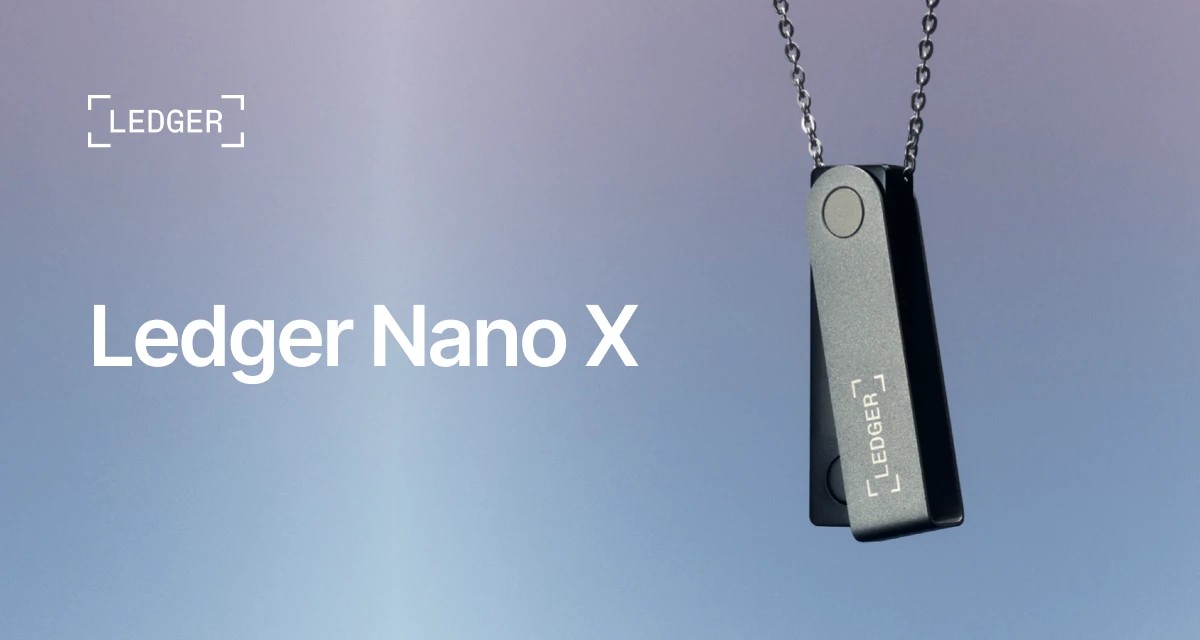
Ledger Nano X
Ledger Nano X is a hardware wallet that stores cryptocurrencies and stablecoins offline. This is one of the best wallets for stablecoin payments. It keeps your private keys completely isolated from the internet. This stablecoin cold wallet supports over a thousand digital assets across multiple blockchains and connects to your phone or computer through Bluetooth or USB. It is one of the safest options for long-term storage of stablecoins.
It works well for anyone who wants to protect their holdings from hacks and scams. Since your keys never leave the device, it prevents online theft. The Ledger Live app makes it easy to manage your portfolio and check balances. For those who hold stablecoins for saving or treasury purposes, this wallet ensures peace of mind.
- Pros
- Cons
highest level of security with offline storage;
one of the best stablecoin wallets with card options;
supports many blockchains and tokens;
easy portfolio tracking through Ledger Live app.
costs more than free mobile wallets;
less convenient for quick daily transfers.
Trust Wallet
Trust Wallet is a free mobile wallet that supports stablecoins across many blockchains. This stablecoin wallet app works on Android and iOS and allows users to send, receive, and swap tokens easily. It connects directly to decentralized apps and DeFi platforms. It is designed for active users who want to manage and move their stablecoins often.
It works because it combines convenience and flexibility in one app. You can hold stablecoins on networks like Ethereum, BNB Chain, Solana, and others. It lets users stake, earn yield, or participate in DeFi without leaving the wallet. For traders or users who transact daily, it offers fast access and smooth performance.
- Pros
- Cons
free and easy to use;
one of the best wallets for stablecoins cross-app compatibility;
works with many blockchains and tokens;
supports NFTs, DeFi, and staking.
less secure than a hardware wallet;
some advanced features need external decentralized exchange links.

Fireblocks
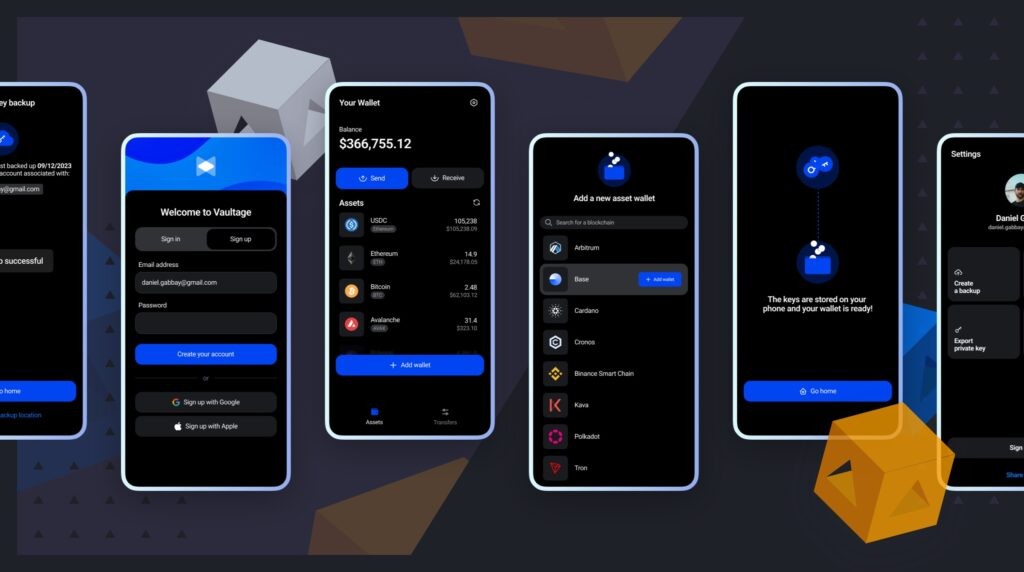
Fireblocks is a professional-grade wallet platform for businesses and institutions. This is one of the best stablecoin wallets for automation, treasury operations, and secure management of stablecoins at scale. It uses advanced multi-party computation to protect private keys and supports large transfers with compliance controls.
It works for companies that manage big stablecoin transactions or payrolls. It combines high-level security, audit logs, and compliance tools. Firms can move funds between exchanges, custodians, and internal accounts quickly. Its automation features save time and reduce operational risk.
- Pros
- Cons
strong institutional security with multi-signature setup;
automated treasury management tools;
full compliance support for large firms.
expensive subscription plans;
complex for individual or small-scale use.
Circle Wallet
Circle Wallet is created by Circle, the company that issues USDC. This is one of the best stablecoin wallets for business use. It allows users to send and receive stablecoin payments easily. The wallet supports bank accounts, debit cards, and regulated financial services in approved regions.
It works because it connects directly to USDC, one of the most transparent and regulated stablecoins. Funds are backed by cash and short-term Treasury assets. This makes it reliable for stablecoin payments, settlements, and conversions. Businesses can use it to pay vendors or receive funds securely.
- Pros
- Cons
direct link with USDC stablecoin;
bank integration for seamless payments;
transparent and compliant structure.
limited regional access for full features;
higher transaction fees than DeFi wallets.

Coinbase Wallet
Coinbase Wallet is a simple self-custody wallet made by Coinbase. It supports stablecoins like USDC and connects easily to the Coinbase exchange. Users can buy, store, and trade assets and also explore decentralized apps. It is designed for beginners who want both safety and flexibility. This is one of the best stablecoin wallets with real-time analytics in 2026.
It works because it blends an easy interface with secure self-custody. The wallet gives full control of private keys while still offering fiat conversion through the Coinbase ecosystem. It supports multiple networks like Ethereum, Base, Polygon, and Avalanche. For retail users who use stablecoins frequently, it is one of the most balanced options.
- Pros
- Cons
very simple to set up and use;
direct link to Coinbase exchange for easy conversions;
supports stablecoins and decentralized apps.
higher network and swap fees;
not as secure as offline hardware storage.

| Wallet | Supported stablecoins | Security level | Analytics & portfolio tracking | Ideal for |
|---|---|---|---|---|
| Ledger Nano X | USDC, USDT, DAI, BUSD, TUSD, PYUSD (via ERC-20/BEP-20) | Very High (offline storage, secure chip) | Basic (Ledger Live portfolio tracker) | Long-term holders, investors valuing maximum security |
| Trust Wallet | 1M+ tokens including USDC, USDT, DAI, FRAX, USDP | Moderate (private keys stored locally, no KYC) | Real-time prices, staking APY, transaction alerts | Everyday DeFi users, mobile traders |
| Fireblocks | Major stablecoins (USDC, USDT, BUSD, DAI, GUSD) | Enterprise-grade (MPC, SOC 2 Type II certified) | Advanced analytics, risk monitoring, API dashboards | Corporations, fintechs, treasury ops |
| Circle Wallet | USDC (native), EURC | High (regulated) with banking-grade encryption | Business-focused reporting and analytics | Businesses, payment providers, compliant DeFi users |
| Coinbase Wallet | USDC, USDT, DAI, PYUSD | High (encrypted keys, Coinbase ecosystem integration) | Real-time data and DeFi integration | Retail users and active traders |
If a wallet is the gateway where you safeguard your stablecoins, an exchange is the bridge that lets you move value in and out of the ecosystem. After setting up a secure stablecoin wallet, the next consideration is finding a trusted exchange in your region to handle purchases, cash-outs, and transfers. Below we highlight exchanges that connect effectively with stablecoin wallets, making everyday transactions simpler and safer.
| OKX | Coinbase | Crypto.com | Cryptohopper | BTCC | |
|---|---|---|---|---|---|
|
Min. Deposit, $ |
10 | 10 | 1 | No | 10 |
|
Coins Supported |
600+ | 400+ | 400+ | 1000 | 399 |
|
Spot Taker fee, % |
0.1 | 0.5 | 0.5 | 0 | 0.3 |
|
Spot Maker Fee, % |
0.08 | 0.5 | 0.25 | 0 | 0.2 |
|
Alerts |
Yes | Yes | Yes | Yes | No |
|
Copy trading |
Yes | No | No | Yes | Yes |
|
TU overall score |
8.48 | 7.84 | 7.8 | 7.76 | 7.6 |
|
Open an account |
Go to broker Your capital is at risk. |
Go to broker Your capital is at risk. |
Go to broker Your capital is at risk. |
Go to broker Your capital is at risk. |
Go to broker Your capital is at risk.
|
What makes a great stablecoin wallet in 2026
A great stablecoin wallet in 2026 must combine security, compliance, usability, and performance. With stablecoins now used for payments, savings, and business operations, wallets are expected to provide more than just storage. They must protect user funds, follow clear regulations, and remain simple to use. Specifically, these are the key aspects to consider:
Security and risk control
The wallet should protect private keys from hackers and phishing attacks.
Smart contracts used for DeFi or yield-earning stablecoins must be audited and free from known bugs.
Hardware or cold wallets are better for storing large amounts safely.
Multi-signature and MPC (multi-party computation) wallets add extra protection for institutions.
Browser wallets should be chosen carefully since many recent studies show they still have exploitable weaknesses.
Regulatory and compliance readiness
Wallets must follow local rules such as KYC, AML, and reserve disclosure laws.
They should provide transparent governance and show regular audits or proof of reserves.
Issuers must be accountable if a stablecoin loses its peg or faces liquidity issues.
Data protection is key, and user information must be stored securely on the device rather than shared with external servers.
Usability and ecosystem integration
Cross-chain compatibility helps users move between networks like Ethereum, BNB Chain, Solana, and Polygon without limits.
Payment support for debit cards, QR codes, and fiat conversions allows smooth daily transactions.
Business wallets should include automation tools such as recurring payments, payroll features, and transaction logs.
Real-time analytics showing balances, transaction history, and network status improve user control.
Performance and cost transparency
Transaction speed matters, especially for cross-border payments or remittances.
Fees should be clearly displayed, including gas costs and swap charges.
The wallet should help users choose the most cost-effective network or route for transfers.
Future-ready features
They should support new asset types such as real-world asset-backed or yield-bearing stablecoins.
Integration with regulatory standards like proof of reserves and licensed custody improves trust. Developers should also focus on next-generation security such as quantum-resistant encryption and enhanced MPC protection.
Risks and limitations
Even the best stablecoin wallets have limitations. Here are some risks and how to mitigate them:
Smart contract / bridge exploits. Bridges between chains often are the weakest link. Use wallets that minimize cross-chain transfers or use well-audited bridges.
Depeg / reserve opacity. If a stablecoin’s reserves are invested in illiquid or volatile assets, there is risk. Always check proof of reserves, audit reports, issuer reputation.
Regulatory risk. In some countries, wallets or stablecoins may face legal restrictions, limits on amounts, or regulation of money transmission. Different jurisdictions treat stablecoins differently.
User error & UX weaknesses. Seed phrase loss, phishing, copy-paste mistakes, malicious browser extensions. Research (WalletProbe) shows many browser wallet extensions have exploitable attack vectors. Using hardware wallets or wallets with strong UX protections helps.
Scalability & fee spikes. On busy networks, gas fees can spike, making some stablecoin transfers expensive. Cross-chain swaps also may involve hidden fees.
Choose by your usage, not feature count

When I first started using stablecoin wallets a few years ago, the experience was fragmented – some wallets were secure but slow, others fast but risky. In 2026, I see that gap closing. The most promising wallets today blend security-grade custody with instant DeFi access, reflecting how stablecoins themselves are evolving from “just digital dollars” into programmable financial tools.
In my experience, the best wallet is not necessarily the one with the most features, but the one that fits your behavior. If you move funds daily, prioritize wallets like Trust Wallet or Coinbase Wallet that give you liquidity and analytics at a glance. But if your goal is capital preservation, Ledger Nano X still leads – I use it to store my long-term USDC holdings because offline security is irreplaceable.
What I find most exciting is the integration of stablecoins with real-world finance. Circle’s ecosystem, for example, already bridges the gap between traditional banking and blockchain. Within the next few years, I expect more wallets to add embedded compliance, yield tracking, and card-linked spending, turning them into full digital cash hubs rather than just crypto storage.
Conclusion
In summary, choosing the right digital wallet for stablecoins in 2026 hinges on prioritizing a blend of robust security and intuitive usability. Platforms such as WalletGuard and StableSave set the current benchmark, offering multi-factor authentication and seamless integration with DeFi services. As regulation evolves and technological standards shift, users should gravitate toward wallets that proactively adapt to legal and technical landscapes. Ultimately, safeguarding your digital assets requires not just powerful tools, but forward-thinking choices—because in the world of stablecoins, security and adaptability are the true currencies of trust.
FAQs
How do different types of stablecoin wallets compare in terms of convenience and use cases?
What role do analytics and portfolio tracking play in stablecoin wallet selection?
How does regulatory compliance affect access and features of stablecoin wallets across regions?
What future-ready features should users look for in stablecoin wallets to remain adaptable?
Editors' Top Picks and Insights





Related Articles
Team that worked on the article
Andrey Mastykin is an experienced author, editor, and content strategist who has been with Traders Union since 2020. As an editor, he is meticulous about fact-checking and ensuring the accuracy of all information published on the Traders Union platform.
Dan Blystone began his trading career in 1998 as an arbitrage clerk on the floor of the Chicago Mercantile Exchange (CME). He later traded bond and Eurex futures at proprietary firms such as Altea Trading, gaining valuable experience in high-frequency trading and risk management.
Chinmay Soni is a financial analyst with more than 5 years of experience in working with stocks, Forex, derivatives, and other assets. As a founder of a boutique research firm and an active researcher, he covers various industries and fields, providing insights backed by statistical data.
CFD is a contract between an investor/trader and seller that demonstrates that the trader will need to pay the price difference between the current value of the asset and its value at the time of contract to the seller.
Bitcoin is a decentralized digital cryptocurrency that was created in 2009 by an anonymous individual or group using the pseudonym Satoshi Nakamoto. It operates on a technology called blockchain, which is a distributed ledger that records all transactions across a network of computers.
An investor is an individual, who invests money in an asset with the expectation that its value would appreciate in the future. The asset can be anything, including a bond, debenture, mutual fund, equity, gold, silver, exchange-traded funds (ETFs), and real-estate property.
Cryptocurrency is a type of digital or virtual currency that relies on cryptography for security. Unlike traditional currencies issued by governments (fiat currencies), cryptocurrencies operate on decentralized networks, typically based on blockchain technology.
Xetra is a German Stock Exchange trading system that the Frankfurt Stock Exchange operates. Deutsche Börse is the parent company of the Frankfurt Stock Exchange.

-
 Afghanistan
-
 Albania
-
 Algeria
-
 Angola
-
 Argentina
-
 Armenia
-
 Australia
-
 Austria
-
 Azerbaijan
-
 Bahamas
-
 Bahrain
-
 Bangladesh
-
 Belarus
-
 Belgium
-
 Bolivia
-
 Botswana
-
 Brazil
-
 Brunei
-
 Bulgaria
-
 Cambodia
-
 Cameroon
-
 Canada
-
 Chile
Chile
-
 China
China
-
 Colombia
-
 Congo
Congo
-
 Costa Rica
-
 Cote d'Ivoire
-
 Croatia
-
 Cuba
Cuba
-
 Cyprus
-
 Czechia
-
 DR Congo
-
 Denmark
-
 Dominican Republic
-
 Ecuador
-
 Egypt
Egypt
-
 El Salvador
-
 Estonia
-
 Eswatini
-
 Ethiopia
-
 Finland
-
 France
-
 Georgia
-
 Germany
-
 Ghana
Ghana
-
 Greece
-
 Haiti
Haiti
-
 Hong Kong
-
 Hungary
-
 India
India
-
 Indonesia
-
 Iran, Islamic republic
-
 Iraq
Iraq
-
 Ireland
-
 Israel
-
 Italy
Italy
-
 Jamaica
-
 Japan
Japan
-
 Jordan
-
 Kazakhstan
-
 Kenya
Kenya
-
 Korea
Korea
-
 Kuwait
-
 Kyrgyzstan
-
 Laos
Laos
-
 Latvia
-
 Lebanon
-
 Lesotho
-
 Libya
Libya
-
 Lithuania
-
 Luxembourg
-
 Madagascar
-
 Malaysia
-
 Malta
Malta
-
 Mauritius
-
 Mexico
-
 Moldova
-
 Mongolia
-
 Montenegro
-
 Morocco
-
 Mozambique
-
 Myanmar
-
 Namibia
-
 Nepal
Nepal
-
 Netherlands
-
 New Zealand
-
 Nigeria
-
 North Macedonia
-
 Norway
-
 Oman
Oman
-
 Pakistan
-
 Palestine
-
 Panama
-
 Papua New Guinea
-
 Paraguay
-
 Peru
Peru
-
 Philippines
-
 Poland
-
 Portugal
-
 Puerto Rico
-
 Qatar
Qatar
-
 Reunion
-
 Romania
-
 Rwanda
-
 Saudi Arabia
-
 Serbia
-
 Singapore
-
 Slovakia
-
 Slovenia
-
 Somalia
-
 South Africa
-
 Spain
Spain
-
 Sri Lanka
-
 Sweden
-
 Switzerland
-
 Syria
Syria
-
 Taiwan
-
 Tajikistan
-
 Tanzania
-
 Thailand
-
 Trinidad and Tobago
-
 Tunisia
-
 Turkey
-
 UAE
UAE
-
 Uganda
-
 Ukraine
-
 United Kingdom
-
United States
-
 Uruguay
-
 Uzbekistan
-
 Venezuela
-
 Vietnam
-
 Yemen
Yemen
-
 Zambia
-
 Zimbabwe
- Forex
- Crypto












