
How To Invest During A Recession



Editorial Note: While we adhere to strict Editorial Integrity, this post may contain references to products from our partners. Here's an explanation for How We Make Money. None of the data and information on this webpage constitutes investment advice according to our Disclaimer.
In 2025, many investors are leaning toward safer options: I-Bonds are paying about 3.98%, short-term U.S. Treasuries yield around 3.8 to 3.9%, and gold has surged 25–32% year-to-date. Utilities have jumped roughly 14%, while consumer defensive stocks are up about 6.7%. A balanced mix of income-generating assets, inflation fighters, and less-volatile stocks is helping people protect their money now while staying ready for a recovery.
Every economic cycle brings signals that serious traders watch closely. As of mid-2025, the yield curve has remained inverted for over 15 months, unemployment is steady around 4.2%, and the Federal Reserve continues to hold its benchmark interest rate at 5.50%. These conditions reflect the central bank’s ongoing attempt to bring down inflation, which currently sits at 3.1% year-over-year. Historically, these indicators have pointed to a potential slowdown, and possibly a recession.
If history is any guide, downturns like the 2008 financial crisis or the 2020 COVID-19 crash triggered panic in the markets, but they also presented unique opportunities. In fact, investing in a recession, when done with a strategy, can often lead to long-term gains while others are sitting on the sidelines.
This guide is designed to walk you through the essentials of investing during a recession, with a focus on practical strategies grounded in real data. We’ll explore how to adjust your asset allocation, manage risk, and understand behavioral patterns during volatile times. Our approach relies on actual market behavior rather than textbook theories, giving U.S. traders actionable insights into where to invest during recession periods with greater confidence.
Risk warning: All investments carry risk, including potential capital loss. Economic fluctuations and market changes affect returns, and 40-50% of investors underperform benchmarks. Diversification helps but does not eliminate risks. Invest wisely and consult professional financial advisors.
What happens to markets in a recession?
Recessions usually mean two straight quarters of GDP decline. In Q1 2025, the U.S. economy shrank by about 0.5 percent annualized, reflecting import surges and dipping government spending. But in Q2, it rebounded with a 3.0 percent annualized gain, so it didn’t hit the official recession threshold. Recessions are often signaled by rising jobless claims, companies cutting earnings forecasts, and weaker retail sales.

When the economy slips, indexes like the S&P 500 and Nasdaq can fall into rough bear-market territory, meaning declines of 20 percent or more. But markets tend to bounce back before the recession officially ends. Looking at past U.S. recessions, people who held on saw median returns of about 3.5 percent during the recession, 20 percent in the year after, and 53 percent over the next three years. And generally, the S&P 500 has delivered a median 38 percent total return in the 12 months after hitting its bottom.
As for volatility, it’s often measured by the VIX. As of August 11 2025, the VIX was around 16.25, a modest uptick, not the 26-plus spike sometimes seen in past downturns. During a slowdown, folks should keep an eye on volatility, since it can hint at when momentum is building and a rebound might begin.
| Timeframe | Average S&P 500 Return | Details |
|---|---|---|
| 6 months before recession start | –1.4% | Market starts pricing in risk early; volatility tends to rise. |
| During the recession (avg 11 months) | +3.5% | Some sectors hold up well; staying invested can pay off. |
| 6 months after recession end | +20% | Recovery gathers pace; cyclicals and tech often lead. |
| 12 months after recession end | +38% | Broad rally as GDP steadies; policy support fuels gains. |
Should you invest during a recession? Yes, but smartly.
Downturns can be goldmines. In March 2020, U.S. markets fell 34%, yet the S&P 500 rebounded 68% by year-end. Buffett’s “be fearful when others are greedy” rang true as fear-driven drops masked huge upside potential.
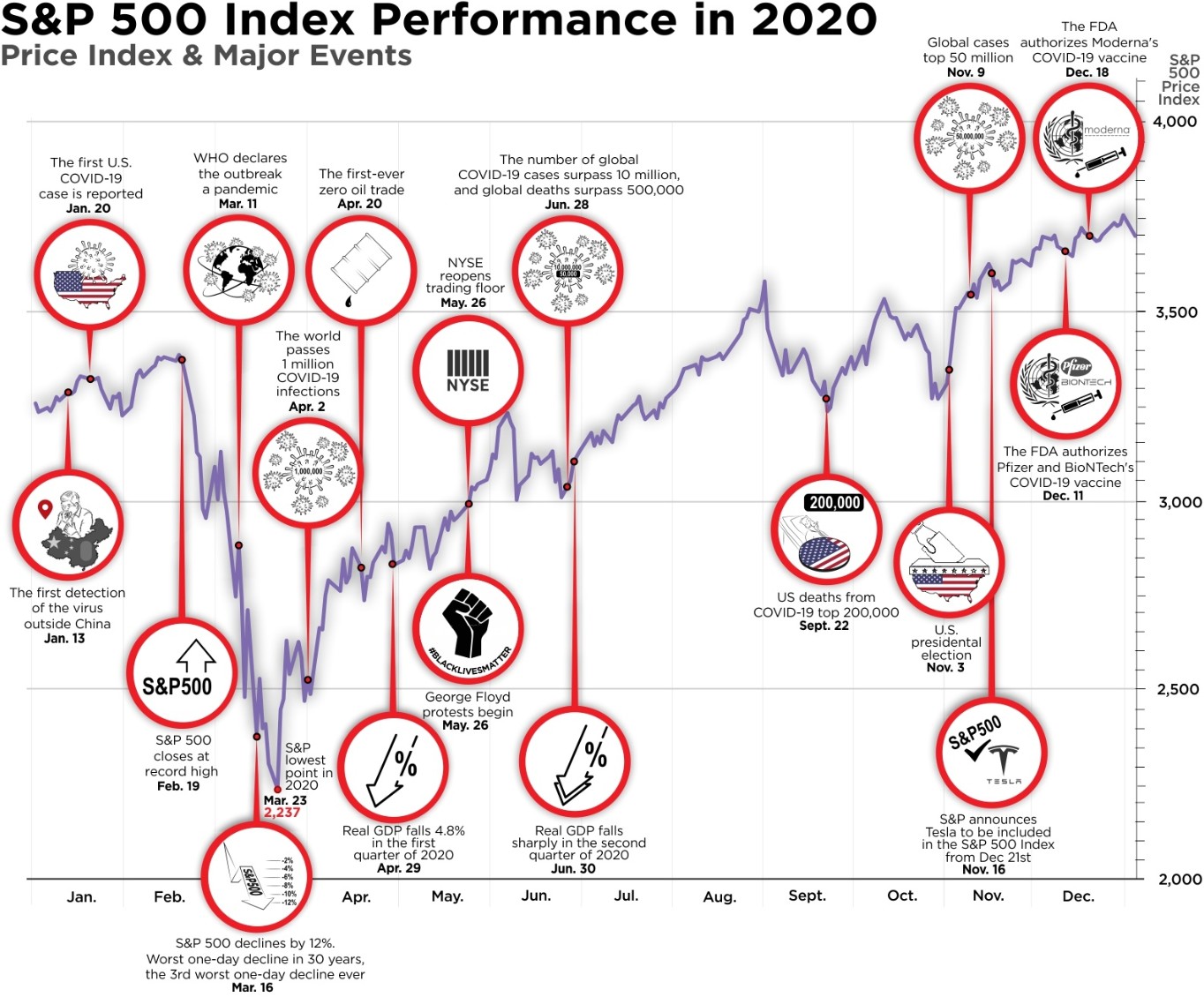
Retail investors often miss rebounds. Data from 967 Indian stocks in mid-2024 showed prices rose after retail investors sold. A 2025 study found they spent just six minutes on research, earning 16.5% vs. the S&P 500’s 25%.
Where to invest during a recession: Strategic asset allocation
Positioning your money with care means putting it where downside is limited and bounce-back is more likely. Here’s how you can think about investing during a recession with fresh, real-world data and the full context:
Defensive stocks
Consumer staples tend to hold their ground during a recession. Covering essentials like food and hygiene products, they delivered positive returns in 62% of months from 2003–2025. In past economic downturn periods (2001, 2008, 2020), they averaged +2.4% while the S&P 500 dropped over 6%. Brands like Procter & Gamble and Coca-Cola kept earnings steady and dividends flowing, making them one of the best investments during recession conditions.
Healthcare weathers downturns and recovers faster. In 2007–2009, the market fell 38.5% but healthcare only dropped 23% and was among the first to rebound. Across the last three U.S. recessions, it averaged +1.2%. Firms like Johnson & Johnson and Pfizer maintained global demand, proving why healthcare is often on the short list of who benefits from a recession.
Utilities offer rock-solid income when the market slides. Providing electricity, water, and gas, they saw small gains in past recessions, often with dividend yields above 3.5%. In early 2025, utilities rose 21% year-over-year while the broader market fell 3%. Companies like Duke Energy and NextEra Energy combine low volatility with steady payouts, answering the question should you invest during a recession with a strong “yes” for income-focused investors.
Dividend-paying stocks
During the 2008 financial crisis, companies with steady dividend payouts outperformed non-dividend payers by roughly 12%. Dividend Aristocrats such as Coca-Cola and Procter & Gamble, along with REITs like Realty Income, continue to attract investors for their consistent cash flow. As of mid-2025, the average yield for this group is between 2.0% and 5.4%.

Precious metals
Gold remains a standout hedge. In Q1 2020, it rose around 14%, while silver gained about 11%. In 2025, gold has been volatile but still up roughly 7% year-to-date as investors react to tariff uncertainty and potential Fed rate cuts. Silver is up about 5% over the same period, benefiting from both industrial demand and its safe-haven role.
U.S. Treasury Bonds & I-Bonds
U.S. Treasury bonds and I-Bonds are still sought-after for capital preservation. I-Bonds peaked at a 9.62% yield in late 2022 and now offer around 4.28% annualized as of July 2025. Short-term Treasuries remain appealing with yields between 4.8% and 5.2% as the Fed maintains elevated rates.
Cash & high-yield savings
Cash and high-yield savings accounts are far from idle assets in this climate. Online banks are offering APYs between 4.75% and 5.0%. Keeping 15–20% in cash has become a tactical move, allowing investors to deploy capital quickly during pullbacks.
Alternative investments
Alternative investments have also held up well. Farmland REITs have delivered 6–8% annualized returns over the last five years with low correlation to public equities. Select cryptocurrencies, including Bitcoin and Ethereum, surged more than 38% in 2023 during the Fed’s rate pause, showing their cyclical potential when used in moderation.
| Asset Class/Sector | Avg Return During Recessions | Volatility/Risk Level | Dividend/Yield | Notable Examples | Strategic Notes |
|---|---|---|---|---|---|
| Consumer Staples | +2.1% | Low (β ≈ 0.58) | 2.4–3.0% | Procter & Gamble (PG), Coca-Cola (KO) | Demand stays steady; pricing power cushions earnings. |
| Healthcare | +1.5% | Low-Medium (β ≈ 0.66) | 1.9–2.6% | Johnson & Johnson (JNJ), Pfizer (PFE) | Less impacted by spending cuts; steady government and insurance payments support revenue. |
| Utilities | +0.4% | Low (β ≈ 0.54) | 3.3–4.1% | Duke Energy (DUK), NextEra Energy (NEE) | Highly regulated; income stability resembles bonds. |
| Dividend-Paying Stocks | +6.4% (avg outperformance) | Medium | 2.1–5.4% | Dividend Aristocrats, Realty Income (O) | Historically outperformed non-dividend stocks by ~11% in 2008. |
| Precious Metals (Gold) | +13.5% (Q1 2020) | Medium | N/A | SPDR Gold Trust (GLD), physical gold | Reliable safe haven; performs well during inflationary shocks. |
| Precious Metals (Silver) | +10.5% (Q1 2020) | Higher than gold | N/A | iShares Silver Trust (SLV) | More volatile; dual role in industry and currency hedge. |
| U.S. Treasury Bonds | +3–5.8% (avg per recession) | Very Low | 4.0–5.4% (short-term) | SHY, VGSH, BIL ETFs | Core holding for capital preservation; benefits when rates fall. |
| I-Bonds (Inflation-linked) | 9.62% (2022 peak), 4.2% (2025) | Very Low | Adjusted biannually | TreasuryDirect | Beats CPI; tax advantages; annual purchase cap of $10K/person. |
| High-Yield Savings/Cash | 4.6–5.0% APY (2025) | Zero market risk | 4.5–5.0% | Marcus, Ally, Capital One | Keeps funds liquid; enables quick reinvestment. |
| Farmland REITs | 6.2–7.9% annualized (5yr avg) | Low correlation to stocks | 2.5–3.4% | Farmland Partners (FPI), LAND | Strong inflation hedge; low volatility alternative. |
| Crypto (BTC, ETH) | +34% in 2023 (rate pause rally) | High volatility | None | Bitcoin (BTC), Ethereum (ETH) | Highly cyclical; best kept under 10% of portfolio. |
Recession-proof investment strategies
Dollar-Cost Averaging (DCA)
Smooths market entry. Spreading investments over time helps avoid committing all your capital at the wrong moment, especially in bear market investing phases when volatility is high.
Example with a $10K portfolio. Instead of investing the full $10K in one go, split it into equal parts over several months, allowing you to buy more when prices dip and fewer when they rise.
Diversification by sector and geography
Avoid single-market risk. A strong diversification strategy reduces exposure to any one economy or industry, making your portfolio more resilient in global downturns.
Use global ETFs. Spreading investments across sectors like technology, energy, and counter-cyclical stocks such as utilities, along with geographic diversification, helps cushion portfolio shocks.
Value investing
Why value shines in recessions. During downturns, high-growth companies often face steep declines, while value stocks with solid fundamentals can outperform. This is where safe haven assets and undervalued businesses attract more capital.
Ratio analysis matters. Looking at P/E and P/B ratios can help spot stocks priced below intrinsic value, a core principle in bear market investing.
Hedging with Inverse ETFs or Options
Shorting strategically. Inverse ETFs like SPDN and SH, or volatility products like VIXY, allow traders to profit or protect against market drops, but must be used with caution.
Options as protection. Buying put options can act as insurance against portfolio losses, especially when Federal Reserve policy signals potential tightening that could pressure equity markets.
Who actually benefits from a recession?
In recessions, certain industries thrive because consumer habits shift. Debt collection agencies benefit as defaults rise, while discount retailers see more foot traffic as households trade down to save money. These sectors are part of defensive sectors that can enhance portfolio resilience during economic stress.
Active traders using volatility (day traders, swing traders)
Periods of heightened market volatility create more price swings, which can be profitable for skilled traders. Day traders and swing traders exploit short-term moves, using strategies like dollar-cost averaging into high-probability setups when prices pull back. The key is disciplined execution, as large swings can cut both ways.
Private equity and venture capital firms buying distressed assets
When valuations fall, private equity and venture capital firms see a window to buy high-quality companies at deep discounts. This can include acquiring real estate, manufacturing plants, or tech firms with strong fundamentals but temporary cash flow issues. Such moves can serve as a form of inflation hedging if assets appreciate during recovery.
Institutional investors with long-term horizons
Pension funds, sovereign wealth funds, and endowments often emerge as winners because they can ride out short-term pain. They deploy large amounts of capital into undervalued assets when others are selling, reinforcing portfolio resilience and capturing outsized returns in the rebound phase. Their size and patience give them a unique edge.
Common mistakes to avoid when investing in a recession
Panic selling. Average investors who sold in March 2020 underperformed those who held by 28%.
Over-concentration. Avoid betting on a single bank or sector.
Ignoring macro trends. Inflation, interest rates, and Federal Reserve policy determine risk appetite.
Overexposure to volatile assets. Avoid >5% allocation to unregulated crypto or penny stocks during drawdowns.
Traders Union insight: Our forecast and recession portfolio framework
TU Trader Sentiment Index shows bearish bias weakening among retail traders by 12% MoM, with institutional flows shifting into healthcare and fixed income.
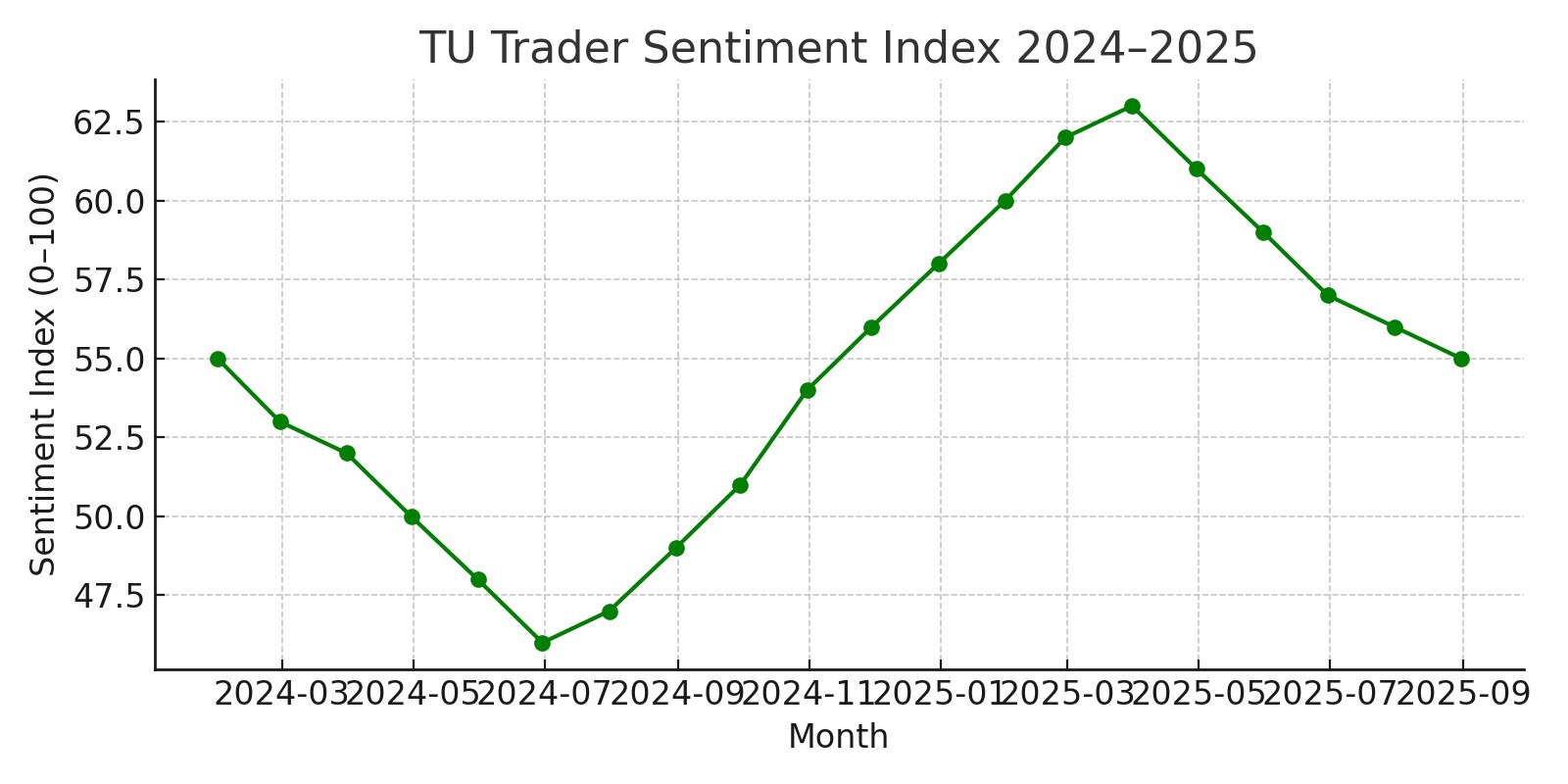
Monitor Federal Reserve policy shifts, CPI prints, and earnings sentiment to guide tactical rebalancing. Join Traders Union to access our exclusive recession-resilient trading tools.
| Asset Class | Weight | Notes |
|---|---|---|
| Equities (Defensive + Dividend) | 40% | Focus on low-beta, high-cash flow stocks |
| Treasury Bonds/I-Bonds | 30% | Laddered duration for interest rate risk |
| Gold/Silver | 20% | Inflation hedge and weak-dollar exposure |
| High-Yield Cash | 10% | Optionality & short-term opportunity fund |
Distressed asset funds and local monopolies can thrive in a 2025 recession

In this recession shaped by stubborn inflation and major shifts in tech-driven employment, forget waiting for a market rebound. A smarter play is looking at distressed asset funds, especially ones focused on small real estate or infrastructure projects in places like Southeast Asia or smaller Indian cities. These funds often grab valuable assets from struggling firms at deep discounts, long before big institutions notice. If you're a retail investor and you explore platforms like SmartOwner or Credavenue, with the right guidance, you could get in on solid opportunities before the rest of the market even catches on.
Recessions also make room for local businesses to become dominant. When others shut down, companies that serve a specific area, like a delivery firm or a wholesale supplier, can end up controlling their market. Instead of buying shares in large listed companies, explore venture debt or crowdfunding platforms that back these small firms while they're still growing. You're not just putting money into a company, you're supporting something built to survive hard times. That kind of investment often pays off better than sitting on cash or chasing gold.
Conclusion
Learning how to invest during a recession requires a blend of data, patience, and tactical adaptation. The economy is cyclical, but the disciplined investor wins the cycle.
Bookmark this page, realign your portfolio using TU’s strategic framework, and stay informed with our ongoing macro updates.
FAQs
What should I avoid doing with my emergency fund during a recession?
Don’t lock it into long-term or volatile assets. Your emergency fund should remain liquid, ideally in a high-yield savings account or money market fund, so you can access it quickly without worrying about market dips. It’s not meant for risk or returns, just stability.
How do interest rate changes impact bond prices during a recession?
When interest rates fall (which often happens during recessions), existing bond prices usually go up, especially long-term ones. That’s because older bonds with higher yields become more attractive compared to new ones. It’s one reason bonds can balance a falling stock market.
Can investing in recession-hit regions or sectors be smart?
Yes, if done carefully. Some regions or sectors hit hardest in early downturns often bounce back sharply. Look for strong balance sheets, low debt, and essential services. Think of it as “value hunting” in temporarily broken but not doomed areas.
Is now a good time to rebalance my portfolio?
Absolutely. Recessions often distort your original allocation due to price swings. Rebalancing helps lock in gains from outperformers (like gold or utilities) and allows you to buy undervalued assets at lower prices, keeping your risk profile in check.
Editors' Top Picks and Insights

Global fintech in 2026: Three trends that matter

From Jesus Christ to aliens: Polymarket's most absurd prediction markets

Hunting crypto owners: Why criminals have gone offline

BitMEX is shutting down: Why Trump could not save the exchange

Do governments need crypto workers?

Brent nears $100: Why oil prices are rising
Related Articles
Team that worked on the article
Viktoras Karapetjanc is a seasoned financial trader, market analyst, and content creator with over 20 years of expertise in Forex, cryptocurrency, and stock markets. As a contributor to the Traders Union website, he provides in-depth analysis, data-driven strategies, and educational content to empower traders of all levels.
Andreas Kristo Saragih is a seasoned equity research analyst with over a decade of experience across both buy-side and sell-side roles, focused on the Indonesian capital market. He has extensive sector coverage, including banking, consumer goods, retail, real estate, healthcare, transportation, poultry, cement, pharmaceuticals, construction, and infrastructure.
Chinmay Soni is a financial analyst with more than 5 years of experience in working with stocks, Forex, derivatives, and other assets. As a founder of a boutique research firm and an active researcher, he covers various industries and fields, providing insights backed by statistical data.
Diversification is an investment strategy that involves spreading investments across different asset classes, industries, and geographic regions to reduce overall risk.
A day trader is an individual who engages in buying and selling financial assets within the same trading day, seeking to profit from short-term price movements.
Index in trading is the measure of the performance of a group of stocks, which can include the assets and securities in it.
CFD is a contract between an investor/trader and seller that demonstrates that the trader will need to pay the price difference between the current value of the asset and its value at the time of contract to the seller.
Ethereum is a decentralized blockchain platform and cryptocurrency that was proposed by Vitalik Buterin in late 2013 and development began in early 2014. It was designed as a versatile platform for creating decentralized applications (DApps) and smart contracts.

-
 Afghanistan
-
 Albania
-
 Algeria
-
 Angola
-
 Argentina
-
 Armenia
-
 Australia
-
 Austria
-
 Azerbaijan
-
 Bahamas
-
 Bahrain
-
 Bangladesh
-
 Belarus
-
 Belgium
-
 Bolivia
-
 Botswana
-
 Brazil
-
 Brunei
-
 Bulgaria
-
 Cambodia
-
 Cameroon
-
 Canada
-
 Chile
Chile
-
 China
China
-
 Colombia
-
 Congo
Congo
-
 Costa Rica
-
 Cote d'Ivoire
-
 Croatia
-
 Cuba
Cuba
-
 Cyprus
-
 Czechia
-
 DR Congo
-
 Denmark
-
 Dominican Republic
-
 Ecuador
-
 Egypt
Egypt
-
 El Salvador
-
 Estonia
-
 Eswatini
-
 Ethiopia
-
 Finland
-
 France
-
 Georgia
-
 Germany
-
 Ghana
Ghana
-
 Greece
-
 Haiti
Haiti
-
 Hong Kong
-
 Hungary
-
 India
India
-
 Indonesia
-
 Iran, Islamic republic
-
 Iraq
Iraq
-
 Ireland
-
 Israel
-
 Italy
Italy
-
 Jamaica
-
 Japan
Japan
-
 Jordan
-
 Kazakhstan
-
 Kenya
Kenya
-
 Korea
Korea
-
 Kuwait
-
 Kyrgyzstan
-
 Laos
Laos
-
 Latvia
-
 Lebanon
-
 Lesotho
-
 Libya
Libya
-
 Lithuania
-
 Luxembourg
-
 Madagascar
-
 Malaysia
-
 Malta
Malta
-
 Mauritius
-
 Mexico
-
 Moldova
-
 Mongolia
-
 Montenegro
-
 Morocco
-
 Mozambique
-
 Myanmar
-
 Namibia
-
 Nepal
Nepal
-
 Netherlands
-
 New Zealand
-
 Nigeria
-
 North Macedonia
-
 Norway
-
 Oman
Oman
-
 Pakistan
-
 Palestine
-
 Panama
-
 Papua New Guinea
-
 Paraguay
-
 Peru
Peru
-
 Philippines
-
 Poland
-
 Portugal
-
 Puerto Rico
-
 Qatar
Qatar
-
 Reunion
-
 Romania
-
 Rwanda
-
 Saudi Arabia
-
 Serbia
-
 Singapore
-
 Slovakia
-
 Slovenia
-
 Somalia
-
 South Africa
-
 Spain
Spain
-
 Sri Lanka
-
 Sweden
-
 Switzerland
-
 Syria
Syria
-
 Taiwan
-
 Tajikistan
-
 Tanzania
-
 Thailand
-
 Trinidad and Tobago
-
 Tunisia
-
 Turkey
-
 UAE
UAE
-
 Uganda
-
 Ukraine
-
 United Kingdom
-
United States
-
 Uruguay
-
 Uzbekistan
-
 Venezuela
-
 Vietnam
-
 Yemen
Yemen
-
 Zambia
-
 Zimbabwe
- Forex
- Crypto












