
Which Sectors Lead The Market After A Recession



Editorial Note: While we adhere to strict Editorial Integrity, this post may contain references to products from our partners. Here's an explanation for How We Make Money. None of the data and information on this webpage constitutes investment advice according to our Disclaimer.
Sectors that recover first after a recession include consumer discretionary, technology, industrials, and basic materials. These industries benefit as consumer confidence returns, businesses reinvest, and economic activity picks up. While defensive sectors like healthcare and utilities stay stable during downturns, the biggest post-recession gains often come from cyclical sectors that were hardest hit. Spotting early signs of hiring, capital spending, and rising demand in these areas can help investors get ahead of the market rebound.
Every recession resets the playing field, and not all sectors bounce back the same way. While many investors stick to the usual safe bets like utilities or consumer staples, the strongest gains often come from the areas that were hit the hardest. The real edge lies in recognizing early signs of a turnaround — spotting where capital is quietly moving before it becomes headline news. In this article, we’ll explore how different sectors perform during recessions and recoveries, which industries tend to lead the rebound, and how to position your portfolio to stay ahead of the market as the economy starts to recover.
Risk warning: All investments carry risk, including potential capital loss. Economic fluctuations and market changes affect returns, and 40-50% of investors underperform benchmarks. Diversification helps but does not eliminate risks. Invest wisely and consult professional financial advisors.
Understanding economic cycles
The economy doesn’t grow in a straight line — it moves in cycles. These ups and downs affect everything from how much people spend to how well businesses perform. By understanding the different phases of the economic cycle, you can make smarter financial and investment decisions.
Phases of the economic cycle

The economy typically goes through five stages: expansion, peak, recession, trough, and recovery. Each one has its own signals and effects on the market.
1. Expansion
This is when the economy is growing steadily. People are spending more, businesses are hiring, and confidence is high.
Jobs are being created, and incomes rise.
Companies report strong earnings, and stocks usually perform well.
Interest rates stay low, making it easier to borrow and invest.
2. Peak
At the peak, growth starts to slow down. The economy has been doing well, but signs of strain begin to show.
Prices and inflation may rise.
The central bank might start raising interest rates to cool things off.
Markets can become shaky as investors anticipate a downturn.
3. Recession
This is the tough phase. The economy shrinks, businesses cut back, and jobs are lost.
Spending drops, and many companies see lower profits.
Central banks usually cut rates to try to boost the economy.
Investors often shift to safer stocks like utilities and healthcare.
4. Trough
This is the bottom of the cycle. It’s when things feel the slowest, but it’s also when the worst is likely behind.
The economy is still weak, but stabilizing.
Some investors start looking for opportunities, expecting a turnaround.
Businesses begin preparing for growth again.
5. Recovery
The economy begins to bounce back. People start spending again, companies rehire, and optimism returns.
GDP turns positive, and unemployment begins to fall.
Businesses invest in growth, and consumers gain confidence.
Stocks usually rise, especially in cyclical sectors like tech and retail.
The table below summarizes the phases of economic cycles
| Phase | Description | Key Economic Indicators | Investor Behavior |
|---|---|---|---|
| Expansion | Steady economic growth, strong consumer and business activity | Job creation, rising incomes, strong corporate earnings, low interest rates | Stocks perform well, increased investment due to borrowing ease |
| Peak | Growth slows after a strong run, early signs of economic strain appear | Rising prices and inflation, interest rate hikes by central bank | Markets become volatile as investors anticipate a downturn |
| Recession | Economic contraction, decline in spending and business activity | Job losses, lower profits, reduced consumer spending, rate cuts by central banks | Investors move toward defensive sectors like utilities and healthcare |
| Trough | Lowest point in the cycle, but signs of stability begin to emerge | Weak but steady conditions, early signs of recovery | Savvy investors start positioning for a rebound |
| Recovery | Economic activity picks up, optimism and consumer confidence return | Positive GDP growth, falling unemployment, increased business investment | Stocks rise, especially in cyclical sectors like technology and retail |
Classification of sectors: Defensive vs. cyclical
When building a smart investment portfolio, understanding how different sectors respond to economic conditions is key. Broadly, industries can be classified into two categories: defensive and cyclical sectors. While defensive sectors provide stability during economic downturns, cyclical sectors offer higher growth potential during periods of expansion. Knowing how to balance these can help you make wiser investment choices across market cycles.

Defensive sectors
Defensive sectors include companies that sell products and services people can’t live without, like food, electricity, or medical care. Whether the economy is booming or shrinking, people still need these things — so these sectors are more stable.
What makes a sector defensive
People keep buying no matter what – even in tough times, families still need groceries, medication, and power.
Stock prices are more stable – these sectors tend to hold up better when the market drops.
Good for income-focused investors – many of these companies pay regular dividends, which helps generate steady returns.
Examples of defensive sectors
Healthcare – from hospitals to pharmaceuticals, this sector stays strong. Think: Johnson & Johnson.
Utilities – companies providing electricity, gas, and water—like Duke Energy.
Consumer Staples – Everyday items like toothpaste, soap, and snacks. Example: Procter & Gamble.
Telecom – phones and internet are basic needs now. Example: Verizon.
Cyclical sectors
Cyclical sectors thrive during periods of economic growth but often decline when the economy contracts. These sectors are tied closely to consumer and business confidence, and their earnings tend to fluctuate with the economic cycle.
What makes a sector cyclical
Heavily tied to the economy – When people and businesses spend more, these industries grow.
More ups and downs – These stocks can rise fast in recoveries, but drop quickly in downturns.
Often need more financing – Cyclical companies may borrow heavily to fund growth, which becomes harder when interest rates rise.
Examples of cyclical sectors
Technology – Consumers and businesses buy new tech when confidence is high. Think: Apple.
Industrials – From construction to manufacturing. Example: Caterpillar.
Consumer Discretionary – Non-essentials like fashion and travel. Example: Nike.
Financials – Banks and lenders that depend on credit activity. Example: JPMorgan.
Energy – Oil and gas demand tends to rise when the economy is strong. Example: ExxonMobil.
Performance of defensive sectors during recessions
When the economy hits a rough patch, some sectors hold up better than others. Defensive industries offer the products and services people rely on every day, so they don’t see the same kind of dramatic drop in demand that others do. That’s why many investors shift their focus to these sectors during a recession—they’re simply more stable.
Consumer staples
No matter how bad things get economically, people still buy groceries, cleaning supplies, and toothpaste. That’s what makes the consumer staples sector so resilient during downturns.
Companies in this space see steady sales, even when people are cutting back.
Stocks in this sector don’t usually swing wildly, which helps protect portfolios.
Big names like Procter & Gamble and Coca-Cola are known for being reliable dividend payers.

Utilities
Electricity, water, and gas are things households and businesses simply can’t go without — even in a recession. That keeps utility companies in business, no matter what.
People keep using these services, recession or not.
Government regulation often keeps revenues predictable and stable.
Investors like utilities because of their regular dividend payouts and relatively low price volatility.
Healthcare
Health is a constant need. From doctor visits to prescriptions, people continue using healthcare services whether the economy is strong or struggling.
Demand stays steady, so revenues remain solid.
The sector includes a wide range of companies, from hospitals to drugmakers.
Many firms in this space also invest heavily in research, which keeps growth going even when other sectors stall.
Performance of cyclical sectors during recessions
When the economy takes a turn for the worse, cyclical sectors are often the first to feel the impact. These industries rely on consumer spending, business investment, and borrowing — all of which tend to shrink in a downturn. As a result, many companies in these sectors see falling sales, tighter margins, and dropping stock prices.
Consumer discretionary
This sector includes the things people enjoy but don’t absolutely need — think clothes, vacations, electronics, and eating out. When budgets tighten, these are the first things consumers cut.
Sales drop fast, especially for big-ticket items like cars or luxury goods.
Companies like restaurants, retailers, and airlines tend to struggle with lower demand.
Stocks in this space can be highly volatile, falling fast during recessions.
Industrials
When businesses are cautious, they hold off on building factories, ordering equipment, or launching new projects. That’s why industrials — like construction, transportation, and manufacturing — often face major slowdowns in a recession.
Demand for machinery, tools, and construction services takes a hit.
Large-scale projects are often delayed or canceled, which hurts revenue and job growth.
These companies usually don’t recover until the economy starts picking up again.
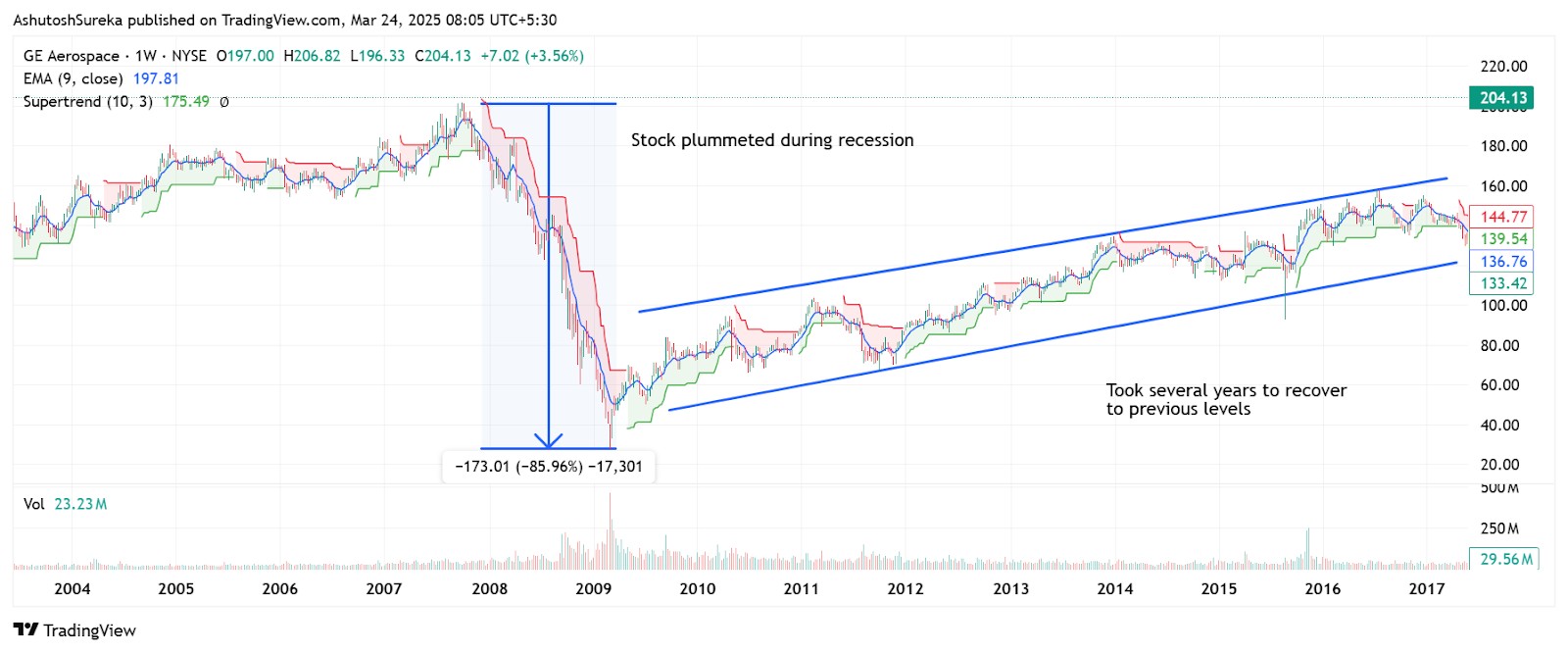
Financials
Banks and other financial firms depend on a healthy flow of borrowing, investing, and saving. But during a recession, fewer people and businesses take out loans, and defaults can rise.
Loan activity slows, and banks may tighten their standards.
Lower interest rates make it harder for banks to earn profits on lending.
Investment firms, asset managers, and insurers can also feel the effects of market uncertainty and reduced cash flow.
Historical case studies
History doesn’t repeat itself exactly — but it often rhymes. Looking back at major economic downturns like the 2008 financial crisis and the COVID-19 pandemic can help us understand how different sectors behave when the economy crashes — and how they bounce back.
2008 financial crisis

The 2008 crisis started in the housing market but quickly spread across the globe. Banks collapsed, markets tanked, and panic set in. Some sectors were hit hard, while others held steady.
During the downturn
Banks and real estate stocks plummeted as the credit system froze.
Retailers, automakers, and construction companies struggled as spending and investment dried up.
Oil prices dropped, and energy stocks followed.
During the recovery
Tech stocks bounced back with strong gains as businesses adapted to new digital tools.
Consumer discretionary led the way once confidence returned.
Defensive sectors like healthcare and consumer staples helped protect portfolios through the worst and continued to grow slowly.
Financials took years to fully recover, weighed down by regulations and lingering risks.
COVID-19 pandemic

In early 2020, the global economy hit the brakes almost overnight. Businesses shut down, people stayed home, and uncertainty spiked. But the recovery came fast — and not every sector followed the same path.
At the start of the crisis
Airlines, hotels, and retailers were devastated. With people stuck indoors, demand for travel and in-person shopping collapsed.
Factories slowed down, hitting industrials hard.
Energy demand fell, dragging oil prices to historic lows.
In the recovery
Tech companies soared, thanks to remote work, e-commerce, and digital services.
Healthcare stayed in demand, with vaccine makers and medical suppliers leading the way.
Industrials and energy recovered more slowly, improving as lockdowns lifted and infrastructure spending increased.
Consumer staples stayed stable, providing reliability when other sectors were shaky.
Spotting sector rebounds before everyone else

A common mistake new investors make is thinking the safest sectors during a recession are also the best places to be afterward. That’s rarely true. Sectors like utilities or healthcare might stay steady during a downturn, but they don’t usually lead when things turn around.
The biggest gains often come from the areas that were hit the hardest — like consumer goods, industrials, or basic materials. It’s less about who survived the recession and more about who’s positioned to grow the fastest when spending picks back up. Auto stocks, for example, can go from ignored to explosive once demand returns — even before the recovery shows up in the official numbers.
Another thing to keep an eye on is how companies start spending again. When a sector cuts back hard during a downturn but starts talking about hiring, rebuilding supply chains, or launching new projects, that’s a big clue something’s changing. These small signs usually show up in earnings calls before they show up in the data.
Most people wait for confirmation in the headlines, but by then, the biggest gains are already gone. Spotting early signs of life in beaten-down sectors can help you get in before everyone else wakes up to the shift.
Conclusion
In a downturn, the real opportunity isn’t just about protecting your portfolio — it’s about figuring out where the rebound will start. The sectors that look the worst during the crash often turn out to be the strongest performers when things begin to turn around. If you’re paying attention to where companies are reinvesting, where leadership starts sounding more confident, and where money quietly starts moving in before the headlines catch up, you’ll be ahead of the crowd. Recessions don’t just hurt — they clear the field. And that’s exactly when sharp investors find their edge.
FAQs
How soon after a recession should investors rotate into cyclical sectors?
Timing sector rotation can be tricky, but many savvy investors begin shifting into cyclical sectors just before clear signs of recovery appear — such as rising manufacturing activity, improving job numbers, or optimistic corporate guidance. Waiting for official confirmation often means missing the early upside.
Are sector ETFs a good way to invest during recovery?
Yes, sector-specific ETFs can be an efficient way to gain exposure to industries likely to rebound. For example, investors expecting a post-recession surge might consider ETFs focused on industrials, consumer discretionary, or technology to capture broader sector growth.
Do all recessions impact sectors the same way?
Not necessarily. The impact on sectors often depends on the cause of the recession. For instance, the 2008 financial crisis hit financials hardest, while the COVID-19 pandemic devastated travel and hospitality. Sector rotation strategies should factor in the unique drivers of each downturn.
What role does government policy play in sector recovery?
Government actions — like stimulus packages, interest rate cuts, or infrastructure spending — can strongly influence which sectors bounce back first. For example, construction and industrial sectors often benefit from public investment, while tech may respond better to tax incentives or digital transformation policies.
Editors' Top Picks and Insights

Global fintech in 2026: Three trends that matter

From Jesus Christ to aliens: Polymarket's most absurd prediction markets

Hunting crypto owners: Why criminals have gone offline

BitMEX is shutting down: Why Trump could not save the exchange

Do governments need crypto workers?

Brent nears $100: Why oil prices are rising
Related Articles
Team that worked on the article
Parshwa is a content expert and finance professional possessing deep knowledge of stock and options trading, technical and fundamental analysis, and equity research. As a Chartered Accountant Finalist, Parshwa also has expertise in Forex, crypto trading, and personal taxation.
Chinmay Soni is a financial analyst with more than 5 years of experience in working with stocks, Forex, derivatives, and other assets. As a founder of a boutique research firm and an active researcher, he covers various industries and fields, providing insights backed by statistical data.
Mirjan Hipolito is a journalist and news editor at Traders Union. She is an expert crypto writer with five years of experience in the financial markets.
Index in trading is the measure of the performance of a group of stocks, which can include the assets and securities in it.
Options trading is a financial derivative strategy that involves the buying and selling of options contracts, which give traders the right (but not the obligation) to buy or sell an underlying asset at a specified price, known as the strike price, before or on a predetermined expiration date. There are two main types of options: call options, which allow the holder to buy the underlying asset, and put options, which allow the holder to sell the underlying asset.
Volatility refers to the degree of variation or fluctuation in the price or value of a financial asset, such as stocks, bonds, or cryptocurrencies, over a period of time. Higher volatility indicates that an asset's price is experiencing more significant and rapid price swings, while lower volatility suggests relatively stable and gradual price movements.
Cryptocurrency is a type of digital or virtual currency that relies on cryptography for security. Unlike traditional currencies issued by governments (fiat currencies), cryptocurrencies operate on decentralized networks, typically based on blockchain technology.
Fundamental analysis is a method or tool that investors use that seeks to determine the intrinsic value of a security by examining economic and financial factors. It considers macroeconomic factors such as the state of the economy and industry conditions.

-
 Afghanistan
-
 Albania
-
 Algeria
-
 Angola
-
 Argentina
-
 Armenia
-
 Australia
-
 Austria
-
 Azerbaijan
-
 Bahamas
-
 Bahrain
-
 Bangladesh
-
 Belarus
-
 Belgium
-
 Bolivia
-
 Botswana
-
 Brazil
-
 Brunei
-
 Bulgaria
-
 Cambodia
-
 Cameroon
-
 Canada
-
 Chile
Chile
-
 China
China
-
 Colombia
-
 Congo
Congo
-
 Costa Rica
-
 Cote d'Ivoire
-
 Croatia
-
 Cuba
Cuba
-
 Cyprus
-
 Czechia
-
 DR Congo
-
 Denmark
-
 Dominican Republic
-
 Ecuador
-
 Egypt
Egypt
-
 El Salvador
-
 Estonia
-
 Eswatini
-
 Ethiopia
-
 Finland
-
 France
-
 Georgia
-
 Germany
-
 Ghana
Ghana
-
 Greece
-
 Haiti
Haiti
-
 Hong Kong
-
 Hungary
-
 India
India
-
 Indonesia
-
 Iran, Islamic republic
-
 Iraq
Iraq
-
 Ireland
-
 Israel
-
 Italy
Italy
-
 Jamaica
-
 Japan
Japan
-
 Jordan
-
 Kazakhstan
-
 Kenya
Kenya
-
 Korea
Korea
-
 Kuwait
-
 Kyrgyzstan
-
 Laos
Laos
-
 Latvia
-
 Lebanon
-
 Lesotho
-
 Libya
Libya
-
 Lithuania
-
 Luxembourg
-
 Madagascar
-
 Malaysia
-
 Malta
Malta
-
 Mauritius
-
 Mexico
-
 Moldova
-
 Mongolia
-
 Montenegro
-
 Morocco
-
 Mozambique
-
 Myanmar
-
 Namibia
-
 Nepal
Nepal
-
 Netherlands
-
 New Zealand
-
 Nigeria
-
 North Macedonia
-
 Norway
-
 Oman
Oman
-
 Pakistan
-
 Palestine
-
 Panama
-
 Papua New Guinea
-
 Paraguay
-
 Peru
Peru
-
 Philippines
-
 Poland
-
 Portugal
-
 Puerto Rico
-
 Qatar
Qatar
-
 Reunion
-
 Romania
-
 Rwanda
-
 Saudi Arabia
-
 Serbia
-
 Singapore
-
 Slovakia
-
 Slovenia
-
 Somalia
-
 South Africa
-
 Spain
Spain
-
 Sri Lanka
-
 Sweden
-
 Switzerland
-
 Syria
Syria
-
 Taiwan
-
 Tajikistan
-
 Tanzania
-
 Thailand
-
 Trinidad and Tobago
-
 Tunisia
-
 Turkey
-
 UAE
UAE
-
 Uganda
-
 Ukraine
-
 United Kingdom
-
United States
-
 Uruguay
-
 Uzbekistan
-
 Venezuela
-
 Vietnam
-
 Yemen
Yemen
-
 Zambia
-
 Zimbabwe
- Forex
- Crypto












