
Are Binary Options Real?


Editorial Note: While we adhere to strict Editorial Integrity, this post may contain references to products from our partners. Here's an explanation for How We Make Money. None of the data and information on this webpage constitutes investment advice according to our Disclaimer.
Binary options are real but come with high risks and regulatory concerns. Here are key facts:
Legitimate but highly risky. Simple yes/no trades with fixed returns.
Often unregulated. Many platforms lack proper oversight.
High fraud potential. Scams and misleading claims are common.
Limited trading strategies. No room for stop-loss or hedging.
Banned in some countries. Restrictions exist due to risks.
Binary options trading has gained attention as a straightforward way to invest, but its high-risk nature and association with scams leave many questioning its legitimacy.
By understanding how binary options work and the regulations surrounding them, traders can make informed decisions and avoid falling prey to fraudulent schemes. This guide will help you explore what binary options are and how to determine their authenticity.
Risk warning: Binary options trading is highly risky and may result in a total loss of funds. These speculative instruments often lack strong regulation, with over 80% of traders losing their capital. Invest only what you can afford to lose and seek professional advice.
Are binary options real?
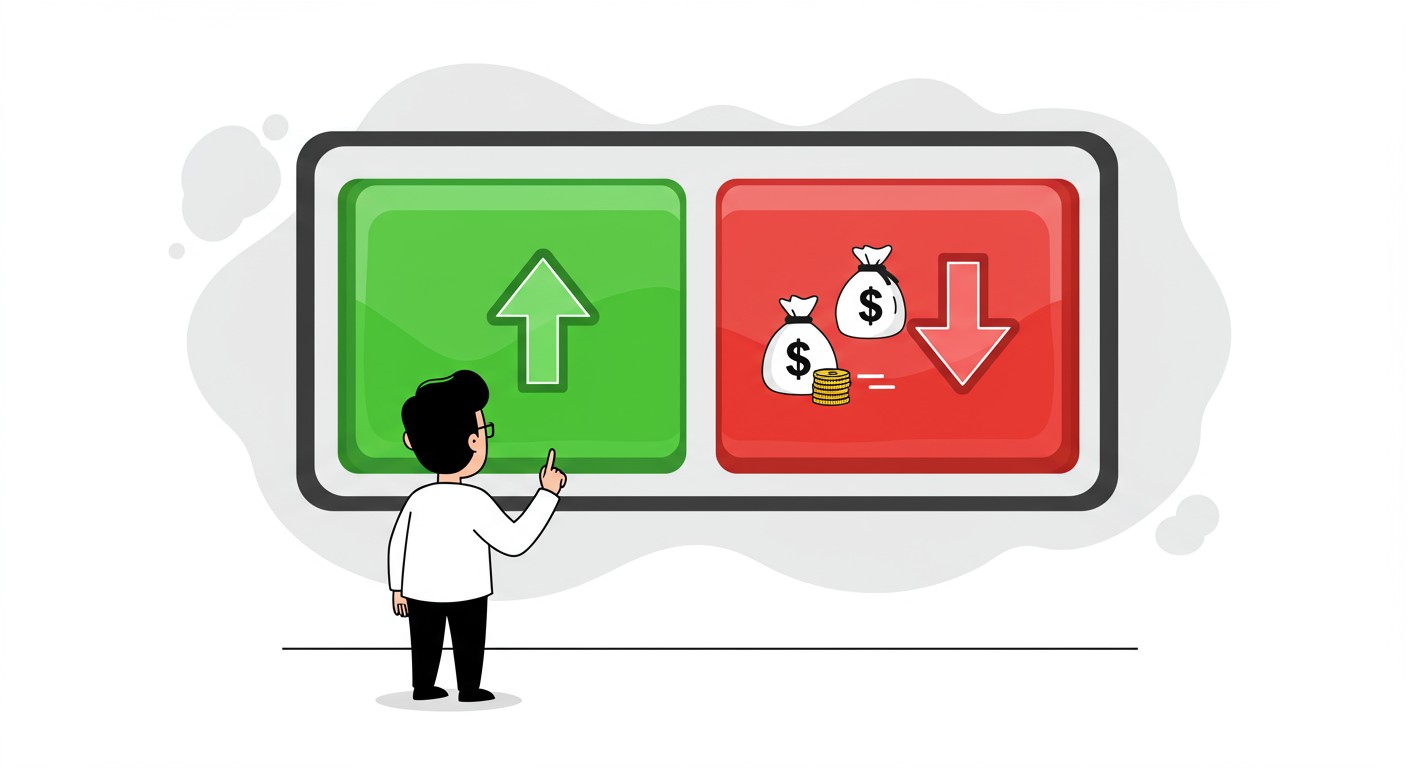
Yes, binary options are a real financial instrument, but they come with significant risks. They allow traders to speculate on the price movement of an asset by predicting whether it will rise or fall within a set time frame. If the prediction is correct, the trader earns a fixed payout; if incorrect, they lose their investment.
To trade binary options, you pick an asset like a currency, stock, or commodity and guess if its price will go up or down within a set time. If you're right, you get a fixed payout. If you're wrong, you lose your initial stake, making it a risky trading method.
For beginners, copy trading helps them get started with binary options. It lets them follow and copy experienced traders’ strategies, learning while making trades. But even with tools like this, you still need to manage risks carefully.
Is binary option trading legit?
Binary option trading is legal in some countries where it’s regulated, like the United States, the United Kingdom, Australia, South Africa, and Japan. Binary trading rules depend on the country, and some have banned it, including Canada, India, and many European nations. Always use a regulated broker to stay safe and legal.
Regional regulations and legality
In countries where binary options are allowed, regulators such as the Commodity Futures Trading Commission (CFTC) and the Financial Services Agency (FSA) monitor trading activity to protect traders. Traders should stick to regulated brokers to avoid fraud. On the other hand, places that banned binary trading, like Canada and much of Europe, did so due to high risks and scams.
Risks and trader responsibility
Using offshore brokers in countries where binary trading is illegal puts traders at serious risk. Regulators in these countries won’t help if you get scammed. Since binary trading is very risky, you should be extra careful, learn how the industry works, and make sure it fits your goals. Stay away from sites that promise easy money or quick fixes to financial problems.
Can I lose money in binary trading? Are binary options scams?
Most beginners think binary options are either a quick way to get rich or a total scam, but it's not that simple. What separates a reckless gambler from a skilled trader is knowing how brokers manipulate short-term price moves. Many brokers act as market makers, meaning they profit when you lose. Rather than guessing, experienced traders rely on "synthetic hedging" — placing trades with multiple brokers or in related markets to stay ahead. This way, even if one broker tries to shift the odds, you’re not completely trapped.
A shady broker isn’t just about regulation — it’s about the payout-to-risk ratio. If a broker always offers 80% payouts but refunds only 10% on losses, they’re making it harder for you to win. Instead of focusing only on wins, check how much a broker lets you recover on losing trades. Some brokers quietly offer rebates or VIP perks that help cut losses over time. Focusing only on wins means you're not seeing the full picture.
How does binary option trading work?
Binary options trading isn’t as simple as it looks — behind the scenes, there are hidden mechanics that can make or break your success.
Market makers manipulate expiry prices. Many beginners think binary options are purely about predicting price direction, but brokers often adjust expiry prices by a fraction of a pip to push trades out of the money. This is called price shading, and it’s why last-second movements can wipe out seemingly winning trades.
Liquidity providers control trade execution. When you place a binary trade, your order doesn’t go straight to the market — it’s handled by a liquidity provider or the broker themselves. If they see too many traders betting the same way, they can delay execution or tweak pricing to shift the odds in their favor.
Short-term binaries are designed for losses. Most traders are drawn to 30-second and 1-minute options for the adrenaline rush, but these are the worst bets. The spread, execution delay, and broker’s profit model mean you’re essentially playing against a rigged clock. Longer expiries give you more control and reduce the broker’s ability to manipulate outcomes.
Hedging tactics are not foolproof. Some traders try to hedge binary options by placing opposing trades with different expiries, but this rarely works as expected. Brokers factor in common hedging strategies and adjust payouts accordingly, so you end up with lower returns even if both trades win.
Regulated doesn’t always mean fair. Even with a license, many brokers use tactics like dynamic payouts, slippage, and order rejections to increase their edge. A regulated broker might be safer in terms of withdrawals, but it doesn’t mean their trading conditions are free from hidden tricks.
What you should know before trading binary options
Binary options trading looks easy, but there are hidden traps that most beginners never see coming.

Your broker profits when you lose. Unlike traditional trading, where brokers make money from spreads or commissions, most binary options brokers operate as the counterparty to your trades. If you win, they lose money. If you lose, they keep your stake. This creates a built-in conflict of interest where brokers benefit from tilting the odds against you.
Payout percentages are designed to drain your balance. The average payout on a winning trade is around 70-80%, but a losing trade costs you 100% of your stake. Over time, even if you win as often as you lose, the math still works against you. You need a much higher win rate just to break even, let alone profit.
Price manipulation happens in milliseconds. Many traders assume binary options pricing is fair, but brokers can slightly adjust expiry prices in the final moments to push trades out of the money. This means your winning trade could turn into a loss by a fraction of a pip, something you’d never notice unless you recorded every tick.
Demo accounts don’t reflect real trading. Most brokers let you practice with a demo account, but the execution speed, price movements, and payouts are often more favorable than real trades. This gives beginners a false sense of confidence, leading them to deposit money and face an entirely different, harsher trading environment.
Regulations don’t stop shady practices. Even licensed brokers use tactics like delaying withdrawals, adjusting payout rates, and rejecting trades during volatile moments. Regulation might offer some protection against outright scams, but it won’t stop brokers from stacking the deck in their favor.
Can I trade Forex with binary options?
Traders can predict the price movement of Forex pairs with binary options. Forex currency pairs are some of the most commonly used assets to trade with binary options.
According to statistics, currency trading accounts for a sizable chunk of the trading volume generated by binary options traders. The majority of new traders begin their careers by trading the most well-liked currency pairs, specifically EUR/USD, USD/JPY, USD/CHF, GBP/USD, AUD/USD, and USD/CAD.
Trading currency pairs with a basic knowledge of technical and fundamental analysis aids traders in identifying signals. This enables them to forecast the price inclination of a particular currency pair. For example, trading the EUR/USD binary option may become simpler if you keep up with all the most recent changes to the financial systems of the Eurozone and the United States.
Even though many traders favor technical analysis, fundamental factors significantly affect certain currency pairs.
Hence, traders should pay close attention to the following:
Manufacturing and Services Purchasing Managers Index.
Inflation Reports.
Central Banks' Interest Rate Decisions.
Housing Data.
Unemployment Data.
GDP Numbers.
Consumer Confidence Reports.
Other assets to trade with binary options
Most traders only stick to Forex and stocks, but there are other assets in binary options that can give you an edge.
Volatility indices don’t follow real-world events. Unlike Forex and stocks, volatility indices (like VIX-based assets) aren’t influenced by news, central bank decisions, or economic reports. They move based on algorithmic volatility patterns, making them perfect if you want to avoid market manipulation from big institutions.
Synthetic indices run 24/7 without gaps. Regular markets have opening and closing times, but synthetic indices (offered by some brokers) trade non-stop. There are no weekend gaps, no sudden price jumps from overnight news, and no need to worry about pre-market volatility throwing off your trades.
Commodities have seasonal price patterns. Many traders ignore gold, silver, and oil in binary options, but these assets move in predictable cycles. Oil spikes during winter due to heating demand, while gold rallies in times of economic uncertainty. Knowing these seasonal trends lets you time your binary trades better.
Crypto pairs offer weekend trading opportunities. While most markets close for the weekend, crypto pairs remain active. This means you can trade binary options on Bitcoin, Ethereum, or lesser-known altcoins when other traders are sitting on the sidelines. Plus, crypto moves in strong trends, making technical analysis easier.
Exotic Forex pairs create extreme volatility. Instead of trading EUR/USD like everyone else, look at exotic pairs like USD/TRY or EUR/ZAR. These pairs have wilder price swings, which means higher payouts on binary options. Just be careful — brokers often widen spreads on exotics to make them harder to trade.
Is Forex binary trading worth it?
Yes, but binary trading is for those who fully understand its risks and mechanics. While it’s easier to grasp and much faster than other trading styles, it works best for day traders. This method lets you cash out fast since it’s not meant for long-term strategies.
Binary trading offers big returns fast if you correctly predict price movement. Reality is, if the price moves against you, you lose everything. You need to develop the right mindset and approach to profit from binary options trading. Success has no shortcuts — it takes time, effort, and discipline to build the right mindset and become a profitable trader.
Since binary trading comes with serious risk, it’s not for those who can’t handle financial losses. If you want to invest in binary options, do it only after fully understanding the risks and only with money you can afford to lose. The system is simpler than Forex — a trader just picks between two possible price outcomes. Trading binary options on the Forex market is popular among pro traders in countries where it’s legal.
Top 5 binary options brokers
| Demo | Copy trading | Min. deposit | Min. trade size | Min. Payout (%) | Max. Payout (%) | TU overall score | Open an account | |
|---|---|---|---|---|---|---|---|---|
| Yes | No | 5 | 1 | 17 | 95 | 7.46 | Go to broker Your capital is at risk. |
|
| Yes | No | 10 | 1 | 60 | 90 | 4.96 | Go to broker Your capital is at risk.
|
|
| Yes | No | 250 | 1 | No | 100 | 3.84 | Study review | |
| Yes | Yes | 5 | 1 | 50 | 128 | 9 | Go to broker Your capital is at risk. |
|
| Yes | No | 10 | 1 | 20 | 98 | 8.6 | Go to broker Your capital is at risk. |
Why trust us
15+ years of independent market analysis
140+ evaluation criteria, reviewed by 50+ experts
Data-driven reviews of 200+ platforms, updated regularly
20+ industry awards & a wide network of global media partners
Learn more about our methodology and editorial policies.


Binary options favor brokers, but smart risk sizing and timing can flip the odds

Most people either call binary options a scam or jump in blindly chasing fast money. Reality is, they are real, but they’re set up to benefit the broker more than the trader. The real catch? Payouts stack the odds against you. Even if you win, you’re often paid less than what you risked. A 70–80% payout means that, over time, you need a much higher win rate just to break even. Brokers rely on traders overlooking this. How do you beat this? Use asymmetric position sizing. Instead of risking a fixed percentage on every trade, adjust based on payout structures. Bet smaller when payouts are low, and only increase size when the odds shift in your favor.
Another thing traders miss is how time decay works against them. Unlike Forex or stocks, where prices move freely, binary options have fixed expiration times. Big players push prices around near expiration to trigger losses. Most traders bet on short timeframes, but that’s exactly where random price noise can wreck a trade. Instead, trade longer expirations and avoid last-minute squeezes. If you have to trade short-term, enter when volatility is high, not when the market is slow. That way, you’re making volatility work for you, instead of letting brokers control the outcome.
Conclusion
Binary options are real, but they’re only as good as the trader using them. They fall somewhere between strategic trading and high-risk speculation, and success depends on how you handle them. For traders who plan and don’t just chase fast money, they can be a real option. The goal isn’t to get rich quickly — it’s about understanding the mechanics, respecting the risk, and trading with knowledge, not impulse. Binary options work for traders who think before they trade, not those looking for shortcuts.
FAQs
Is binary option trading real or fake?
With a reputable broker, binary options trading is real, but with an unregulated broker, it could be fake. And this is because many scam binary brokers are found among the unregulated brokers.
Can you really make money with binary options?
Yes. Binary traders can make real money with binary options. However, they must endure trading with reputable brokers and integrate top trading strategies.
Do binary options exist?
Yes. Binary options exist, and they are popular among low-skilled traders because they are easy to use and understand. Numerous binary options platforms are available, each with a different payout structure, selection of assets, and minimum deposit requirements.
Are binary options a game of chance?
Considering the nature of binary options trading, you can liken it to a game of chance. Binary options are designed to have a 50/50 chance of success, but you risk 100% for an 80% payout.
Editors' Top Picks and Insights






Related Articles
Team that worked on the article
Alamin Morshed is a contributor at Traders Union. He specializes in writing articles for businesses that want to improve their Google search rankings to compete with their competition.
Chinmay Soni is a financial analyst with more than 5 years of experience in working with stocks, Forex, derivatives, and other assets. As a founder of a boutique research firm and an active researcher, he covers various industries and fields, providing insights backed by statistical data.
Mirjan Hipolito is a journalist and news editor at Traders Union. She is an expert crypto writer with five years of experience in the financial markets.
Binary options trading is a financial trading method where traders speculate on the price movement of various assets, such as stocks, currencies, or commodities, by predicting whether the price will rise or fall within a specified time frame, often as short as a few minutes. Unlike traditional trading, binary options have only two possible outcomes: a fixed payout if the trader's prediction is correct or a loss of the invested amount if the prediction is wrong.
Index in trading is the measure of the performance of a group of stocks, which can include the assets and securities in it.
Fundamental analysis is a method or tool that investors use that seeks to determine the intrinsic value of a security by examining economic and financial factors. It considers macroeconomic factors such as the state of the economy and industry conditions.
Bitcoin is a decentralized digital cryptocurrency that was created in 2009 by an anonymous individual or group using the pseudonym Satoshi Nakamoto. It operates on a technology called blockchain, which is a distributed ledger that records all transactions across a network of computers.
A day trader is an individual who engages in buying and selling financial assets within the same trading day, seeking to profit from short-term price movements.

-
 Afghanistan
-
 Albania
-
 Algeria
-
 Angola
-
 Argentina
-
 Armenia
-
 Australia
-
 Austria
-
 Azerbaijan
-
 Bahamas
-
 Bahrain
-
 Bangladesh
-
 Belarus
-
 Belgium
-
 Bolivia
-
 Botswana
-
 Brazil
-
 Brunei
-
 Bulgaria
-
 Cambodia
-
 Cameroon
-
 Canada
-
 Chile
Chile
-
 China
China
-
 Colombia
-
 Congo
Congo
-
 Costa Rica
-
 Cote d'Ivoire
-
 Croatia
-
 Cuba
Cuba
-
 Cyprus
-
 Czechia
-
 DR Congo
-
 Denmark
-
 Dominican Republic
-
 Ecuador
-
 Egypt
Egypt
-
 El Salvador
-
 Estonia
-
 Eswatini
-
 Ethiopia
-
 Finland
-
 France
-
 Georgia
-
 Germany
-
 Ghana
Ghana
-
 Greece
-
 Haiti
Haiti
-
 Hong Kong
-
 Hungary
-
 India
India
-
 Indonesia
-
 Iran, Islamic republic
-
 Iraq
Iraq
-
 Ireland
-
 Israel
-
 Italy
Italy
-
 Jamaica
-
 Japan
Japan
-
 Jordan
-
 Kazakhstan
-
 Kenya
Kenya
-
 Korea
Korea
-
 Kuwait
-
 Kyrgyzstan
-
 Laos
Laos
-
 Latvia
-
 Lebanon
-
 Lesotho
-
 Libya
Libya
-
 Lithuania
-
 Luxembourg
-
 Madagascar
-
 Malaysia
-
 Malta
Malta
-
 Mauritius
-
 Mexico
-
 Moldova
-
 Mongolia
-
 Montenegro
-
 Morocco
-
 Mozambique
-
 Myanmar
-
 Namibia
-
 Nepal
Nepal
-
 Netherlands
-
 New Zealand
-
 Nigeria
-
 North Macedonia
-
 Norway
-
 Oman
Oman
-
 Pakistan
-
 Palestine
-
 Panama
-
 Papua New Guinea
-
 Paraguay
-
 Peru
Peru
-
 Philippines
-
 Poland
-
 Portugal
-
 Puerto Rico
-
 Qatar
Qatar
-
 Reunion
-
 Romania
-
 Rwanda
-
 Saudi Arabia
-
 Serbia
-
 Singapore
-
 Slovakia
-
 Slovenia
-
 Somalia
-
 South Africa
-
 Spain
Spain
-
 Sri Lanka
-
 Sweden
-
 Switzerland
-
 Syria
Syria
-
 Taiwan
-
 Tajikistan
-
 Tanzania
-
 Thailand
-
 Trinidad and Tobago
-
 Tunisia
-
 Turkey
-
 UAE
UAE
-
 Uganda
-
 Ukraine
-
 United Kingdom
-
United States
-
 Uruguay
-
 Uzbekistan
-
 Venezuela
-
 Vietnam
-
 Yemen
Yemen
-
 Zambia
-
 Zimbabwe
- Forex
- Crypto










- Are binary options real?
- Is binary option trading legit?
- Can I lose money in binary trading?
- How does binary option trading work?
- What you should know before trading
- Can I trade Forex with binary options?
- Other assets to trade with binary
- Is Forex binary trading worth it?
- Top binary options brokers
- Expert opinion
- Conclusion
- FAQs


