

U.S. construction slump sharpens focus on AI infrastructure spending

Broad weakness across U.S. construction is becoming more visible as spending tied to artificial intelligence continues to expand. The divergence is shifting investor attention toward data centers and power equipment, while factory, office, lodging and education projects lose momentum.
Highlights
- Total U.S. construction spending in August annualized at $2.20 trillion, down 1.7% year over year before inflation, while data-center construction spending surged 64.5% in real terms.
- Factory construction spending fell about 20% in nominal terms versus last year, with computer, electronics and electrical-equipment factories dropping from a $126.4 billion peak in June 2024 to $52.3 billion.
- Power construction spending grew nearly 10% year over year in August, overtaking manufacturing, as demand for AI-driven infrastructure boosts utilities and related electrical supply chain investments.
Construction trends highlight AI-led divergence
As reported by Weiss Ratings, the latest U.S. construction data points to a widening gap between AI-related building activity and most other private investment categories. The analysis says total U.S. construction spending in August is running at an annualized $2.20 trillion, down 1.7% from a year earlier before inflation adjustments, while September's ISM Manufacturing PMI stands at 54.5, indicating expansion.After adjusting for inflation, manufacturing construction is down nearly 24% from a year earlier, while lodging and traditional office construction have fallen almost 15% and 14%, respectively. Education and commercial construction are also down by double digits, in contrast with a 64.5% jump in real spending on data centers.
The downturn is especially pronounced in factory building. In nominal terms, factory construction spending is roughly 20% below year-earlier levels, reversing part of the surge that followed spending tied to the CHIPS Act and Inflation Reduction Act on semiconductor fabs, battery plants and related projects.
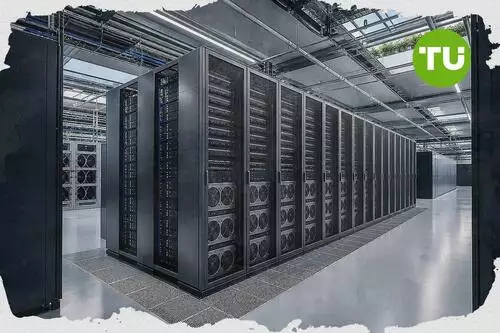
Construction of computer, electronics and electrical-equipment factories peaked at an annual rate of $126.4 billion in June 2024 and has since fallen to about $52.3 billion. By comparison, data-center construction reached a record annual rate of $85 billion in August, based on KPMG's analysis of Census data, up 73.2% over one year.
Power supply chain draws investor interest
Rising AI capacity needs are also lifting spending beyond server facilities into the electrical supply chain. Demand for utilities, transmission lines, substations, transformers, switchgear, turbines and backup generation is increasing as operators build the infrastructure needed to support energy-intensive computing.Power construction jumped nearly 10% year over year in August and has now overtaken manufacturing construction as a category, according to the analysis. Weiss Ratings points to examples including Eaton's new Nebraska factory for medium-voltage switchgear and Hitachi Energy's $457 million expansion of large-power-transformer operations in Virginia.
Against that backdrop, Weiss Ratings highlights the Defiance AI & Power Infrastructure ETF, ticker AIPO, as a way to gain targeted exposure to AI hardware, data centers, utilities, power generation, electrical infrastructure and construction companies. The fund carries an expense ratio of 0.69%, and the analysis argues that recent weakness in AI power suppliers has created a potential entry point as the broader AI buildout continues.
In our earlier article on CEOs’ early gains from AI agents, we noted that most large U.S. companies see meaningful efficiency and growth benefits, even if only a small share view AI agents as transformational so far. The same survey also highlighted plans for continued hiring, retraining, and sizable increases in AI investment budgets—spending priorities that help explain why AI-related buildouts like data centers and power infrastructure are drawing capital even as other construction categories cool.









-
 Afghanistan
-
 Albania
-
 Algeria
-
 Angola
-
 Argentina
-
 Armenia
-
 Australia
-
 Austria
-
 Azerbaijan
-
 Bahamas
-
 Bahrain
-
 Bangladesh
-
 Belarus
-
 Belgium
-
 Bolivia
-
 Botswana
-
 Brazil
-
 Brunei
-
 Bulgaria
-
 Cambodia
-
 Cameroon
-
 Canada
-
 Chile
-
 China
-
 Colombia
-
 Congo
-
 Costa Rica
-
 Cote d'Ivoire
-
 Croatia
-
 Cuba
-
 Cyprus
-
 Czechia
-
 DR Congo
-
 Denmark
-
 Dominican Republic
-
 Ecuador
-
 Egypt
-
 El Salvador
-
 Estonia
-
 Eswatini
-
 Ethiopia
-
 Finland
-
 France
-
 Georgia
-
 Germany
-
 Ghana
-
 Greece
-
 Haiti
-
 Hong Kong
-
 Hungary
-
 India
-
 Indonesia
-
 Iran, Islamic republic
-
 Iraq
-
 Ireland
-
 Israel
-
 Italy
-
 Jamaica
-
 Japan
-
 Jordan
-
 Kazakhstan
-
 Kenya
-
 Korea
-
 Kuwait
-
 Kyrgyzstan
-
 Laos
-
 Latvia
-
 Lebanon
-
 Lesotho
-
 Libya
-
 Lithuania
-
 Luxembourg
-
 Madagascar
-
 Malaysia
-
 Malta
-
 Mauritius
-
 Mexico
-
 Moldova
-
 Mongolia
-
 Montenegro
-
 Morocco
-
 Mozambique
-
 Myanmar
-
 Namibia
-
 Nepal
-
 Netherlands
-
 New Zealand
-
 Nigeria
-
 North Macedonia
-
 Norway
-
 Oman
-
 Pakistan
-
 Palestine
-
 Panama
-
 Papua New Guinea
-
 Paraguay
-
 Peru
-
 Philippines
-
 Poland
-
 Portugal
-
 Puerto Rico
-
 Qatar
-
 Reunion
-
 Romania
-
 Rwanda
-
 Saudi Arabia
-
 Serbia
-
 Singapore
-
 Slovakia
-
 Slovenia
-
 Somalia
-
 South Africa
-
 Spain
-
 Sri Lanka
-
 Sweden
-
 Switzerland
-
 Syria
-
 Taiwan
-
 Tajikistan
-
 Tanzania
-
 Thailand
-
 Trinidad and Tobago
-
 Tunisia
-
 Turkey
-
 UAE
-
 Uganda
-
 Ukraine
-
 United Kingdom
-
United States
-
 Uruguay
-
 Uzbekistan
-
 Venezuela
-
 Vietnam
-
 Yemen
-
 Zambia
-
 Zimbabwe
- Forex
- Crypto












