

Fed raises rates and signals more tightening ahead

The Federal Reserve raised interest rates for the first time in more than three years, marking a decisive shift back toward tighter monetary policy as inflation remains well above its target. Policymakers also signaled that another increase could come before year-end, suggesting Wednesday’s move may be the beginning of a broader tightening cycle.
Highlights
- Fed raised rates 25 basis points to 3.75%-4%.
- The decision was unanimous.
- Officials signal another hike could come in 2026.
- PCE inflation is projected at 3.7% this year.
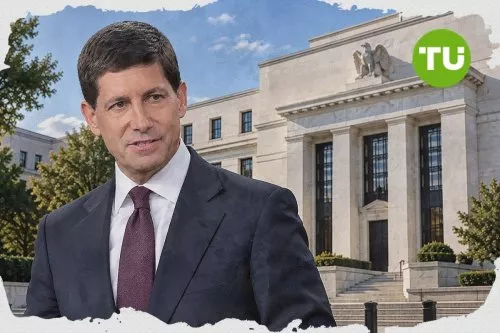
The Federal Open Market Committee voted unanimously to increase the federal funds target range by 25 basis points to 3.75%-4%, Bloomberg reported. The increase was the first since July 2023 and the first change in policy under Fed Chair Kevin Warsh, who took office in May.
Inflation pushes the Fed back toward tightening
Persistent price pressures drove the decision. Core inflation accelerated more than expected in August, while higher energy prices, tariffs, and resilient domestic demand have increased concern that inflation is spreading beyond temporary supply disruptions.
The Fed now projects PCE inflation at 3.7% in 2026, up from its 3.6% June estimate. Officials also pushed back their expected return to the 2% inflation target until 2029, one year later than previously forecast.
At the same time, policymakers see little evidence that current financial conditions are significantly constraining the economy. The median GDP growth forecast for 2026 increased to 2.3% from 2.2%, while projected unemployment fell to 4.1% from 4.3%.
Warsh emphasized inflation risks while pointing to resilient consumer spending, strong productivity, and robust capital investment as evidence that the economy can absorb higher borrowing costs.
Fed projections point to another increase
The new projections show a significant shift among policymakers. The median estimate for the federal funds rate at the end of 2026 rose to 4.1% from 3.8% in June.
Sixteen officials projected at least one additional rate increase this year. Rate futures also indicate roughly a 90% probability of another quarter-point increase by year-end.
Markets reacted instantly to the more restrictive outlook. The policy-sensitive 2-year Treasury yield climbed to about 4.73%, more than 12 basis points above its pre-announcement level, while the 10-year Treasury yield moved above 5% during Warsh’s press conference. The dollar also strengthened.
The move runs counter to President Donald Trump’s preference for substantially lower borrowing costs. After the announcement, Trump renewed his call for U.S. rates to fall to 1% or below, while saying later that he retained confidence in Warsh.
Higher rates reshape the market outlook
Wednesday’s decision shifts the debate from whether the Fed will resume tightening to how far rates may rise. With inflation projected at 3.7%, economic growth at 2.3%, and unemployment at 4.1%, policymakers are signaling that price stability currently takes priority despite already elevated borrowing costs.
Another increase would bring the target range to 4%-4.25%. That prospect matters beyond financial markets: Treasury yields influence mortgages, corporate financing, and other forms of credit, while the average 30-year mortgage rate is already approaching 7%.
The Fed’s challenge is now to contain inflation without unnecessarily weakening an economy that officials still describe as resilient.
We have previously highlighted that government bond yields across major economies climbed to levels not seen since the global financial crisis, increasing financing pressure on governments and companies already carrying heavy debt loads.






Latest Fed News




-
 Afghanistan
-
 Albania
-
 Algeria
-
 Angola
-
 Argentina
-
 Armenia
-
 Australia
-
 Austria
-
 Azerbaijan
-
 Bahamas
-
 Bahrain
-
 Bangladesh
-
 Belarus
-
 Belgium
-
 Bolivia
-
 Botswana
-
 Brazil
-
 Brunei
-
 Bulgaria
-
 Cambodia
-
 Cameroon
-
 Canada
-
 Chile
-
 China
-
 Colombia
-
 Congo
-
 Costa Rica
-
 Cote d'Ivoire
-
 Croatia
-
 Cuba
-
 Cyprus
-
 Czechia
-
 DR Congo
-
 Denmark
-
 Dominican Republic
-
 Ecuador
-
 Egypt
-
 El Salvador
-
 Estonia
-
 Eswatini
-
 Ethiopia
-
 Finland
-
 France
-
 Georgia
-
 Germany
-
 Ghana
-
 Greece
-
 Haiti
-
 Hong Kong
-
 Hungary
-
 India
-
 Indonesia
-
 Iran, Islamic republic
-
 Iraq
-
 Ireland
-
 Israel
-
 Italy
-
 Jamaica
-
 Japan
-
 Jordan
-
 Kazakhstan
-
 Kenya
-
 Korea
-
 Kuwait
-
 Kyrgyzstan
-
 Laos
-
 Latvia
-
 Lebanon
-
 Lesotho
-
 Libya
-
 Lithuania
-
 Luxembourg
-
 Madagascar
-
 Malaysia
-
 Malta
-
 Mauritius
-
 Mexico
-
 Moldova
-
 Mongolia
-
 Montenegro
-
 Morocco
-
 Mozambique
-
 Myanmar
-
 Namibia
-
 Nepal
-
 Netherlands
-
 New Zealand
-
 Nigeria
-
 North Macedonia
-
 Norway
-
 Oman
-
 Pakistan
-
 Palestine
-
 Panama
-
 Papua New Guinea
-
 Paraguay
-
 Peru
-
 Philippines
-
 Poland
-
 Portugal
-
 Puerto Rico
-
 Qatar
-
 Reunion
-
 Romania
-
 Rwanda
-
 Saudi Arabia
-
 Serbia
-
 Singapore
-
 Slovakia
-
 Slovenia
-
 Somalia
-
 South Africa
-
 Spain
-
 Sri Lanka
-
 Sweden
-
 Switzerland
-
 Syria
-
 Taiwan
-
 Tajikistan
-
 Tanzania
-
 Thailand
-
 Trinidad and Tobago
-
 Tunisia
-
 Turkey
-
 UAE
-
 Uganda
-
 Ukraine
-
 United Kingdom
-
United States
-
 Uruguay
-
 Uzbekistan
-
 Venezuela
-
 Vietnam
-
 Yemen
-
 Zambia
-
 Zimbabwe
- Forex
- Crypto












