


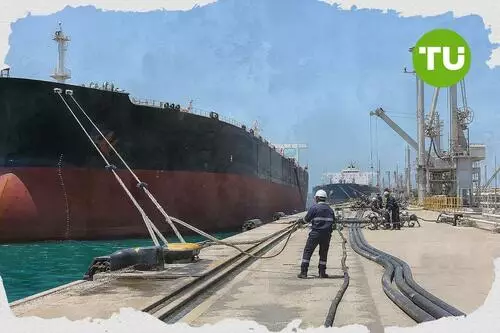
Oil shipping costs on the largest tankers are retreating this week after hitting record highs as demand on key Middle East routes eases. The pullback comes as attacks on vessels in the region reshape trade flows and as the Trump administration considers lifting sanctions on some shadow-fleet tankers.
Highlights
- VLCC freight rates from the Gulf of Oman to China fall to about 776 Worldscale, down from 841 last week, as Middle East demand softens.
- Higher Middle East Gulf freight rates and lower export volumes, plus potential removal of sanctions on shadow-fleet tankers, contribute to declining demand for VLCCs.
- Despite easing from records, tanker rates remain near record highs, maintaining elevated cost pressures and inflation risks for global oil shipping.
Freight rates retreat from recent peak
As reported by Reuters, freight rates for very large crude carriers, or VLCCs, carrying oil from the Gulf of Oman to China fall to about 776 on the Worldscale basis, citing Baltic Exchange data.That compares with 841 last week, the highest level since the rate was launched earlier this year, after gains that follow the outbreak of the Iran war.
Kpler analyst Matthew Wright says Gulf of Oman VLCC rates drop as demand on that route softens after the fresh attacks. He adds that higher Middle East Gulf freight rates, along with lower export volumes, reduce demand on the route.
Sparta Commodities analyst Michael Ryan says comments from the Trump administration about potentially removing sanctions on some shadow-fleet tankers also push freight rates lower, because such a move would expand the pool of ships able to carry oil.
Wider cost pressures remain elevated
Despite the weekly decline, rates remain close to record highs, underscoring continued strain in oil shipping markets.The U.S.-Israeli war on Iran increases the use of ship-to-ship transfers to move oil out of the Strait of Hormuz, boosting demand for tankers. If elevated shipping costs persist, they could add to inflationary pressures and raise costs for businesses and consumers.
Rates also ease from record highs this week on other routes, including voyages from West Africa to Asia, suggesting the recent pressure in tanker markets is beginning to moderate beyond the Gulf of Oman corridor.
In our earlier article on the conflict-driven spike in oil shipping costs, we explained how attacks and heightened risks around key chokepoints such as the Strait of Hormuz and the Red Sea pushed tanker and insurance rates sharply higher, making freight a much larger share of the delivered oil price. We also noted that increased ship-to-ship transfers and longer rerouting tied up vessel capacity, lifting charter earnings and intensifying cost pressures for import-dependent markets and consumers.






Latest Commodities News




-
 Afghanistan
-
 Albania
-
 Algeria
-
 Angola
-
 Argentina
-
 Armenia
-
 Australia
-
 Austria
-
 Azerbaijan
-
 Bahamas
-
 Bahrain
-
 Bangladesh
-
 Belarus
-
 Belgium
-
 Bolivia
-
 Botswana
-
 Brazil
-
 Brunei
-
 Bulgaria
-
 Cambodia
-
 Cameroon
-
 Canada
-
 Chile
-
 China
-
 Colombia
-
 Congo
-
 Costa Rica
-
 Cote d'Ivoire
-
 Croatia
-
 Cuba
-
 Cyprus
-
 Czechia
-
 DR Congo
-
 Denmark
-
 Dominican Republic
-
 Ecuador
-
 Egypt
-
 El Salvador
-
 Estonia
-
 Eswatini
-
 Ethiopia
-
 Finland
-
 France
-
 Georgia
-
 Germany
-
 Ghana
-
 Greece
-
 Haiti
-
 Hong Kong
-
 Hungary
-
 India
-
 Indonesia
-
 Iran, Islamic republic
-
 Iraq
-
 Ireland
-
 Israel
-
 Italy
-
 Jamaica
-
 Japan
-
 Jordan
-
 Kazakhstan
-
 Kenya
-
 Korea
-
 Kuwait
-
 Kyrgyzstan
-
 Laos
-
 Latvia
-
 Lebanon
-
 Lesotho
-
 Libya
-
 Lithuania
-
 Luxembourg
-
 Madagascar
-
 Malaysia
-
 Malta
-
 Mauritius
-
 Mexico
-
 Moldova
-
 Mongolia
-
 Montenegro
-
 Morocco
-
 Mozambique
-
 Myanmar
-
 Namibia
-
 Nepal
-
 Netherlands
-
 New Zealand
-
 Nigeria
-
 North Macedonia
-
 Norway
-
 Oman
-
 Pakistan
-
 Palestine
-
 Panama
-
 Papua New Guinea
-
 Paraguay
-
 Peru
-
 Philippines
-
 Poland
-
 Portugal
-
 Puerto Rico
-
 Qatar
-
 Reunion
-
 Romania
-
 Rwanda
-
 Saudi Arabia
-
 Serbia
-
 Singapore
-
 Slovakia
-
 Slovenia
-
 Somalia
-
 South Africa
-
 Spain
-
 Sri Lanka
-
 Sweden
-
 Switzerland
-
 Syria
-
 Taiwan
-
 Tajikistan
-
 Tanzania
-
 Thailand
-
 Trinidad and Tobago
-
 Tunisia
-
 Turkey
-
 UAE
-
 Uganda
-
 Ukraine
-
 United Kingdom
-
United States
-
 Uruguay
-
 Uzbekistan
-
 Venezuela
-
 Vietnam
-
 Yemen
-
 Zambia
-
 Zimbabwe
- Forex
- Crypto












