

SK Hynix invests $38 billion to expand memory chip production

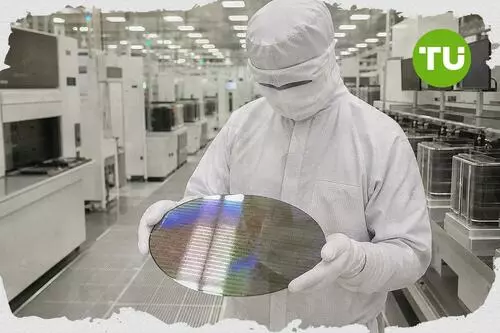
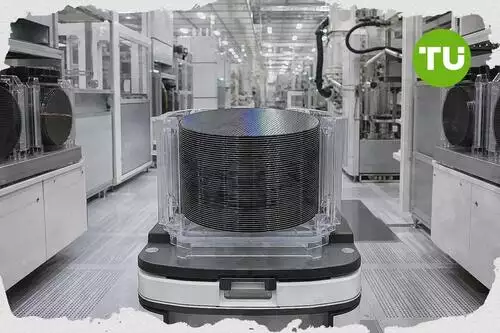
SK Hynix is preparing one of its largest manufacturing expansions yet, committing 54.3 trillion won, or roughly $38.1 billion, to two new memory-chip plants in South Korea. The investment reflects the company’s expectation that demand for high-bandwidth memory and other advanced memory products will remain strong as artificial intelligence infrastructure expands.
Highlights
- SK Hynix will invest about $38.1 billion in two new memory plants.
- Yongin will focus on DRAM and HBM, while Cheongju will produce NAND.
- New capacity is scheduled to come online from 2028 and 2029.
The company will spend 35.2 trillion won on its Y2 fabrication plant in Yongin and another 19.1 trillion won on the M17 facility in Cheongju, according to CNBC. The projects are aimed at expanding production of DRAM, high-bandwidth memory, or HBM, and NAND as memory manufacturers contend with tight supply and rising demand from AI data centers and advanced computing systems.
AI demand drives capacity expansion
SK Hynix has emerged as a major supplier of HBM, a specialized form of memory used alongside advanced AI processors. Demand has accelerated as technology companies invest heavily in computing infrastructure, and chipmakers such as Nvidia require increasingly large quantities of high-performance memory.
The new Yongin Y2 plant will become the second of four planned fabrication facilities at the Yongin Semiconductor Cluster. Construction is scheduled to begin in July 2027, with the first cleanroom expected to open in June 2029. The facility will manufacture DRAM products, including HBM and other next-generation memory.
The M17 plant in Cheongju will focus on NAND memory. Construction is scheduled to start in February 2027, followed by the opening of its first cleanroom in December 2028.
The timing means the investment will not immediately increase SK Hynix's output. Instead, it adds capacity for the end of the decade, when AI computing requirements could be substantially larger than today.
Memory makers race to meet demand
SK Hynix is expanding as competition across the memory industry intensifies. Samsung regained the leading position in the global DRAM market by share during the second quarter, according to Counterpoint Research, while Micron and Chinese manufacturers are also adding capacity.
Despite those expansion plans, supply could remain tight if AI infrastructure demand continues to grow faster than new factories can come online. Memory prices have already risen sharply amid the imbalance, supporting earnings and share prices across major producers.
The latest projects also form part of a much larger manufacturing strategy. SK Hynix previously outlined plans to invest 600 trillion won in the Yongin semiconductor complex and 100 trillion won in expanding its Cheongju production base.
A long-term wager on AI infrastructure
The 54.3 trillion won commitment shows that SK Hynix expects the current memory shortage to evolve into a longer investment cycle rather than disappear quickly. With the first new cleanrooms arriving only in late 2028 and 2029, the company is effectively positioning capacity several years ahead of expected demand.
That matters beyond SK Hynix. HBM and DRAM availability increasingly determines how quickly AI computing capacity can expand, making memory production a critical part of the global AI supply chain.
We have previously highlighted that Samsung and SK Hynix plan massive AI chip investments in South Korea.






Latest SK Hynix News


-
 Afghanistan
-
 Albania
-
 Algeria
-
 Angola
-
 Argentina
-
 Armenia
-
 Australia
-
 Austria
-
 Azerbaijan
-
 Bahamas
-
 Bahrain
-
 Bangladesh
-
 Belarus
-
 Belgium
-
 Bolivia
-
 Botswana
-
 Brazil
-
 Brunei
-
 Bulgaria
-
 Cambodia
-
 Cameroon
-
 Canada
-
 Chile
-
 China
-
 Colombia
-
 Congo
-
 Costa Rica
-
 Cote d'Ivoire
-
 Croatia
-
 Cuba
-
 Cyprus
-
 Czechia
-
 DR Congo
-
 Denmark
-
 Dominican Republic
-
 Ecuador
-
 Egypt
-
 El Salvador
-
 Estonia
-
 Eswatini
-
 Ethiopia
-
 Finland
-
 France
-
 Georgia
-
 Germany
-
 Ghana
-
 Greece
-
 Haiti
-
 Hong Kong
-
 Hungary
-
 India
-
 Indonesia
-
 Iran, Islamic republic
-
 Iraq
-
 Ireland
-
 Israel
-
 Italy
-
 Jamaica
-
 Japan
-
 Jordan
-
 Kazakhstan
-
 Kenya
-
 Korea
-
 Kuwait
-
 Kyrgyzstan
-
 Laos
-
 Latvia
-
 Lebanon
-
 Lesotho
-
 Libya
-
 Lithuania
-
 Luxembourg
-
 Madagascar
-
 Malaysia
-
 Malta
-
 Mauritius
-
 Mexico
-
 Moldova
-
 Mongolia
-
 Montenegro
-
 Morocco
-
 Mozambique
-
 Myanmar
-
 Namibia
-
 Nepal
-
 Netherlands
-
 New Zealand
-
 Nigeria
-
 North Macedonia
-
 Norway
-
 Oman
-
 Pakistan
-
 Palestine
-
 Panama
-
 Papua New Guinea
-
 Paraguay
-
 Peru
-
 Philippines
-
 Poland
-
 Portugal
-
 Puerto Rico
-
 Qatar
-
 Reunion
-
 Romania
-
 Rwanda
-
 Saudi Arabia
-
 Serbia
-
 Singapore
-
 Slovakia
-
 Slovenia
-
 Somalia
-
 South Africa
-
 Spain
-
 Sri Lanka
-
 Sweden
-
 Switzerland
-
 Syria
-
 Taiwan
-
 Tajikistan
-
 Tanzania
-
 Thailand
-
 Trinidad and Tobago
-
 Tunisia
-
 Turkey
-
 UAE
-
 Uganda
-
 Ukraine
-
 United Kingdom
-
United States
-
 Uruguay
-
 Uzbekistan
-
 Venezuela
-
 Vietnam
-
 Yemen
-
 Zambia
-
 Zimbabwe
- Forex
- Crypto












