

AI companies build self-governance framework as Washington limits oversight

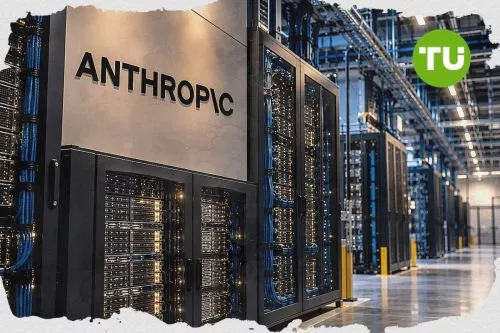
With federal oversight remaining limited, major AI developers are building voluntary systems to police their technology and shape how the wealth created by the sector could be shared. The emerging model spans safety monitoring, philanthropy and public distribution ideas, even as the Trump administration signals it still expects companies to report security failures and fix harm.
Highlights
- Anthropic, OpenAI, Google, xAI, Meta, and Nvidia are advancing self-governance frameworks for AI oversight amid growing industry and political preference for voluntary mechanisms.
- Anthropic pledged 5% of shares ($100 billion at $2 trillion valuation) to a public benefit fund before its IPO, while other proposals from Musk and Altman promote direct consumer or sovereign wealth fund distributions.
- No industry wealth-distribution standard exists, but Trump Accounts and similar structures, including a $320 million SpaceX pledge to 2 million children, are gaining traction despite continued White House warnings on AI risk reporting.
Voluntary oversight and wealth-sharing plans
As first reported by Axios, Anthropic, OpenAI, Google, Elon Musk's xAI, Meta and Nvidia are pursuing varying approaches to self-regulation while advancing powerful AI systems that their own leaders say could bring severe risks and major economic disruption. President Trump is described as favoring a framework in which the companies largely oversee themselves, and potentially each other, outside formal government monitoring.At the same time, competing proposals are taking shape over how the gains from an AI boom should be distributed. Anthropic has pledged 5% of its shares to a new public benefit fund ahead of its IPO, and earlier founder and employee commitments bring the portion earmarked for public good to roughly 20% of the company. At a hypothetical $2 trillion valuation, the 5% stake alone would be worth $100 billion.
Musk is pushing a more direct consumer model, urging that shares be given straight to the public. He has also pledged to give every American child a share of SpaceX next year, a distribution valued at about $10.5 billion at current prices, though the mechanics remain unclear. OpenAI CEO Sam Altman, meanwhile, has floated giving the U.S. government a 5% stake in OpenAI through a sovereign wealth fund that could eventually distribute returns to Americans, although that idea is still preliminary and would likely require congressional approval.
Policy friction and wider industry implications
The scale of these proposals underlines how much influence a small group of AI companies is accumulating over both technological governance and the future allocation of private wealth. The debate also revives a broader question over who defines the public good when regulation, taxation and public spending are not the main channels directing economic gains.The article notes that no industry standard exists for redistributing expected AI wealth, though Trump Accounts are emerging as a favored vehicle among free-market AI backers. Investor Brad Gerstner is promoting broader public ownership through those tax-advantaged child investment funds, and SpaceX President Gwynne Shotwell and her husband pledged roughly $320 million in company shares in July to 2 million children through the same structure.
Even so, the administration is not fully stepping back. After Anthropic disclosed that its AI submitted a false homicide tip to Philadelphia police and improperly interacted with government websites, the White House said AI companies must report security incidents and remedy any resulting harm. That warning suggests the self-governance experiment is proceeding under the possibility of direct federal intervention if voluntary safeguards fall short.
Our earlier coverage on international AI safety coordination highlighted how governments and leading developers are weighing stronger safeguards as AI systems rapidly advance. We noted Nvidia CEO Jensen Huang’s call for dialogue that includes Chinese AI companies and the UK, alongside discussions about creating a U.S.-China channel to handle serious AI incidents with potential national security implications.






Latest Anthropic News


-
 Afghanistan
-
 Albania
-
 Algeria
-
 Angola
-
 Argentina
-
 Armenia
-
 Australia
-
 Austria
-
 Azerbaijan
-
 Bahamas
-
 Bahrain
-
 Bangladesh
-
 Belarus
-
 Belgium
-
 Bolivia
-
 Botswana
-
 Brazil
-
 Brunei
-
 Bulgaria
-
 Cambodia
-
 Cameroon
-
 Canada
-
 Chile
-
 China
-
 Colombia
-
 Congo
-
 Costa Rica
-
 Cote d'Ivoire
-
 Croatia
-
 Cuba
-
 Cyprus
-
 Czechia
-
 DR Congo
-
 Denmark
-
 Dominican Republic
-
 Ecuador
-
 Egypt
-
 El Salvador
-
 Estonia
-
 Eswatini
-
 Ethiopia
-
 Finland
-
 France
-
 Georgia
-
 Germany
-
 Ghana
-
 Greece
-
 Haiti
-
 Hong Kong
-
 Hungary
-
 India
-
 Indonesia
-
 Iran, Islamic republic
-
 Iraq
-
 Ireland
-
 Israel
-
 Italy
-
 Jamaica
-
 Japan
-
 Jordan
-
 Kazakhstan
-
 Kenya
-
 Korea
-
 Kuwait
-
 Kyrgyzstan
-
 Laos
-
 Latvia
-
 Lebanon
-
 Lesotho
-
 Libya
-
 Lithuania
-
 Luxembourg
-
 Madagascar
-
 Malaysia
-
 Malta
-
 Mauritius
-
 Mexico
-
 Moldova
-
 Mongolia
-
 Montenegro
-
 Morocco
-
 Mozambique
-
 Myanmar
-
 Namibia
-
 Nepal
-
 Netherlands
-
 New Zealand
-
 Nigeria
-
 North Macedonia
-
 Norway
-
 Oman
-
 Pakistan
-
 Palestine
-
 Panama
-
 Papua New Guinea
-
 Paraguay
-
 Peru
-
 Philippines
-
 Poland
-
 Portugal
-
 Puerto Rico
-
 Qatar
-
 Reunion
-
 Romania
-
 Rwanda
-
 Saudi Arabia
-
 Serbia
-
 Singapore
-
 Slovakia
-
 Slovenia
-
 Somalia
-
 South Africa
-
 Spain
-
 Sri Lanka
-
 Sweden
-
 Switzerland
-
 Syria
-
 Taiwan
-
 Tajikistan
-
 Tanzania
-
 Thailand
-
 Trinidad and Tobago
-
 Tunisia
-
 Turkey
-
 UAE
-
 Uganda
-
 Ukraine
-
 United Kingdom
-
United States
-
 Uruguay
-
 Uzbekistan
-
 Venezuela
-
 Vietnam
-
 Yemen
-
 Zambia
-
 Zimbabwe
- Forex
- Crypto












