
The tweet was deleted by the author.
But we saved everything 🙂.

Ethereum (ETH) is trading at $1,867.30, down $7.32 or 0.39% from the previous close, with intraday movement drifting $24.36 lower, a 1.29% drop from the daily high. After a minor gap down at the open, ETH has remained in the lower half of today’s range, as short-term bullish signals are offset by moderate selling pressure. The decline reflects moderate profit-taking and mixed technical momentum, despite generally positive sentiment stemming from institutional accumulation and product launches.
 1939.99
1946.52
1939.99
1946.52
The Ethereum Foundation highlighted recent ecosystem launches, including the deployment of Robinhood Chain, an Ethereum Layer 2 built on the Arbitrum stack, which signals continued adoption and infrastructure expansion for ETH. This tweet matters because new L2 solutions can drive activity, user growth, and greater liquidity on the network. Despite the positive sentiment around ecosystem developments, today’s price action shows that technical resistance and moderate profit-taking are weighing more heavily on the market. In the broader industry backdrop, ETH saw $105 million in net spot ETF inflows, a new Morgan Stanley Ethereum ETF filing, new trading access for nine million E*Trade users, and significant whale accumulation, alongside anticipation for the Glamsterdam protocol upgrade.
ETH sits above its 20-day ($1,784.30) and 50-day ($1,736.37) moving averages but remains below the 200-day ($2,184.98), signaling near-term momentum yet ongoing long-term pressure. Support is found at the Ichimoku Kijun ($1,729.26), while near resistance lies at both the MA-50 and the $1,900 psychological threshold. The MACD points to upward bias but mixed momentum signals and the presence of technical barriers limit near-term upside. For the next five days, price is expected to stay within the $1,705 to $1,960 range, though the lack of price confirmation for recent positive developments adds caution to the near-term outlook.
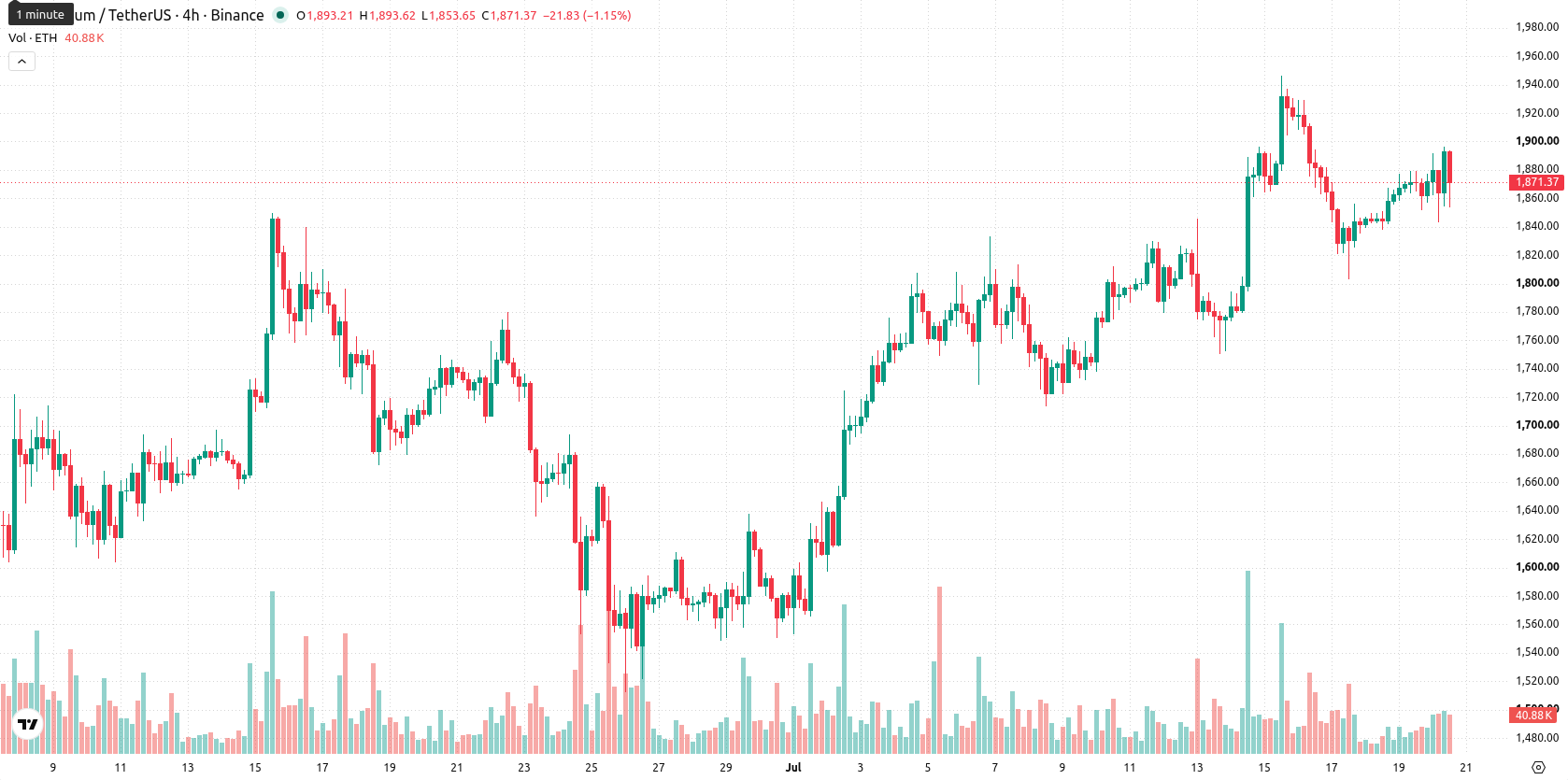
Previously it was reported that cross-chain crypto bridges while essential for interoperability between blockchain networks like Ethereum, remain among the sector's most vulnerable points due to persistent security risks. In light of ongoing developments, investors should closely monitor Ethereum’s exposure to bridge-related exploits, as these vulnerabilities represent a key downside risk that could impact broader network confidence.

 Afghanistan
 Albania
 Algeria
 Angola
 Argentina
 Armenia
 Australia
 Austria
 Azerbaijan
 Bahamas
 Bahrain
 Bangladesh
 Belarus
 Belgium
 Bolivia
 Botswana
 Brazil
 Brunei
 Bulgaria
 Cambodia
 Cameroon
 Canada
 Chile
Chile
 China
China
 Colombia
 Congo
Congo
 Costa Rica
 Cote d'Ivoire
 Croatia
 Cuba
Cuba
 Cyprus
 Czechia
 DR Congo
 Denmark
 Dominican Republic
 Ecuador
 Egypt
Egypt
 El Salvador
 Estonia
 Eswatini
 Ethiopia
 Finland
 France
 Georgia
 Germany
 Ghana
Ghana
 Greece
 Haiti
Haiti
 Hong Kong
 Hungary
 India
India
 Indonesia
 Iran, Islamic republic
 Iraq
Iraq
 Ireland
 Israel
 Italy
Italy
 Jamaica
 Japan
Japan
 Jordan
 Kazakhstan
 Kenya
Kenya
 Korea
Korea
 Kuwait
 Kyrgyzstan
 Laos
Laos
 Latvia
 Lebanon
 Lesotho
 Libya
Libya
 Lithuania
 Luxembourg
 Madagascar
 Malaysia
 Malta
Malta
 Mauritius
 Mexico
 Moldova
 Mongolia
 Montenegro
 Morocco
 Mozambique
 Myanmar
 Namibia
 Nepal
Nepal
 Netherlands
 New Zealand
 Nigeria
 North Macedonia
 Norway
 Oman
Oman
 Pakistan
 Palestine
 Panama
 Papua New Guinea
 Paraguay
 Peru
Peru
 Philippines
 Poland
 Portugal
 Puerto Rico
 Qatar
Qatar
 Reunion
 Romania
 Rwanda
 Saudi Arabia
 Serbia
 Singapore
 Slovakia
 Slovenia
 Somalia
 South Africa
 Spain
Spain
 Sri Lanka
 Sweden
 Switzerland
 Syria
Syria
 Taiwan
 Tajikistan
 Tanzania
 Thailand
 Trinidad and Tobago
 Tunisia
 Turkey
 UAE
UAE
 Uganda
 Ukraine
 United Kingdom
United States
United Kingdom
United States
 Uruguay
 Uzbekistan
 Venezuela
 Vietnam
 Yemen
Yemen
 Zambia
 Zimbabwe