

Gemini valuation slide sharpens focus on regulatory licenses and custody assets

Falling trading activity and a steep share-price decline are shifting attention from Gemini’s exchange business to the strategic value of its regulated infrastructure. The crypto platform’s market capitalization has dropped to about $753 million, raising questions about whether licenses, custody capabilities and customer relationships could matter more to a buyer than the shrinking spot business.
Highlights
- Gemini's market value plunged about 80% from $4 billion to $753 million as second-quarter exchange revenue fell 38% to $12.5 million and platform assets dropped to $8.4 billion.
- Spot trading volume declined 66% year-on-year to $3.8 billion, strengthening views that Gemini's regulatory licenses and custody infrastructure now surpass its core exchange activity in perceived value.
- Cameron and Tyler Winklevoss control 94.5% of Gemini's voting power, making any acquisition highly dependent on their approval and deterring hostile takeovers.
Valuation pressure and acquisition logic
As reported by CoinDesk, Gemini’s stock has fallen about 80% since its public debut, cutting its market value from roughly $4 billion at its peak to about $753 million as revenue, trading volume and platform assets decline.Second-quarter exchange revenue fell 38% from a year earlier to $12.5 million, while spot trading volume dropped 66% to $3.8 billion. Assets on the platform also declined to $8.4 billion from $18.2 billion, reinforcing investor concerns about the scale and momentum of the exchange operation.
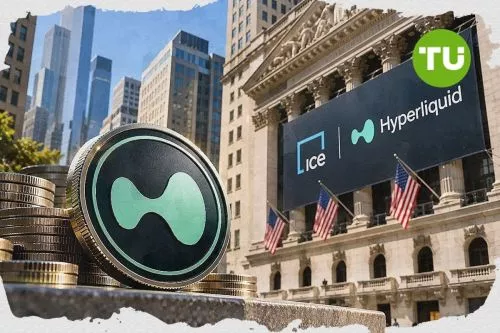
Lorenzo Valente, director of digital assets research at ARK Invest, said in a post on X last month that Hyperliquid should acquire Gemini and use it as a regulated U.S. gateway for perpetual futures and prediction markets. There is no indication Hyperliquid is actively pursuing a deal, but the argument highlights a broader view that Gemini’s licenses, custody infrastructure and customer base may be more valuable than its weakening spot-exchange franchise.
A venture capital investor told CoinDesk that Gemini’s core exchange technology appears to offer limited differentiation from rivals, while its subsidiaries still hold regulatory approvals that would be costly and time-consuming to replicate. That makes any takeover calculation less about buying trading volume and more about securing market access through an established regulated platform.
Control structure and wider crypto M&A implications
The ownership structure could simplify negotiations while also limiting outside pressure. Cameron and Tyler Winklevoss control 94.5% of Gemini’s voting power, meaning any transaction would largely depend on their approval and making a hostile takeover or shareholder-led push effectively impossible.The situation fits a broader pattern in crypto mergers and acquisitions, where buyers increasingly target regulatory infrastructure, distribution and access to customers rather than pure exchange activity. CoinDesk reported in April that prospective buyers were considering Gemini’s shuttered European and UK operations mainly for their regulatory licenses instead of a full takeover, though no deal has emerged amid differing valuation views.
Gemini declined to comment. For potential acquirers, the lower valuation may offer a relatively inexpensive path to regulated U.S. operations, but any serious approach still hinges on whether the Winklevoss brothers are willing to sell.
Our earlier coverage of the latest crypto rally highlighted a rotation away from Bitcoin and toward Layer-2 and DeFi tokens, alongside a noticeable rise in altcoin sentiment indicators. The piece also pointed to improving risk appetite and supportive derivatives positioning—such as rising futures open interest and more bullish short-term options skews—as signals that the move was being reinforced by broader market conditions.






Latest Hyperliquid News


-
 Afghanistan
-
 Albania
-
 Algeria
-
 Angola
-
 Argentina
-
 Armenia
-
 Australia
-
 Austria
-
 Azerbaijan
-
 Bahamas
-
 Bahrain
-
 Bangladesh
-
 Belarus
-
 Belgium
-
 Bolivia
-
 Botswana
-
 Brazil
-
 Brunei
-
 Bulgaria
-
 Cambodia
-
 Cameroon
-
 Canada
-
 Chile
-
 China
-
 Colombia
-
 Congo
-
 Costa Rica
-
 Cote d'Ivoire
-
 Croatia
-
 Cuba
-
 Cyprus
-
 Czechia
-
 DR Congo
-
 Denmark
-
 Dominican Republic
-
 Ecuador
-
 Egypt
-
 El Salvador
-
 Estonia
-
 Eswatini
-
 Ethiopia
-
 Finland
-
 France
-
 Georgia
-
 Germany
-
 Ghana
-
 Greece
-
 Haiti
-
 Hong Kong
-
 Hungary
-
 India
-
 Indonesia
-
 Iran, Islamic republic
-
 Iraq
-
 Ireland
-
 Israel
-
 Italy
-
 Jamaica
-
 Japan
-
 Jordan
-
 Kazakhstan
-
 Kenya
-
 Korea
-
 Kuwait
-
 Kyrgyzstan
-
 Laos
-
 Latvia
-
 Lebanon
-
 Lesotho
-
 Libya
-
 Lithuania
-
 Luxembourg
-
 Madagascar
-
 Malaysia
-
 Malta
-
 Mauritius
-
 Mexico
-
 Moldova
-
 Mongolia
-
 Montenegro
-
 Morocco
-
 Mozambique
-
 Myanmar
-
 Namibia
-
 Nepal
-
 Netherlands
-
 New Zealand
-
 Nigeria
-
 North Macedonia
-
 Norway
-
 Oman
-
 Pakistan
-
 Palestine
-
 Panama
-
 Papua New Guinea
-
 Paraguay
-
 Peru
-
 Philippines
-
 Poland
-
 Portugal
-
 Puerto Rico
-
 Qatar
-
 Reunion
-
 Romania
-
 Rwanda
-
 Saudi Arabia
-
 Serbia
-
 Singapore
-
 Slovakia
-
 Slovenia
-
 Somalia
-
 South Africa
-
 Spain
-
 Sri Lanka
-
 Sweden
-
 Switzerland
-
 Syria
-
 Taiwan
-
 Tajikistan
-
 Tanzania
-
 Thailand
-
 Trinidad and Tobago
-
 Tunisia
-
 Turkey
-
 UAE
-
 Uganda
-
 Ukraine
-
 United Kingdom
-
United States
-
 Uruguay
-
 Uzbekistan
-
 Venezuela
-
 Vietnam
-
 Yemen
-
 Zambia
-
 Zimbabwe
- Forex
- Crypto












