

Theta technical analysis: Oversold conditions and volatility as price nears long-term support

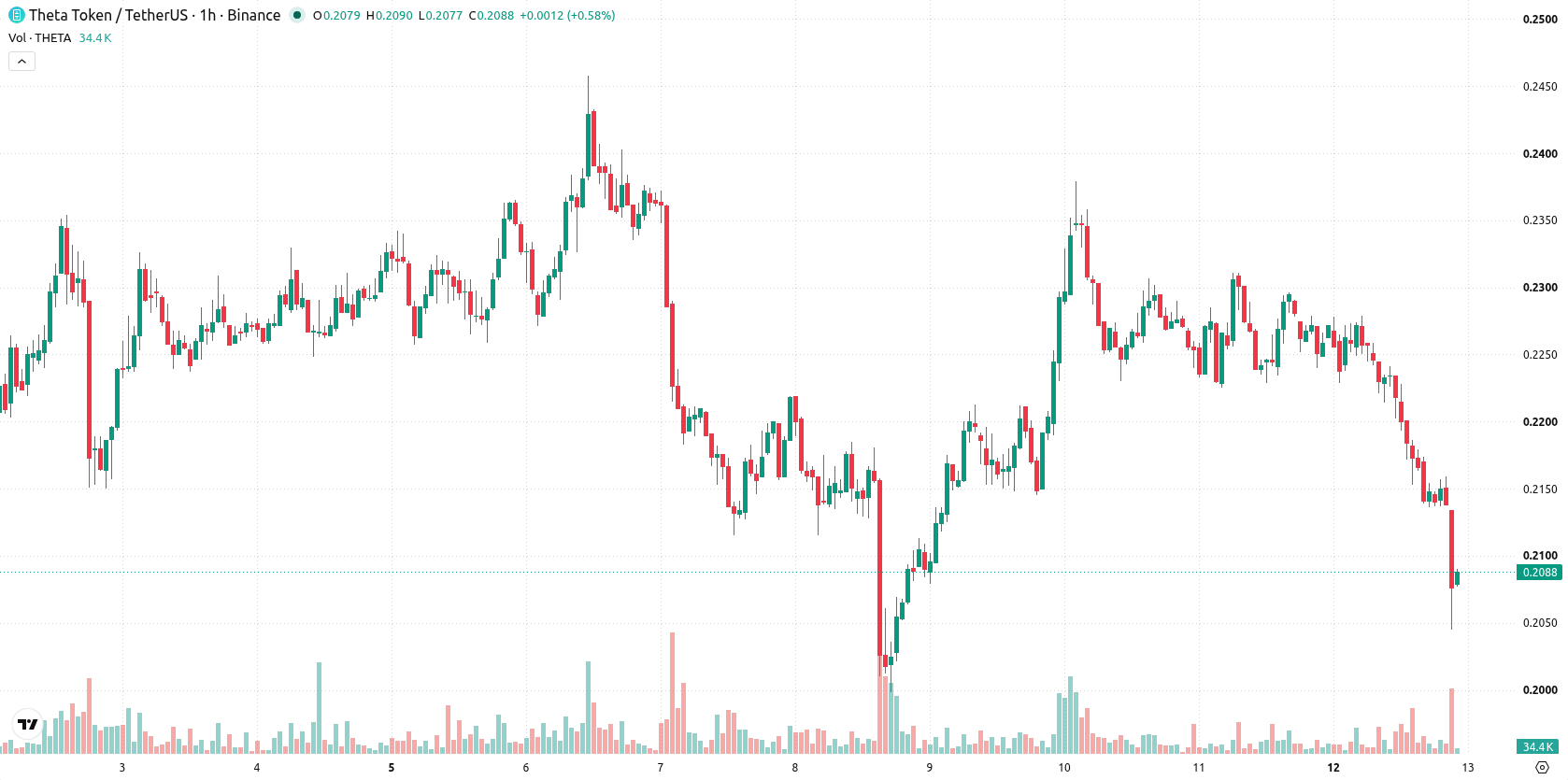
Theta (THETA) is trading at $0.2084, posting a daily decline of 7.38%. The price sits below its key moving averages for the current and intermediate timeframes, indicating ongoing pressure relative to recent trends.
 0.2062
0.2379000
0.2062
0.2379000
Highlights
- THETA/USD is trading below key short-term moving averages, indicating sustained intraday and medium-term selling pressure.
- Bearish momentum dominates with strong Sell signals from MACD and ADX, while indicators show oversold conditions and seller control.
- In the next 2 to 3 trading days, price is expected to fluctuate between $0.1981141 and $0.2222, with a low probability of a rebound.
Bearish momentum intensifies amid oversold readings and resistance tests
THETA/USD is trading beneath the MA-20 ($0.22019) and MA-50 ($0.223928) on the hourly chart, while holding above the MA-200 ($0.175387) on the daily chart. Immediate resistance is at the Ichimoku Kijun level of $0.2202. Bearish momentum is confirmed by strong Sell signals from both MACD and ADX, and sellers continue to dominate per Bull/Bear Power. The RSI is at 27, with Stoch RSI and CCI also in oversold territory. The Awesome Oscillator matches the prevailing downward move, with the price quoted near today's low on elevated volatility.
Downside risk grows as support threatened within volatile trading band
Over the next 2–3 sessions, price action is likely to fluctuate within the $0.1981141 to $0.2222 range, reflecting a typical volatility band relative to current levels. The likelihood of a sustained upward move is very low, while further downside remains a significant risk if support fails. A bullish scenario would require a decisive breakout above immediate resistance, while a bearish extension could occur should the lower boundary give way.
Earlier, analysts noted that Theta was showing renewed bullish momentum with a possible upside breakout in focus. The current technical setup signals a reversal from that outlook, with sustained bearish pressure making the loss of immediate support a prominent risk for traders to monitor.





Latest Theta News






-
 Afghanistan
-
 Albania
-
 Algeria
-
 Angola
-
 Argentina
-
 Armenia
-
 Australia
-
 Austria
-
 Azerbaijan
-
 Bahamas
-
 Bahrain
-
 Bangladesh
-
 Belarus
-
 Belgium
-
 Bolivia
-
 Botswana
-
 Brazil
-
 Brunei
-
 Bulgaria
-
 Cambodia
-
 Cameroon
-
 Canada
-
 Chile
Chile
-
 China
China
-
 Colombia
-
 Congo
Congo
-
 Costa Rica
-
 Cote d'Ivoire
-
 Croatia
-
 Cuba
Cuba
-
 Cyprus
-
 Czechia
-
 DR Congo
-
 Denmark
-
 Dominican Republic
-
 Ecuador
-
 Egypt
Egypt
-
 El Salvador
-
 Estonia
-
 Eswatini
-
 Ethiopia
-
 Finland
-
 France
-
 Georgia
-
 Germany
-
 Ghana
Ghana
-
 Greece
-
 Haiti
Haiti
-
 Hong Kong
-
 Hungary
-
 India
India
-
 Indonesia
-
 Iran, Islamic republic
-
 Iraq
Iraq
-
 Ireland
-
 Israel
-
 Italy
Italy
-
 Jamaica
-
 Japan
Japan
-
 Jordan
-
 Kazakhstan
-
 Kenya
Kenya
-
 Korea
Korea
-
 Kuwait
-
 Kyrgyzstan
-
 Laos
Laos
-
 Latvia
-
 Lebanon
-
 Lesotho
-
 Libya
Libya
-
 Lithuania
-
 Luxembourg
-
 Madagascar
-
 Malaysia
-
 Malta
Malta
-
 Mauritius
-
 Mexico
-
 Moldova
-
 Mongolia
-
 Montenegro
-
 Morocco
-
 Mozambique
-
 Myanmar
-
 Namibia
-
 Nepal
Nepal
-
 Netherlands
-
 New Zealand
-
 Nigeria
-
 North Macedonia
-
 Norway
-
 Oman
Oman
-
 Pakistan
-
 Palestine
-
 Panama
-
 Papua New Guinea
-
 Paraguay
-
 Peru
Peru
-
 Philippines
-
 Poland
-
 Portugal
-
 Puerto Rico
-
 Qatar
Qatar
-
 Reunion
-
 Romania
-
 Rwanda
-
 Saudi Arabia
-
 Serbia
-
 Singapore
-
 Slovakia
-
 Slovenia
-
 Somalia
-
 South Africa
-
 Spain
Spain
-
 Sri Lanka
-
 Sweden
-
 Switzerland
-
 Syria
Syria
-
 Taiwan
-
 Tajikistan
-
 Tanzania
-
 Thailand
-
 Trinidad and Tobago
-
 Tunisia
-
 Turkey
-
 UAE
UAE
-
 Uganda
-
 Ukraine
-
 United Kingdom
-
United States
-
 Uruguay
-
 Uzbekistan
-
 Venezuela
-
 Vietnam
-
 Yemen
Yemen
-
 Zambia
-
 Zimbabwe
- Forex
- Crypto












