The tweet was deleted by the author.
But we saved everything 🙂.


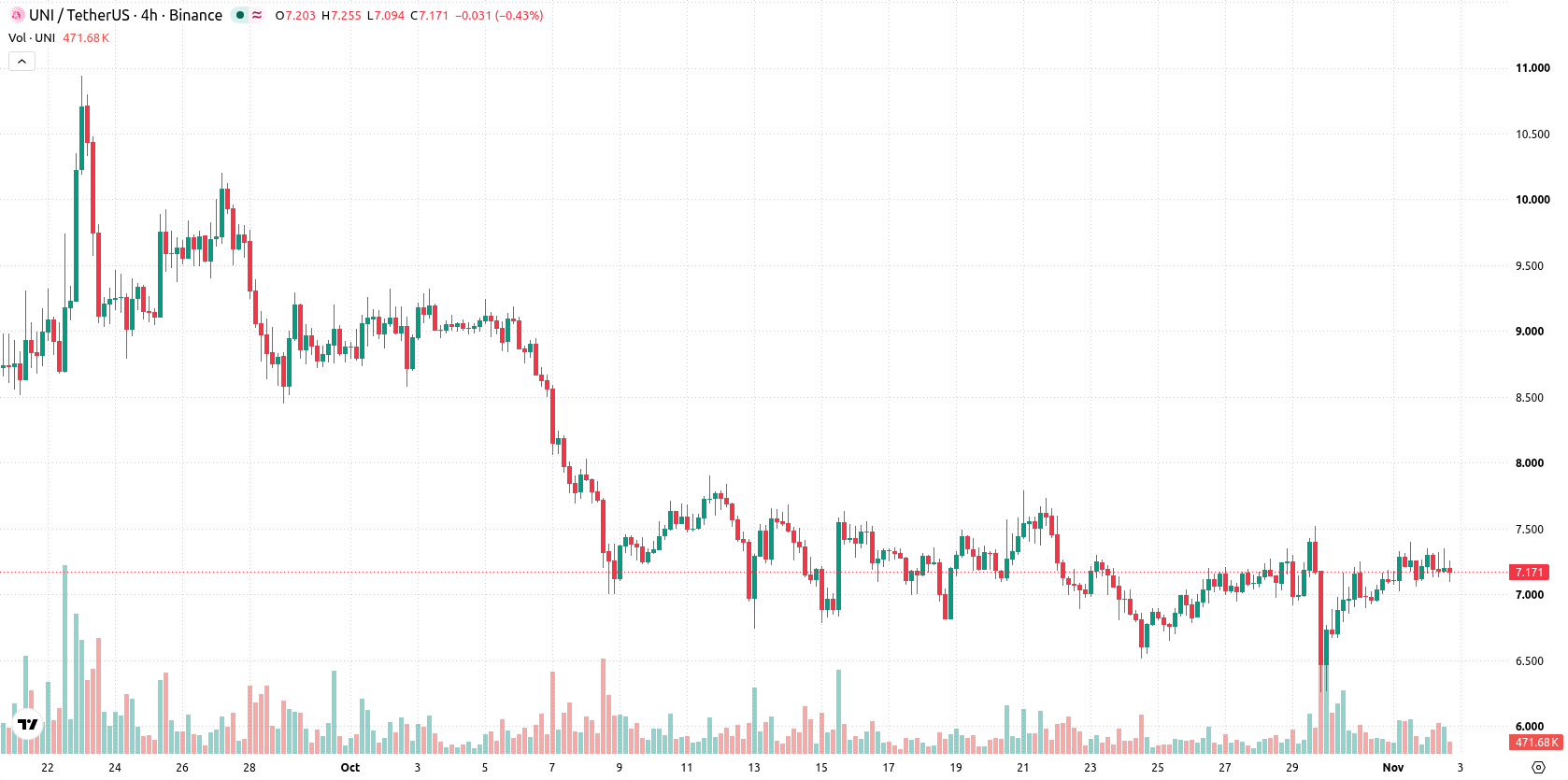
Uniswap (UNI) is trading at $7.154, marking a modest daily gain of 0.07% versus the previous close, with the price moving within a $0.22 intraday band (up 0.4% from the low). The current price sits just below the 20-day moving average at $7.1587 and is well below the 50-day MA but remains comfortably above the 200-day MA. Technical consolidation around the short-term averages and mixed momentum signals have contributed to today's generally sideways movement, supported by recent governance and protocol updates. Positive remarks from Hayden Adams about the platform's continued growth also provided a supportive undertone to sentiment.
 4.553
5.4540
Hayden Adams celebrated Uniswap's eighth anniversary, expressing optimism for the platform's future and acknowledging the community's contribution. This upbeat statement can enhance market sentiment and highlight UNI's growing ecosystem, indirectly supporting adoption and user engagement. Uniswap has activated a protocol fee mechanism that burns UNI tokens and executed a one-time burn of 100 million UNI from its treasury, reducing supply as cumulative trading volume has surpassed $4.5 trillion. Additional developments include aggregator hooks for protocol fee collection and the Token Jar framework, which streamlines on-chain fee conversion for external applications.
View post on X Loading...
UNI trades just below the 20-day MA ($7.1587), well under the 50-day MA ($7.8915), but remains firmly above the 200-day MA ($4.7348). Support is indicated near the Ichimoku Kijun at $7.4220, with resistance at the 50-day MA. The MACD shows strong sell pressure, while the RSI is neutral to slightly bearish, pointing to continued consolidation and moderate volatility. The 5-day forecast sees price action within $6.80 to $7.60, with an upward bias supported by fundamentals highlighted in the recent influencer commentary.
Previously it was reported that Uniswap was experiencing elevated volatility due to significant token movements and heightened discussion around ecosystem security concerns. The current article builds on this by highlighting new developments that may influence near-term price direction, with market participants advised to closely monitor the next major support and resistance levels for actionable signals.



 Afghanistan
 Albania
 Algeria
 Angola
 Argentina
 Armenia
 Australia
 Austria
 Azerbaijan
 Bahamas
 Bahrain
 Bangladesh
 Belarus
 Belgium
 Bolivia
 Botswana
 Brazil
 Brunei
 Bulgaria
 Cambodia
 Cameroon
 Canada
 Chile
 China
 Colombia
 Congo
 Costa Rica
 Cote d'Ivoire
 Croatia
 Cuba
 Cyprus
 Czechia
 DR Congo
 Denmark
 Dominican Republic
 Ecuador
 Egypt
 El Salvador
 Estonia
 Eswatini
 Ethiopia
 Finland
 France
 Georgia
 Germany
 Ghana
 Greece
 Haiti
 Hong Kong
 Hungary
 India
 Indonesia
 Iran, Islamic republic
 Iraq
 Ireland
 Israel
 Italy
 Jamaica
 Japan
 Jordan
 Kazakhstan
 Kenya
 Korea
 Kuwait
 Kyrgyzstan
 Laos
 Latvia
 Lebanon
 Lesotho
 Libya
 Lithuania
 Luxembourg
 Madagascar
 Malaysia
 Malta
 Mauritius
 Mexico
 Moldova
 Mongolia
 Montenegro
 Morocco
 Mozambique
 Myanmar
 Namibia
 Nepal
 Netherlands
 New Zealand
 Nigeria
 North Macedonia
 Norway
 Oman
 Pakistan
 Palestine
 Panama
 Papua New Guinea
 Paraguay
 Peru
 Philippines
 Poland
 Portugal
 Puerto Rico
 Qatar
 Reunion
 Romania
 Rwanda
 Saudi Arabia
 Serbia
 Singapore
 Slovakia
 Slovenia
 Somalia
 South Africa
 Spain
 Sri Lanka
 Sweden
 Switzerland
 Syria
 Taiwan
 Tajikistan
 Tanzania
 Thailand
 Trinidad and Tobago
 Tunisia
 Turkey
 UAE
 Uganda
 Ukraine
 United Kingdom
United States
 Uruguay
 Uzbekistan
 Venezuela
 Vietnam
 Yemen
 Zambia
 Zimbabwe