

Fed rate hike outlook puts pressure on Solana amid growing risk aversion

Solana (SOL) is trading lower as of November 13, 2026, in a market weighed down by rising US policy risks. Escalating expectations of a Federal Reserve rate increase for December have pressured risk assets such as SOL, shifting attention to macroeconomic policy and liquidity conditions. Traders are watching upcoming Federal Reserve statements and new US inflation data as cues for further moves in risk appetite.
 78.5
90.01
Highlights
- Solana came under strong selling pressure as markets priced in a probable US Federal Reserve interest rate hike in December 2026.
- Shifts toward tighter US monetary policy reduced demand for risk assets and drained liquidity from crypto markets.
- SOL continues to trade below key moving averages with sustained bearish momentum and has not broken the H4 Kijun resistance at $83.
Fed rate hike expectations and the risk asset selloff
According to Coinjournal, on November 11, 2026, Solana faced notable selling pressure after the market responded to a sharp increase in expectations that the US Federal Reserve would implement an interest rate hike in December 2026.
Tighter anticipated US monetary policy channels demand away from risk assets like SOL as investors increase preference for safer holdings, diminishing available liquidity within crypto markets. This environment typically suppresses sentiment for assets reliant on risk tolerance and speculative flows.
With the Fed’s policy outlook now a major focus, further volatility cannot be ruled out, especially as upcoming economic indicators and central bank comments may adjust market expectations. No offsetting Solana-specific developments have been reported to moderate the macro-driven selling pressure.
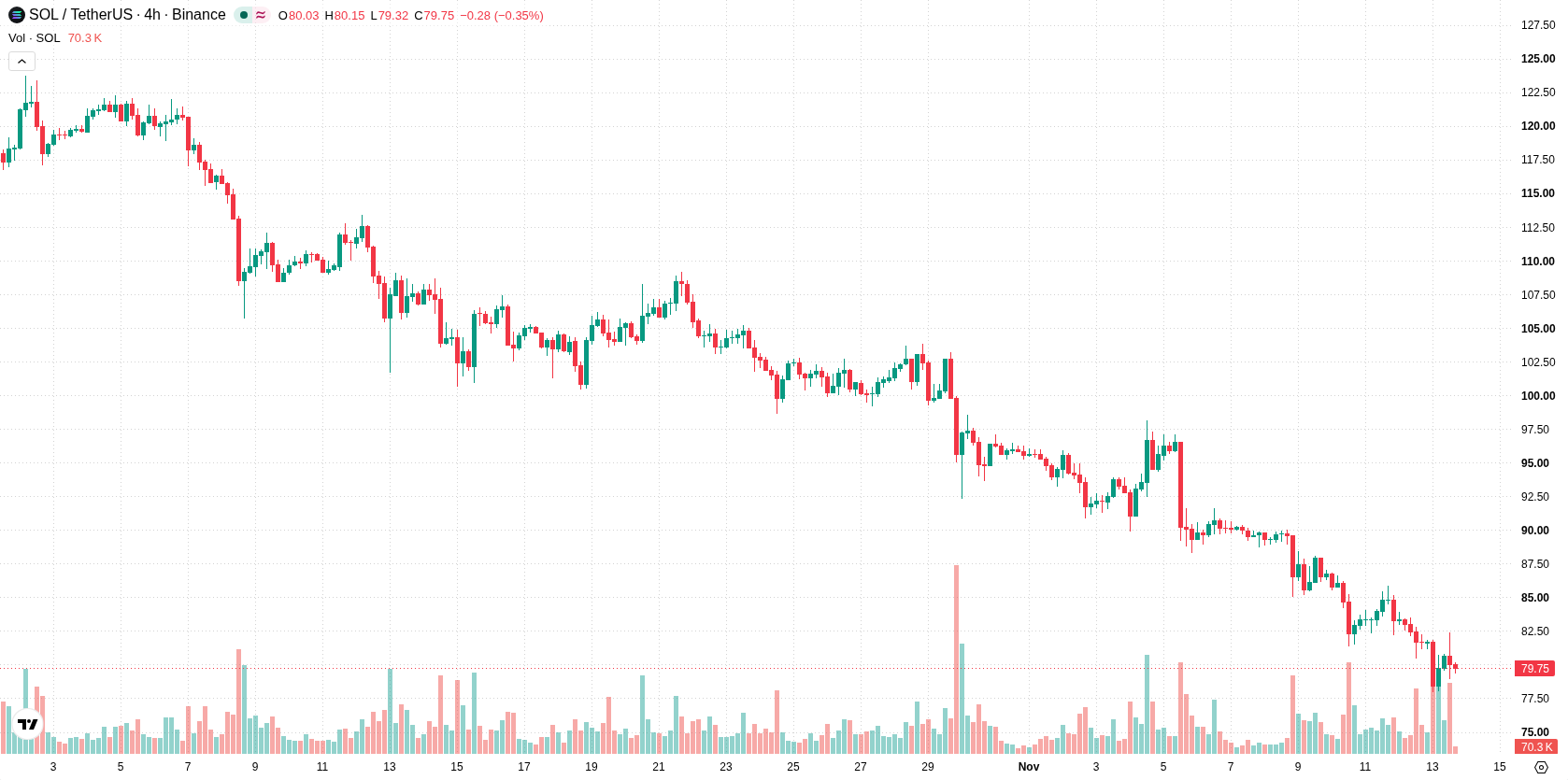
Bearish macro setup reflected in 4H trend signals
On the 4H chart, SOL remains below its 50-period and 200-period simple moving averages, reflecting continued technical weakness. The most recent H4 Kijun resistance at $83 has not been broken, and trend-following indicators show ongoing downside momentum.
MACD and ADX both currently provide sell signals, indicating that negative momentum remains dominant. Shorter-term moving averages are also aligned negatively, pointing to sustained bearish pressure as long as macro risks persist.
Fed policy signals and the $83 resistance as next technical test
External US monetary policy risks remain the dominant factor for price direction unless sentiment stabilizes. A move above the H4 Kijun resistance at $83 would be the first technical sign of relief. Otherwise, SOL stays vulnerable to fresh macro shocks tied to Fed guidance and liquidity shifts.
Earlier, analysts noted that Solana was under sustained selling pressure with a predominantly bearish technical outlook. The current article reinforces this assessment, highlighting that macroeconomic developments—specifically tightening US monetary policy and Federal Reserve guidance—remain the primary factors to watch for Solana's next moves.










-
 Afghanistan
-
 Albania
-
 Algeria
-
 Angola
-
 Argentina
-
 Armenia
-
 Australia
-
 Austria
-
 Azerbaijan
-
 Bahamas
-
 Bahrain
-
 Bangladesh
-
 Belarus
-
 Belgium
-
 Bolivia
-
 Botswana
-
 Brazil
-
 Brunei
-
 Bulgaria
-
 Cambodia
-
 Cameroon
-
 Canada
-
 Chile
-
 China
-
 Colombia
-
 Congo
-
 Costa Rica
-
 Cote d'Ivoire
-
 Croatia
-
 Cuba
-
 Cyprus
-
 Czechia
-
 DR Congo
-
 Denmark
-
 Dominican Republic
-
 Ecuador
-
 Egypt
-
 El Salvador
-
 Estonia
-
 Eswatini
-
 Ethiopia
-
 Finland
-
 France
-
 Georgia
-
 Germany
-
 Ghana
-
 Greece
-
 Haiti
-
 Hong Kong
-
 Hungary
-
 India
-
 Indonesia
-
 Iran, Islamic republic
-
 Iraq
-
 Ireland
-
 Israel
-
 Italy
-
 Jamaica
-
 Japan
-
 Jordan
-
 Kazakhstan
-
 Kenya
-
 Korea
-
 Kuwait
-
 Kyrgyzstan
-
 Laos
-
 Latvia
-
 Lebanon
-
 Lesotho
-
 Libya
-
 Lithuania
-
 Luxembourg
-
 Madagascar
-
 Malaysia
-
 Malta
-
 Mauritius
-
 Mexico
-
 Moldova
-
 Mongolia
-
 Montenegro
-
 Morocco
-
 Mozambique
-
 Myanmar
-
 Namibia
-
 Nepal
-
 Netherlands
-
 New Zealand
-
 Nigeria
-
 North Macedonia
-
 Norway
-
 Oman
-
 Pakistan
-
 Palestine
-
 Panama
-
 Papua New Guinea
-
 Paraguay
-
 Peru
-
 Philippines
-
 Poland
-
 Portugal
-
 Puerto Rico
-
 Qatar
-
 Reunion
-
 Romania
-
 Rwanda
-
 Saudi Arabia
-
 Serbia
-
 Singapore
-
 Slovakia
-
 Slovenia
-
 Somalia
-
 South Africa
-
 Spain
-
 Sri Lanka
-
 Sweden
-
 Switzerland
-
 Syria
-
 Taiwan
-
 Tajikistan
-
 Tanzania
-
 Thailand
-
 Trinidad and Tobago
-
 Tunisia
-
 Turkey
-
 UAE
-
 Uganda
-
 Ukraine
-
 United Kingdom
-
United States
-
 Uruguay
-
 Uzbekistan
-
 Venezuela
-
 Vietnam
-
 Yemen
-
 Zambia
-
 Zimbabwe
- Forex
- Crypto












