

Fed guidance on further rate increases deepens risk context for Tron and related tokens

Tron (TRX) is trading lower, with a clear downward direction observed as of November 14, 2026. The asset remains under pressure amid shifting macroeconomic signals. Traders are closely monitoring U.S. Federal Reserve communications, inflation developments, and bond market trends for further clues.
 0.314
0.3210
Highlights
- Boston Fed President Susan Collins stated higher interest rates may remain necessary to contain U.S. inflation, impacting speculative assets.
- Prolonged elevated rates strengthen the U.S. dollar and yields, reducing the attractiveness of risk-sensitive cryptocurrencies like TRX.
- TRX remains under broad technical selling pressure with downside momentum intact unless a sustained move above $0.32 occurs.
Fed policy outlook pressures crypto market via yields and USD
According to Crypto, on November 13, 2026, Boston Fed President Susan Collins indicated that higher interest rates may still be warranted to contain inflation. This policy stance has already affected the backdrop for a range of speculative assets.
The prospect of prolonged or increased U.S. rates supports a stronger U.S. dollar and higher yields, both of which can weigh on risk-sensitive cryptocurrencies such as TRX. A firmer policy trajectory reduces the relative appeal of digital assets as liquidity and funding conditions tighten.
As a result, the channel linking monetary policy expectations to crypto asset market dynamics remains a key risk factor for TRX. Ongoing attention rests on Fed guidance and economic data, setting the tone for market liquidity and speculative demand.
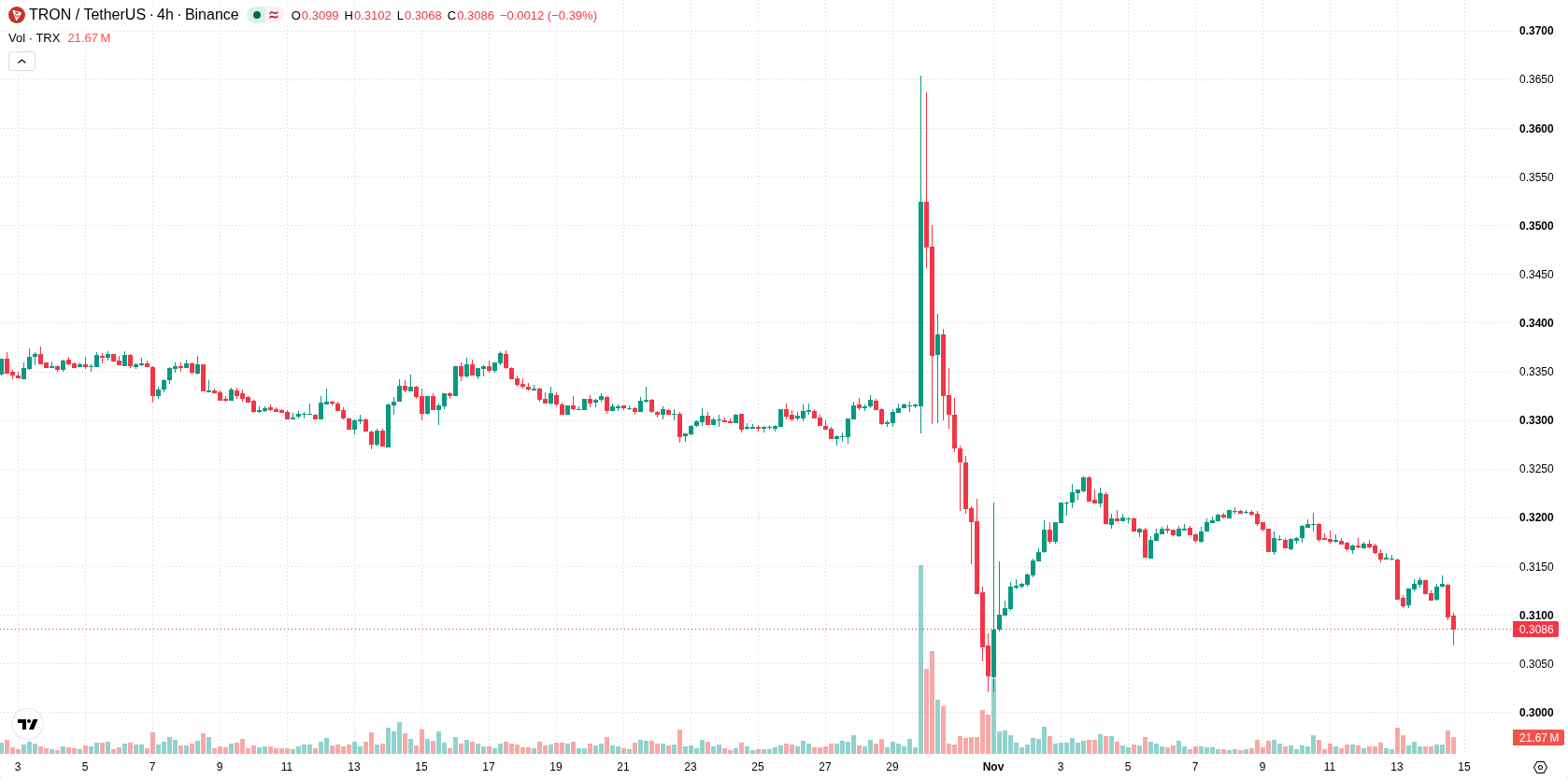
TRX weak below key 4H averages amid macro headwinds
TRX continues to trade below its 50-period and 200-period SMAs on the 4H chart, reflecting the ongoing sell bias that matches the unfavorable policy environment. The asset is also trading underneath the 20-period SMA and the H4 Kijun, further confirming the technical weakness.
Both MACD and ADX on 4H align in signaling continued selling momentum, with MACD showing a strong sell and ADX reinforcing this bearish direction. No conflicting or counterbalancing signals are currently present, suggesting prevailing downward pressure remains intact unless technical levels are recovered.
Fed signals and inflation data shape next TRX trend
A change in Fed policy tone or clearer evidence of cooling inflation could support stabilization of TRX. For now, any move above the H4 Kijun resistance near $0.32 could signal the start of a recovery. Until then, TRX is likely to remain vulnerable to macro-driven selling as long as monetary tightening risks persist.
Earlier, analysts noted that Tron's persistent bearish momentum was primarily driven by unfavorable macroeconomic conditions and technical weakness. The current article strengthens this view, emphasizing that the outlook for TRX remains tied to upcoming U.S. Federal Reserve policy decisions and the broader inflation backdrop.











-
 Afghanistan
-
 Albania
-
 Algeria
-
 Angola
-
 Argentina
-
 Armenia
-
 Australia
-
 Austria
-
 Azerbaijan
-
 Bahamas
-
 Bahrain
-
 Bangladesh
-
 Belarus
-
 Belgium
-
 Bolivia
-
 Botswana
-
 Brazil
-
 Brunei
-
 Bulgaria
-
 Cambodia
-
 Cameroon
-
 Canada
-
 Chile
-
 China
-
 Colombia
-
 Congo
-
 Costa Rica
-
 Cote d'Ivoire
-
 Croatia
-
 Cuba
-
 Cyprus
-
 Czechia
-
 DR Congo
-
 Denmark
-
 Dominican Republic
-
 Ecuador
-
 Egypt
-
 El Salvador
-
 Estonia
-
 Eswatini
-
 Ethiopia
-
 Finland
-
 France
-
 Georgia
-
 Germany
-
 Ghana
-
 Greece
-
 Haiti
-
 Hong Kong
-
 Hungary
-
 India
-
 Indonesia
-
 Iran, Islamic republic
-
 Iraq
-
 Ireland
-
 Israel
-
 Italy
-
 Jamaica
-
 Japan
-
 Jordan
-
 Kazakhstan
-
 Kenya
-
 Korea
-
 Kuwait
-
 Kyrgyzstan
-
 Laos
-
 Latvia
-
 Lebanon
-
 Lesotho
-
 Libya
-
 Lithuania
-
 Luxembourg
-
 Madagascar
-
 Malaysia
-
 Malta
-
 Mauritius
-
 Mexico
-
 Moldova
-
 Mongolia
-
 Montenegro
-
 Morocco
-
 Mozambique
-
 Myanmar
-
 Namibia
-
 Nepal
-
 Netherlands
-
 New Zealand
-
 Nigeria
-
 North Macedonia
-
 Norway
-
 Oman
-
 Pakistan
-
 Palestine
-
 Panama
-
 Papua New Guinea
-
 Paraguay
-
 Peru
-
 Philippines
-
 Poland
-
 Portugal
-
 Puerto Rico
-
 Qatar
-
 Reunion
-
 Romania
-
 Rwanda
-
 Saudi Arabia
-
 Serbia
-
 Singapore
-
 Slovakia
-
 Slovenia
-
 Somalia
-
 South Africa
-
 Spain
-
 Sri Lanka
-
 Sweden
-
 Switzerland
-
 Syria
-
 Taiwan
-
 Tajikistan
-
 Tanzania
-
 Thailand
-
 Trinidad and Tobago
-
 Tunisia
-
 Turkey
-
 UAE
-
 Uganda
-
 Ukraine
-
 United Kingdom
-
United States
-
 Uruguay
-
 Uzbekistan
-
 Venezuela
-
 Vietnam
-
 Yemen
-
 Zambia
-
 Zimbabwe
- Forex
- Crypto












