

Can Tron recover with smart-contract storage optimization and enhanced blockchain stability?

Tron (TRX) is trading lower, with the price remaining modestly below key moving averages as the network adapts to recent protocol changes. The main focus surrounds the activation of TRON Proposal 108, targeting improved smart-contract storage on the blockchain. Investors are watching for any shifts in network activity or performance metrics following this update.
 0.3096
0.3205
Highlights
- TRON Proposal 108, aiming to optimize smart-contract storage and improve blockchain stability, was activated on November 2, 2026.
- The upgrade's impact on user and developer activity remains uncertain, requiring ongoing monitoring of network engagement trends.
- TRX trades below major moving averages and the H4 Kijun resistance at $0.31, with MACD and ADX indicating continued bearish momentum.
TRON protocol upgrade aims to improve blockchain efficiency
According to Blockchain, TRON Proposal 108, which provides a smart-contract storage optimization feature, was activated on November 2, 2026 following approval by Super Representatives.
This protocol upgrade is designed to enhance the stability and reliability of the Tron blockchain, which may influence both user experience and developer participation. If the upgrade achieves its intended effect, it could support longer term engagement and trust in the network, though concrete usage trends will emerge over time.
The realized impact of this change depends on post-upgrade network activity levels, as its success in attracting new users or developers is not assured and is subject to ongoing observation.
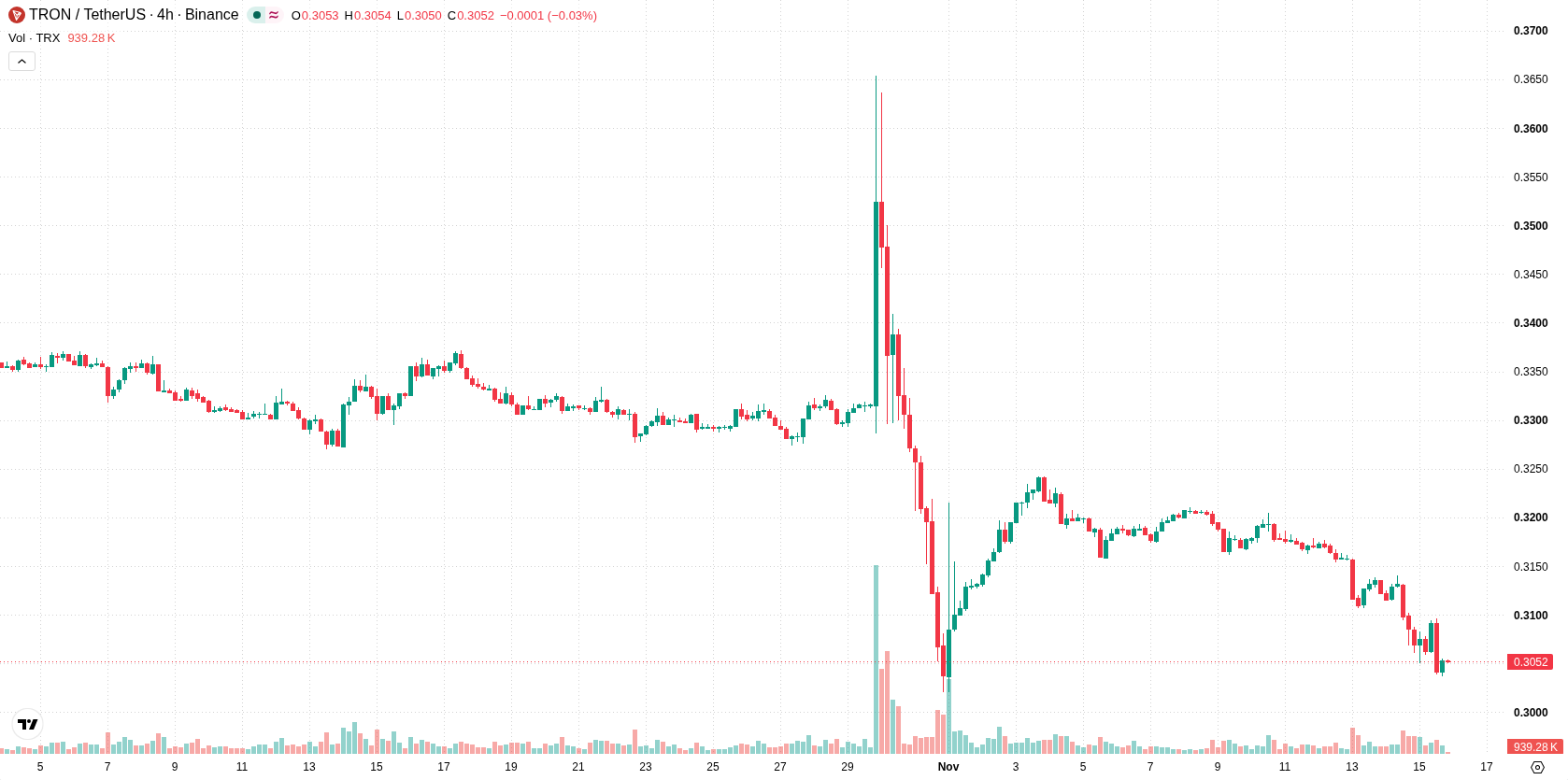
TRX trades below key 4H moving averages and Kijun resistance
On the 4H chart, TRX is trading beneath its main moving averages, signaling a bearish setup on this timeframe. The price also remains under the H4 Kijun resistance, capping short-term upward attempts.
Both MACD and ADX provide sell signals, suggesting bearish momentum is currently dominant. There are no indications of mixed signals or divergence at this point, and the resistance level around $0.31 remains a key technical marker for any potential recovery.
Sustained move above $0.31 needed to confirm technical recovery
Any stabilization in TRX will likely require a sustained move above the H4 Kijun resistance around $0.31. Market participants are monitoring for measurable improvements in network performance to validate the upgrade’s intended effects, while downside risk persists if activity fails to pick up. A clear break above this level would shift focus toward further upside scenarios; otherwise, price action remains vulnerable to continued pressure.
Earlier, analysts noted that Tron's bearish momentum was primarily influenced by unfavorable macroeconomic conditions and persistent technical weakness. The current article adds a new dimension by highlighting recent protocol enhancements, but cautions that the outlook remains dependent on measurable improvements in network performance to offset ongoing downside risk.








-
 Afghanistan
-
 Albania
-
 Algeria
-
 Angola
-
 Argentina
-
 Armenia
-
 Australia
-
 Austria
-
 Azerbaijan
-
 Bahamas
-
 Bahrain
-
 Bangladesh
-
 Belarus
-
 Belgium
-
 Bolivia
-
 Botswana
-
 Brazil
-
 Brunei
-
 Bulgaria
-
 Cambodia
-
 Cameroon
-
 Canada
-
 Chile
-
 China
-
 Colombia
-
 Congo
-
 Costa Rica
-
 Cote d'Ivoire
-
 Croatia
-
 Cuba
-
 Cyprus
-
 Czechia
-
 DR Congo
-
 Denmark
-
 Dominican Republic
-
 Ecuador
-
 Egypt
-
 El Salvador
-
 Estonia
-
 Eswatini
-
 Ethiopia
-
 Finland
-
 France
-
 Georgia
-
 Germany
-
 Ghana
-
 Greece
-
 Haiti
-
 Hong Kong
-
 Hungary
-
 India
-
 Indonesia
-
 Iran, Islamic republic
-
 Iraq
-
 Ireland
-
 Israel
-
 Italy
-
 Jamaica
-
 Japan
-
 Jordan
-
 Kazakhstan
-
 Kenya
-
 Korea
-
 Kuwait
-
 Kyrgyzstan
-
 Laos
-
 Latvia
-
 Lebanon
-
 Lesotho
-
 Libya
-
 Lithuania
-
 Luxembourg
-
 Madagascar
-
 Malaysia
-
 Malta
-
 Mauritius
-
 Mexico
-
 Moldova
-
 Mongolia
-
 Montenegro
-
 Morocco
-
 Mozambique
-
 Myanmar
-
 Namibia
-
 Nepal
-
 Netherlands
-
 New Zealand
-
 Nigeria
-
 North Macedonia
-
 Norway
-
 Oman
-
 Pakistan
-
 Palestine
-
 Panama
-
 Papua New Guinea
-
 Paraguay
-
 Peru
-
 Philippines
-
 Poland
-
 Portugal
-
 Puerto Rico
-
 Qatar
-
 Reunion
-
 Romania
-
 Rwanda
-
 Saudi Arabia
-
 Serbia
-
 Singapore
-
 Slovakia
-
 Slovenia
-
 Somalia
-
 South Africa
-
 Spain
-
 Sri Lanka
-
 Sweden
-
 Switzerland
-
 Syria
-
 Taiwan
-
 Tajikistan
-
 Tanzania
-
 Thailand
-
 Trinidad and Tobago
-
 Tunisia
-
 Turkey
-
 UAE
-
 Uganda
-
 Ukraine
-
 United Kingdom
-
United States
-
 Uruguay
-
 Uzbekistan
-
 Venezuela
-
 Vietnam
-
 Yemen
-
 Zambia
-
 Zimbabwe
- Forex
- Crypto












