

Bitcoin falls as renewed US trade tensions and higher inflation dampen risk appetite

Bitcoin (BTC) is trading lower on November 25, 2026, following renewed US trade tensions and a spike in US core inflation. The risk-off environment has reduced demand for high-risk assets like BTC. Traders are closely watching policy shifts and further inflation signals.
 59835.38
64603.12
Highlights
- US core inflation reached a three-year high in November 2026, and potential new tariffs from a Trump administration reignited trade tensions.
- Bitcoin spot exchange-traded funds sustained $4.9 billion in net outflows in November 2026, signaling reduced institutional involvement.
- Bitcoin trades below key moving averages with MACD and ADX indicating bearish momentum; $60,992 remains a critical resistance for near-term stabilization.
US inflation spike and trade tensions hit Bitcoin demand
According to CryptoSlate, on November 25, 2026, a surge in US core inflation to its highest level in three years, alongside renewed trade tensions featuring potential fresh tariffs from a Trump administration, drove increased selling in the Bitcoin market.
These developments spurred risk-off sentiment among institutional and retail investors, reducing appetite for high-risk assets such as BTC as market participants sought safer positions.
Adding to this, US spot Bitcoin exchange-traded funds experienced $4.9 billion in net outflows in November 2026, which indicated a broad retreat of institutional capital from the asset class during this period, as reported by CryptoSlate CryptoSlate.
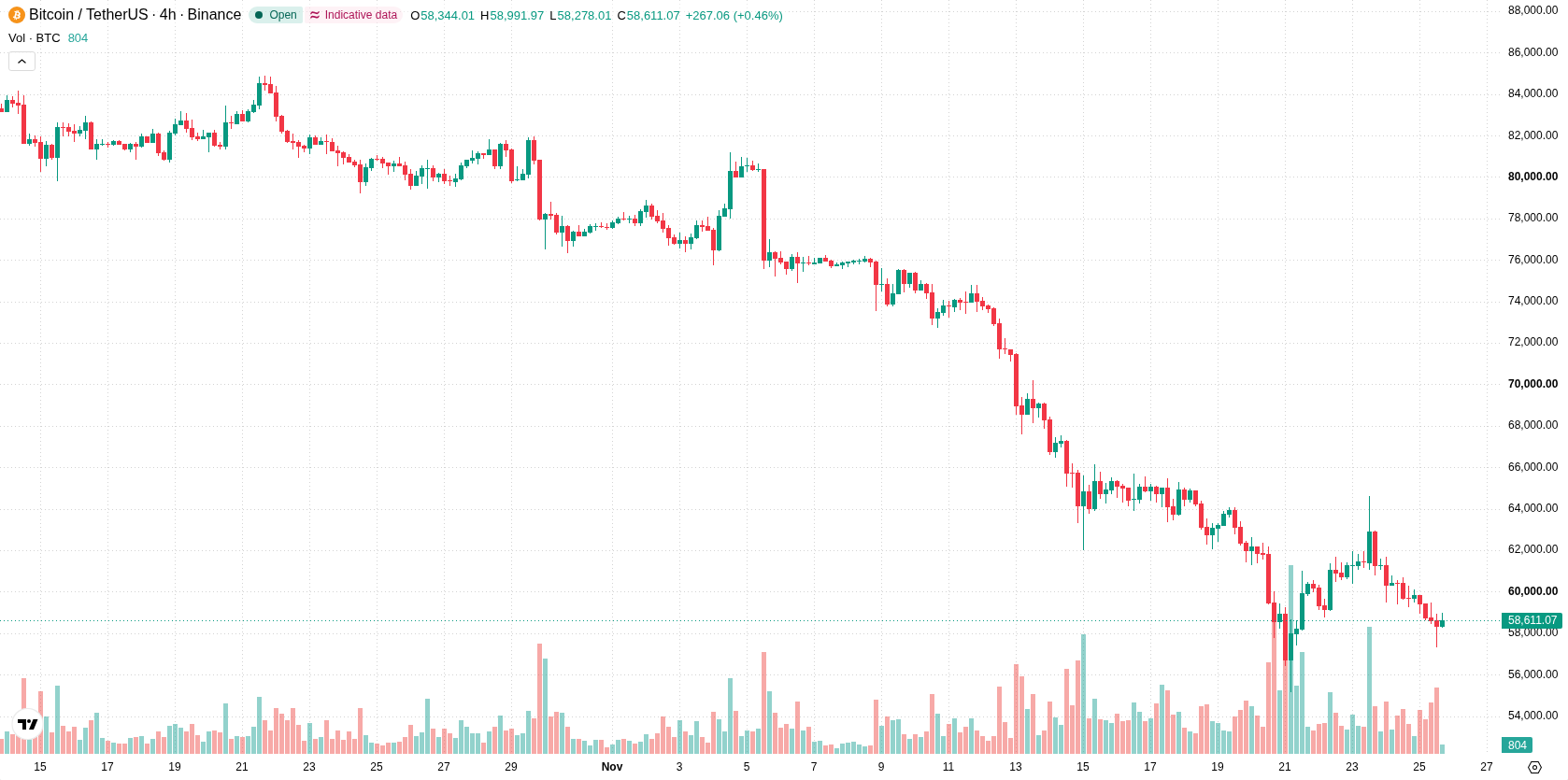
BTC below major 4H moving averages amid risk-off move
On the 4H chart, BTC trades below the 50-period SMA at $61,260 and 200-period SMA at $72,069, showing sustained technical weakness following the uptick in US inflation and trade risks.
The H4 Kijun at $60,992 acts as resistance, while MACD and ADX both signal a bearish outlook. All observed moving averages on the relevant timeframes remain above the current price, underscoring persistent downward momentum.
Further US trade and inflation volatility to guide direction
As long as US trade policy and inflation remain uncertain, BTC is likely to face ongoing headwinds. A move above the resistance area around $60,992 could signal short-term stabilization. Sustained downward pressure would be confirmed if BTC remains capped below this level. Monitoring further developments in US macro policy is key for a change in outlook.
Previously it was reported that UniCredit expanded retail access to Bitcoin-linked investment certificates amid ongoing market volatility. The current downturn, marked by rising U.S. inflation and trade tensions, adds a new challenge to institutional and retail adoption, making upcoming U.S. macro policy developments critical for Bitcoin's direction.










-
 Afghanistan
-
 Albania
-
 Algeria
-
 Angola
-
 Argentina
-
 Armenia
-
 Australia
-
 Austria
-
 Azerbaijan
-
 Bahamas
-
 Bahrain
-
 Bangladesh
-
 Belarus
-
 Belgium
-
 Bolivia
-
 Botswana
-
 Brazil
-
 Brunei
-
 Bulgaria
-
 Cambodia
-
 Cameroon
-
 Canada
-
 Chile
-
 China
-
 Colombia
-
 Congo
-
 Costa Rica
-
 Cote d'Ivoire
-
 Croatia
-
 Cuba
-
 Cyprus
-
 Czechia
-
 DR Congo
-
 Denmark
-
 Dominican Republic
-
 Ecuador
-
 Egypt
-
 El Salvador
-
 Estonia
-
 Eswatini
-
 Ethiopia
-
 Finland
-
 France
-
 Georgia
-
 Germany
-
 Ghana
-
 Greece
-
 Haiti
-
 Hong Kong
-
 Hungary
-
 India
-
 Indonesia
-
 Iran, Islamic republic
-
 Iraq
-
 Ireland
-
 Israel
-
 Italy
-
 Jamaica
-
 Japan
-
 Jordan
-
 Kazakhstan
-
 Kenya
-
 Korea
-
 Kuwait
-
 Kyrgyzstan
-
 Laos
-
 Latvia
-
 Lebanon
-
 Lesotho
-
 Libya
-
 Lithuania
-
 Luxembourg
-
 Madagascar
-
 Malaysia
-
 Malta
-
 Mauritius
-
 Mexico
-
 Moldova
-
 Mongolia
-
 Montenegro
-
 Morocco
-
 Mozambique
-
 Myanmar
-
 Namibia
-
 Nepal
-
 Netherlands
-
 New Zealand
-
 Nigeria
-
 North Macedonia
-
 Norway
-
 Oman
-
 Pakistan
-
 Palestine
-
 Panama
-
 Papua New Guinea
-
 Paraguay
-
 Peru
-
 Philippines
-
 Poland
-
 Portugal
-
 Puerto Rico
-
 Qatar
-
 Reunion
-
 Romania
-
 Rwanda
-
 Saudi Arabia
-
 Serbia
-
 Singapore
-
 Slovakia
-
 Slovenia
-
 Somalia
-
 South Africa
-
 Spain
-
 Sri Lanka
-
 Sweden
-
 Switzerland
-
 Syria
-
 Taiwan
-
 Tajikistan
-
 Tanzania
-
 Thailand
-
 Trinidad and Tobago
-
 Tunisia
-
 Turkey
-
 UAE
-
 Uganda
-
 Ukraine
-
 United Kingdom
-
United States
-
 Uruguay
-
 Uzbekistan
-
 Venezuela
-
 Vietnam
-
 Yemen
-
 Zambia
-
 Zimbabwe
- Forex
- Crypto












