

Prospect of higher US tariffs keeps Bitcoin sensitive as investors turn cautious on risk exposure

Bitcoin (BTC) is trading higher, with price last quoted at $60,426 as of November 26, 2026. The market is responding to recent US macroeconomic concerns, specifically the prospect of higher trade tariffs and persistently strong inflation data. Traders are focused on upcoming US inflation releases and any formal decisions on tariffs, which could drive renewed volatility.
 61622.38
64603.12
Highlights
- Bitcoin fell toward $57,000 as concerns about higher US trade tariffs and stronger PCE inflation data impacted risk assets.
- No immediate confirmation of new US tariffs or monetary tightening emerged, leaving market direction highly reactive to upcoming US economic data.
- BTC trades below key moving averages, with mixed momentum and volatility risks focused on resistance near $60,773 and upcoming policy signals.
US inflation and tariff risks weigh on Bitcoin demand
According to Cointelegraph, on November 25, 2026, Bitcoin declined toward $57,000 as risk assets responded to the prospect of higher US trade tariffs and hotter-than-expected inflation as measured by the PCE index.
These developments created anxiety about possible tightening of US monetary policy, diminishing demand for risk assets as investors reassessed their exposure to cryptocurrencies and equities.
While this macroeconomic backdrop weighed on BTC and other risk-sensitive assets, no new escalation in tariffs or immediate tightening was confirmed, keeping near-term positioning highly sensitive to upcoming US data.
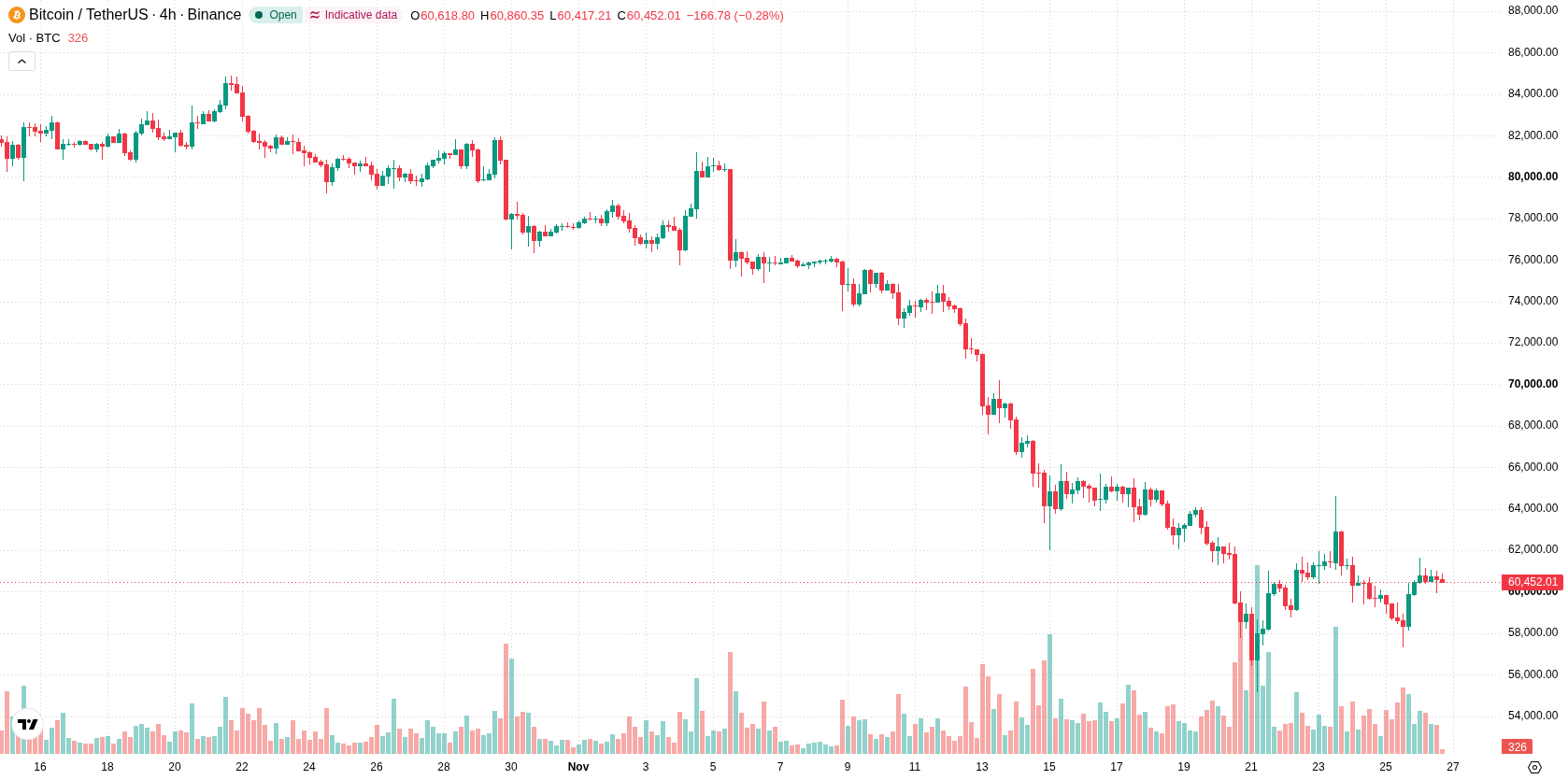
BTC below key 4H SMAs with mixed momentum signals
On the 4-hour chart, BTC continues to trade below both the 50-period SMA at $60,772 and the 200-period SMA at $71,445, highlighting a technical overhang from recent selling pressure.
However, short-term action has begun to stabilize above the 20-period SMA at $60,279, though MACD remains in a strong sell mode and ADX signals weak trend strength, pointing to mixed momentum. The Kijun level at $60,951 is a nearby resistance to watch for further confirmation.
US policy decisions and $60,773 resistance shape near-term Bitcoin moves
BTC remains exposed to shifts in US policy and inflation sentiment. Sustained movement above resistance around $60,773 could signal a return of risk appetite, while failure to clear this area keeps volatility risks elevated. Any surprise in upcoming US macro releases or tariff actions could quickly alter short-term direction.
Previously it was reported that the accessibility of Bitcoin mining has enabled even small-scale participants to contribute to the network and potentially earn rewards, despite the dominance of large players. Current market direction, however, remains largely driven by US macroeconomic developments such as upcoming inflation data and tariff decisions, which are expected to determine Bitcoin's next significant move.






Latest Bitcoin News




-
 Afghanistan
-
 Albania
-
 Algeria
-
 Angola
-
 Argentina
-
 Armenia
-
 Australia
-
 Austria
-
 Azerbaijan
-
 Bahamas
-
 Bahrain
-
 Bangladesh
-
 Belarus
-
 Belgium
-
 Bolivia
-
 Botswana
-
 Brazil
-
 Brunei
-
 Bulgaria
-
 Cambodia
-
 Cameroon
-
 Canada
-
 Chile
-
 China
-
 Colombia
-
 Congo
-
 Costa Rica
-
 Cote d'Ivoire
-
 Croatia
-
 Cuba
-
 Cyprus
-
 Czechia
-
 DR Congo
-
 Denmark
-
 Dominican Republic
-
 Ecuador
-
 Egypt
-
 El Salvador
-
 Estonia
-
 Eswatini
-
 Ethiopia
-
 Finland
-
 France
-
 Georgia
-
 Germany
-
 Ghana
-
 Greece
-
 Haiti
-
 Hong Kong
-
 Hungary
-
 India
-
 Indonesia
-
 Iran, Islamic republic
-
 Iraq
-
 Ireland
-
 Israel
-
 Italy
-
 Jamaica
-
 Japan
-
 Jordan
-
 Kazakhstan
-
 Kenya
-
 Korea
-
 Kuwait
-
 Kyrgyzstan
-
 Laos
-
 Latvia
-
 Lebanon
-
 Lesotho
-
 Libya
-
 Lithuania
-
 Luxembourg
-
 Madagascar
-
 Malaysia
-
 Malta
-
 Mauritius
-
 Mexico
-
 Moldova
-
 Mongolia
-
 Montenegro
-
 Morocco
-
 Mozambique
-
 Myanmar
-
 Namibia
-
 Nepal
-
 Netherlands
-
 New Zealand
-
 Nigeria
-
 North Macedonia
-
 Norway
-
 Oman
-
 Pakistan
-
 Palestine
-
 Panama
-
 Papua New Guinea
-
 Paraguay
-
 Peru
-
 Philippines
-
 Poland
-
 Portugal
-
 Puerto Rico
-
 Qatar
-
 Reunion
-
 Romania
-
 Rwanda
-
 Saudi Arabia
-
 Serbia
-
 Singapore
-
 Slovakia
-
 Slovenia
-
 Somalia
-
 South Africa
-
 Spain
-
 Sri Lanka
-
 Sweden
-
 Switzerland
-
 Syria
-
 Taiwan
-
 Tajikistan
-
 Tanzania
-
 Thailand
-
 Trinidad and Tobago
-
 Tunisia
-
 Turkey
-
 UAE
-
 Uganda
-
 Ukraine
-
 United Kingdom
-
United States
-
 Uruguay
-
 Uzbekistan
-
 Venezuela
-
 Vietnam
-
 Yemen
-
 Zambia
-
 Zimbabwe
- Forex
- Crypto












