
Visa tests stablecoins to speed up cross-border payments

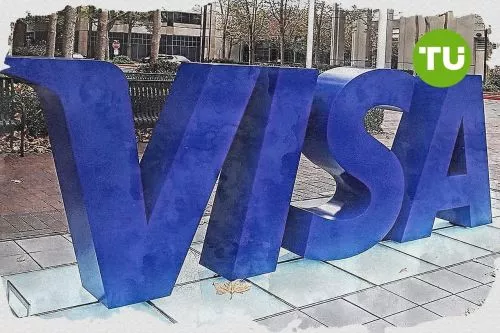
Visa is turning to stablecoins as part of its latest effort to modernize international money transfers.
On September 30, the company announced a pilot program within its Visa Direct platform that allows businesses to use stablecoins for global payouts, potentially reducing long-standing delays and costs tied to traditional systems.
Stablecoins as a settlement layer
Traditionally, cross-border transactions required firms to park large sums in local accounts to cover payments, locking up capital for weeks. Visa’s pilot seeks to change that by treating stablecoins deposited into Visa Direct as cash-on-hand. This setup could cut the need for prefunded balances in multiple currencies, while giving institutions faster access to liquidity and greater treasury flexibility.
“For decades, moving money across borders has depended on slow, costly systems that tie up capital in advance. With this pilot, Visa Direct is testing stablecoins as a new funding source. The goal: reduce friction, unlock faster access to liquidity and give financial institutions more flexibility,” the company said in its release.
The trial is being run with select partners, with plans for a wider rollout through 2026 if the tests succeed.
Global context and regulatory momentum
Visa’s move aligns with broader global momentum in the stablecoin sector. In the U.S., President Donald Trump earlier this year signed the bipartisan GENIUS Act, the first federal framework for stablecoins, requiring regular audits and consumer protection measures.
Across Europe, nine major banks—including ING, UniCredit, SEB, and CaixaBank—are developing a euro-backed stablecoin under the EU’s MiCAR regulations. Meanwhile, markets in Asia, from Singapore to Japan, are advancing oversight frameworks and promoting stablecoin adoption for remittances and cross-border digital payments.
With global stablecoin capitalization now standing at about $307.8 billion, dominated by Tether and Circle’s USD Coin, Visa’s pilot underscores how mainstream finance is increasingly integrating blockchain-based payment solutions.
Looking Ahead
If successful, Visa’s program could transform the infrastructure of global payments by lowering costs, improving liquidity, and streamlining treasury operations. The outcome of this pilot, alongside evolving regulations, will be critical in determining whether stablecoins move from niche tools to foundational elements of international finance.
As previously covered MetaMask launches new stablecoin: Potential rival for USDT and USDC.







-
 Afghanistan
-
 Albania
-
 Algeria
-
 Angola
-
 Argentina
-
 Armenia
-
 Australia
-
 Austria
-
 Azerbaijan
-
 Bahamas
-
 Bahrain
-
 Bangladesh
-
 Belarus
-
 Belgium
-
 Bolivia
-
 Botswana
-
 Brazil
-
 Brunei
-
 Bulgaria
-
 Cambodia
-
 Cameroon
-
 Canada
-
 Chile
Chile
-
 China
China
-
 Colombia
-
 Congo
Congo
-
 Costa Rica
-
 Cote d'Ivoire
-
 Croatia
-
 Cuba
Cuba
-
 Cyprus
-
 Czechia
-
 DR Congo
-
 Denmark
-
 Dominican Republic
-
 Ecuador
-
 Egypt
Egypt
-
 El Salvador
-
 Estonia
-
 Eswatini
-
 Ethiopia
-
 Finland
-
 France
-
 Georgia
-
 Germany
-
 Ghana
Ghana
-
 Greece
-
 Haiti
Haiti
-
 Hong Kong
-
 Hungary
-
 India
India
-
 Indonesia
-
 Iran, Islamic republic
-
 Iraq
Iraq
-
 Ireland
-
 Israel
-
 Italy
Italy
-
 Jamaica
-
 Japan
Japan
-
 Jordan
-
 Kazakhstan
-
 Kenya
Kenya
-
 Korea
Korea
-
 Kuwait
-
 Kyrgyzstan
-
 Laos
Laos
-
 Latvia
-
 Lebanon
-
 Lesotho
-
 Libya
Libya
-
 Lithuania
-
 Luxembourg
-
 Madagascar
-
 Malaysia
-
 Malta
Malta
-
 Mauritius
-
 Mexico
-
 Moldova
-
 Mongolia
-
 Montenegro
-
 Morocco
-
 Mozambique
-
 Myanmar
-
 Namibia
-
 Nepal
Nepal
-
 Netherlands
-
 New Zealand
-
 Nigeria
-
 North Macedonia
-
 Norway
-
 Oman
Oman
-
 Pakistan
-
 Palestine
-
 Panama
-
 Papua New Guinea
-
 Paraguay
-
 Peru
Peru
-
 Philippines
-
 Poland
-
 Portugal
-
 Puerto Rico
-
 Qatar
Qatar
-
 Reunion
-
 Romania
-
 Rwanda
-
 Saudi Arabia
-
 Serbia
-
 Singapore
-
 Slovakia
-
 Slovenia
-
 Somalia
-
 South Africa
-
 Spain
Spain
-
 Sri Lanka
-
 Sweden
-
 Switzerland
-
 Syria
Syria
-
 Taiwan
-
 Tajikistan
-
 Tanzania
-
 Thailand
-
 Trinidad and Tobago
-
 Tunisia
-
 Turkey
-
 UAE
UAE
-
 Uganda
-
 Ukraine
-
 United Kingdom
-
United States
-
 Uruguay
-
 Uzbekistan
-
 Venezuela
-
 Vietnam
-
 Yemen
Yemen
-
 Zambia
-
 Zimbabwe
- Forex
- Crypto












