

US Dollar vs Indian Rupee edges lower as foreign portfolio inflows and softer oil prices support rupee

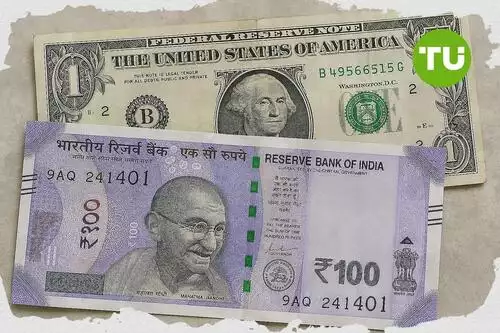
US Dollar vs Indian Rupee (USD/INR) edged lower as sustained foreign portfolio inflows into Indian equities and easing global oil prices fueled rupee strength. The downside move is supported by the pair’s position below all major moving averages, underscoring sustained selling pressure.
 93.1101
94.4702
Highlights
- Foreign portfolio inflows into Indian equities exceeded $11 billion in November, aiding rupee strength as exporters converted more overseas earnings.
- Lower global oil prices reduced India’s import costs, while the Reserve Bank of India used lighter currency intervention amid persistent foreign investment.
- USD/INR trades below key moving averages with bearish technical structure, support at ₹91.9625 and resistance at ₹92.7828, and a high probability of consolidation near current levels.
Record equity inflows and muted RBI action underpin persistent rupee demand
Foreign portfolio inflows into Indian equities surpassed $11 billion in November, contributing to rupee strength as exporters converted more overseas earnings. Lower global oil prices further reduced India’s import costs. The Reserve Bank of India took a lighter approach to currency intervention, accompanied by persistent foreign investment and short-covering of bearish INR positions. Elevated US rates and renewed global uncertainty were noted as potential caps on further rupee gains, though price action has remained under broader selling pressure.
Multi-horizon bearish signals persist as sellers dominate under moving averages
USD/INR is trading below its 20-day, 50-day, and 200-day moving averages (₹94.1866, ₹95.0264, and ₹95.0566 respectively), signaling that the pair is under pressure across short-, medium-, and long-term horizons. The nearest resistance is at ₹92.7828 with a support zone at ₹91.9625; the overall trend structure is bearish, as confirmed by the alignment of the 50-day and 200-day averages. Momentum signals remain soft: both MACD and Average Directional Index (ADX) indicate weak, trendless downside pressure. The Relative Strength Index (RSI) and Stochastic RSI are neutral, while the Commodity Channel Index (CCI) registers as oversold, hinting at some exhaustion in the selloff. Sellers currently dominate intraday dynamics according to the negative Bull/Bear Power (BBP) value. The pair opened nearly flat and is trading near session lows at ₹92.6253, having slipped ₹0.7168 or 0.77% so far, with intraday volatility at 0.69%. Intraday tone remains heavy, reflecting sustained pressure after the open.
Previously it was reported that sustained foreign inflows and limited central bank intervention had prompted a bearish shift in USD/INR, leaving the pair vulnerable to further declines. The current analysis reinforces this view with fresh evidence of persistent selling pressure, indicating that any move below ₹91.9625 could accelerate downside risk in the near term.









-
 Afghanistan
-
 Albania
-
 Algeria
-
 Angola
-
 Argentina
-
 Armenia
-
 Australia
-
 Austria
-
 Azerbaijan
-
 Bahamas
-
 Bahrain
-
 Bangladesh
-
 Belarus
-
 Belgium
-
 Bolivia
-
 Botswana
-
 Brazil
-
 Brunei
-
 Bulgaria
-
 Cambodia
-
 Cameroon
-
 Canada
-
 Chile
-
 China
-
 Colombia
-
 Congo
-
 Costa Rica
-
 Cote d'Ivoire
-
 Croatia
-
 Cuba
-
 Cyprus
-
 Czechia
-
 DR Congo
-
 Denmark
-
 Dominican Republic
-
 Ecuador
-
 Egypt
-
 El Salvador
-
 Estonia
-
 Eswatini
-
 Ethiopia
-
 Finland
-
 France
-
 Georgia
-
 Germany
-
 Ghana
-
 Greece
-
 Haiti
-
 Hong Kong
-
 Hungary
-
 India
-
 Indonesia
-
 Iran, Islamic republic
-
 Iraq
-
 Ireland
-
 Israel
-
 Italy
-
 Jamaica
-
 Japan
-
 Jordan
-
 Kazakhstan
-
 Kenya
-
 Korea
-
 Kuwait
-
 Kyrgyzstan
-
 Laos
-
 Latvia
-
 Lebanon
-
 Lesotho
-
 Libya
-
 Lithuania
-
 Luxembourg
-
 Madagascar
-
 Malaysia
-
 Malta
-
 Mauritius
-
 Mexico
-
 Moldova
-
 Mongolia
-
 Montenegro
-
 Morocco
-
 Mozambique
-
 Myanmar
-
 Namibia
-
 Nepal
-
 Netherlands
-
 New Zealand
-
 Nigeria
-
 North Macedonia
-
 Norway
-
 Oman
-
 Pakistan
-
 Palestine
-
 Panama
-
 Papua New Guinea
-
 Paraguay
-
 Peru
-
 Philippines
-
 Poland
-
 Portugal
-
 Puerto Rico
-
 Qatar
-
 Reunion
-
 Romania
-
 Rwanda
-
 Saudi Arabia
-
 Serbia
-
 Singapore
-
 Slovakia
-
 Slovenia
-
 Somalia
-
 South Africa
-
 Spain
-
 Sri Lanka
-
 Sweden
-
 Switzerland
-
 Syria
-
 Taiwan
-
 Tajikistan
-
 Tanzania
-
 Thailand
-
 Trinidad and Tobago
-
 Tunisia
-
 Turkey
-
 UAE
-
 Uganda
-
 Ukraine
-
 United Kingdom
-
United States
-
 Uruguay
-
 Uzbekistan
-
 Venezuela
-
 Vietnam
-
 Yemen
-
 Zambia
-
 Zimbabwe
- Forex
- Crypto












