

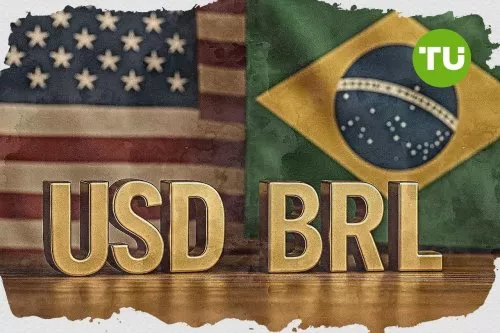
Approval of Brazil's fiscal package drives US Dollar vs Brazilian Real lower by almost 2%

US Dollar vs Brazilian Real (USD/BRL) fell 1.76% as Brazil's Lower House approved a major fiscal package, triggering a reversal in recent Real weakness and contributing to the selloff. The move is contradicted by the strong bullish alignment above all key moving averages, which typically supports upward momentum.
 5.8455
6.0053
Highlights
- Brazil's Lower House approved a major fiscal package by a 353-128 margin, supporting the Real and addressing fiscal concerns.
- The central bank sold US dollars for liquidity and the government signaled spending cuts as price action stays under selling pressure.
- USD/BRL maintains bullish momentum above key moving averages with a 73% probability of an upward move toward R$5.8201 over five days.
Liquidity intervention and fiscal reforms drive investor optimism
Brazil's Lower House approved a significant fiscal package by a 353-128 vote, which addressed immediate fiscal concerns and led to renewed Real strength. The central bank conducted US dollar sales to provide liquidity. Additional government signals toward spending cuts were reported, improving sentiment among investors, though price action has remained under broader selling pressure.
Bullish technical structure challenged as volatility and selling persist
USD/BRL is trading above its 20-day, 50-day, and 200-day moving averages at R$5.7004, R$5.3641, and R$5.1593, confirming bullish momentum across timeframes. Resistance is noted at R$5.7663 with support at R$5.7004, and the prevailing bullish structure is underpinned by the alignment of the key moving averages. Momentum signals remain firm; both MACD and ADX indicate a buying bias. Oscillators such as RSI and CCI are neutral, while the Stochastic RSI is in the oversold zone, pointing to possible near-term volatility. Bull/Bear Power reveals buyers dominating intraday action, although the pair slipped R$0.1024 or 1.76% with early trading flat and prices near the session low. Intraday volatility is high at 1.15%, and despite some strong signals, downside pressure persists after the open.
In a recent review, analysts highlighted that fiscal reforms and central bank interventions had introduced two-way risks for USD/BRL, with sideways movement prevailing after earlier period of volatility. The current setup strengthens this view, with technicals and macro developments suggesting traders should monitor the R$5.7663 resistance for a potential shift in the near-term trend.









-
 Afghanistan
-
 Albania
-
 Algeria
-
 Angola
-
 Argentina
-
 Armenia
-
 Australia
-
 Austria
-
 Azerbaijan
-
 Bahamas
-
 Bahrain
-
 Bangladesh
-
 Belarus
-
 Belgium
-
 Bolivia
-
 Botswana
-
 Brazil
-
 Brunei
-
 Bulgaria
-
 Cambodia
-
 Cameroon
-
 Canada
-
 Chile
-
 China
-
 Colombia
-
 Congo
-
 Costa Rica
-
 Cote d'Ivoire
-
 Croatia
-
 Cuba
-
 Cyprus
-
 Czechia
-
 DR Congo
-
 Denmark
-
 Dominican Republic
-
 Ecuador
-
 Egypt
-
 El Salvador
-
 Estonia
-
 Eswatini
-
 Ethiopia
-
 Finland
-
 France
-
 Georgia
-
 Germany
-
 Ghana
-
 Greece
-
 Haiti
-
 Hong Kong
-
 Hungary
-
 India
-
 Indonesia
-
 Iran, Islamic republic
-
 Iraq
-
 Ireland
-
 Israel
-
 Italy
-
 Jamaica
-
 Japan
-
 Jordan
-
 Kazakhstan
-
 Kenya
-
 Korea
-
 Kuwait
-
 Kyrgyzstan
-
 Laos
-
 Latvia
-
 Lebanon
-
 Lesotho
-
 Libya
-
 Lithuania
-
 Luxembourg
-
 Madagascar
-
 Malaysia
-
 Malta
-
 Mauritius
-
 Mexico
-
 Moldova
-
 Mongolia
-
 Montenegro
-
 Morocco
-
 Mozambique
-
 Myanmar
-
 Namibia
-
 Nepal
-
 Netherlands
-
 New Zealand
-
 Nigeria
-
 North Macedonia
-
 Norway
-
 Oman
-
 Pakistan
-
 Palestine
-
 Panama
-
 Papua New Guinea
-
 Paraguay
-
 Peru
-
 Philippines
-
 Poland
-
 Portugal
-
 Puerto Rico
-
 Qatar
-
 Reunion
-
 Romania
-
 Rwanda
-
 Saudi Arabia
-
 Serbia
-
 Singapore
-
 Slovakia
-
 Slovenia
-
 Somalia
-
 South Africa
-
 Spain
-
 Sri Lanka
-
 Sweden
-
 Switzerland
-
 Syria
-
 Taiwan
-
 Tajikistan
-
 Tanzania
-
 Thailand
-
 Trinidad and Tobago
-
 Tunisia
-
 Turkey
-
 UAE
-
 Uganda
-
 Ukraine
-
 United Kingdom
-
United States
-
 Uruguay
-
 Uzbekistan
-
 Venezuela
-
 Vietnam
-
 Yemen
-
 Zambia
-
 Zimbabwe
- Forex
- Crypto












