

Nigeria remittance inflows reach seven-year H1 high as naira stays stable

Nigeria’s foreign exchange market is showing firmer conditions in 2026 as formal diaspora transfers rise and the naira holds broadly steady across key trading windows. The trend is reinforced by stronger external reserves, which are increasing the country’s buffer against currency pressure even as liquidity conditions remain mixed.
Highlights
- Nigeria's remittance inflows via international money transfer operators surged 38.16 percent year-on-year to $2.85 billion in H1 2026, the highest first-half total in seven years.
- Nigeria's external reserves climbed to $55.12 billion as of October 19, 2026, up 28.69 percent from $42.83 billion a year earlier, marking an 18-year high.
- The naira gained 7.29 percent year to date at the Nigerian Foreign Exchange Market, trading at N1,333.65 per dollar versus N1,430.85 at 2026’s start, with improved reserve levels expected to boost investor confidence.
Remittance growth and reserve support
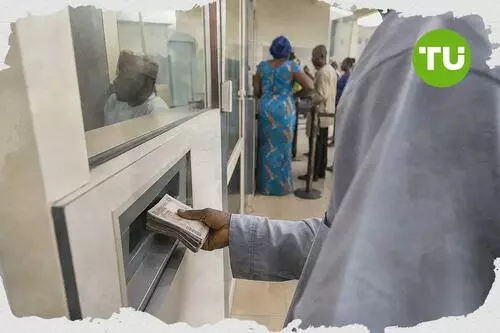
As reported by Business Day, citing the Central Bank of Nigeria, remittance inflows through international money transfer operators reach $2.85 billion between January and June 2026, a 38.16 percent increase from $2.07 billion in the same period of 2025. The total is the highest first-half level in the seven-year data series and represents about $788.5 million in additional inflows.The rebound reverses the 11.78 percent decline recorded in the first half of 2025, when inflows fell from $2.34 billion in January to June 2024 to $2.07 billion a year later. Monthly data show June posts the strongest inflow of the first half at $580.16 million, followed by April at $513.81 million and January at $507.91 million.
Quarterly figures indicate inflows of about $1.29 billion in the first quarter and roughly $1.57 billion in the second quarter, with the latter accounting for around 55 percent of the six-month total. Separately, data published on the CBN website show Nigeria’s external reserves rise to $55.12 billion as of October 19, 2026, their highest level in 18 years, up 28.69 percent from $42.83 billion on October 20, 2025.
Naira performance and market implications
The naira gains 7.29 percent year to date at the Nigerian Foreign Exchange Market, with the dollar quoted at N1,333.65 on Tuesday versus N1,430.85 at the start of January 2026. On a day-to-day basis, the currency is broadly flat from N1,333.72 on Monday, while in the parallel market it appreciates to N1,372 per dollar on Wednesday from N1,500 at the beginning of the year, a gain of 8.53 percent.Foreign exchange trading data show a mixed picture on market activity. Interbank turnover rises 49.59 percent to $60.72 million from $40.59 million on Monday, while the number of deals increases to 70 from 59. At the NFEM window, the number of deals edges up to 235 from 230, but total turnover declines 2.75 percent to $322.21 million from $331.31 million in the previous session.
The stronger reserve position could support confidence in Nigeria’s ability to meet foreign currency obligations and absorb external shocks, although reserve accumulation alone does not guarantee exchange-rate stability. Foreign exchange demand, capital flows, oil receipts and monetary policy remain important drivers of the currency outlook.
CBN Governor Olayemi Cardoso says sustained exchange-rate stability could help deepen Nigeria’s capital markets by reducing currency risks for investors, lenders and businesses. He says the prospects for mobilising long-term naira-denominated capital have increased significantly, while the risks linked to exchange-rate volatility and sharp depreciation have receded considerably.
United Nigeria Airlines’ commercial paper fundraising plan was previously covered by our publication, focusing on its bid to raise up to N20 billion through Series 1 and 2 issuances to finance fleet expansion and boost operational capacity. We noted that, if successful, the funding could strengthen the carrier’s domestic footprint and add momentum to competition in Nigeria’s local aviation market.









-
 Afghanistan
-
 Albania
-
 Algeria
-
 Angola
-
 Argentina
-
 Armenia
-
 Australia
-
 Austria
-
 Azerbaijan
-
 Bahamas
-
 Bahrain
-
 Bangladesh
-
 Belarus
-
 Belgium
-
 Bolivia
-
 Botswana
-
 Brazil
-
 Brunei
-
 Bulgaria
-
 Cambodia
-
 Cameroon
-
 Canada
-
 Chile
-
 China
-
 Colombia
-
 Congo
-
 Costa Rica
-
 Cote d'Ivoire
-
 Croatia
-
 Cuba
-
 Cyprus
-
 Czechia
-
 DR Congo
-
 Denmark
-
 Dominican Republic
-
 Ecuador
-
 Egypt
-
 El Salvador
-
 Estonia
-
 Eswatini
-
 Ethiopia
-
 Finland
-
 France
-
 Georgia
-
 Germany
-
 Ghana
-
 Greece
-
 Haiti
-
 Hong Kong
-
 Hungary
-
 India
-
 Indonesia
-
 Iran, Islamic republic
-
 Iraq
-
 Ireland
-
 Israel
-
 Italy
-
 Jamaica
-
 Japan
-
 Jordan
-
 Kazakhstan
-
 Kenya
-
 Korea
-
 Kuwait
-
 Kyrgyzstan
-
 Laos
-
 Latvia
-
 Lebanon
-
 Lesotho
-
 Libya
-
 Lithuania
-
 Luxembourg
-
 Madagascar
-
 Malaysia
-
 Malta
-
 Mauritius
-
 Mexico
-
 Moldova
-
 Mongolia
-
 Montenegro
-
 Morocco
-
 Mozambique
-
 Myanmar
-
 Namibia
-
 Nepal
-
 Netherlands
-
 New Zealand
-
 Nigeria
-
 North Macedonia
-
 Norway
-
 Oman
-
 Pakistan
-
 Palestine
-
 Panama
-
 Papua New Guinea
-
 Paraguay
-
 Peru
-
 Philippines
-
 Poland
-
 Portugal
-
 Puerto Rico
-
 Qatar
-
 Reunion
-
 Romania
-
 Rwanda
-
 Saudi Arabia
-
 Serbia
-
 Singapore
-
 Slovakia
-
 Slovenia
-
 Somalia
-
 South Africa
-
 Spain
-
 Sri Lanka
-
 Sweden
-
 Switzerland
-
 Syria
-
 Taiwan
-
 Tajikistan
-
 Tanzania
-
 Thailand
-
 Trinidad and Tobago
-
 Tunisia
-
 Turkey
-
 UAE
-
 Uganda
-
 Ukraine
-
 United Kingdom
-
United States
-
 Uruguay
-
 Uzbekistan
-
 Venezuela
-
 Vietnam
-
 Yemen
-
 Zambia
-
 Zimbabwe
- Forex
- Crypto












