

Bank of England inflation outlook tests UK confidence in price target

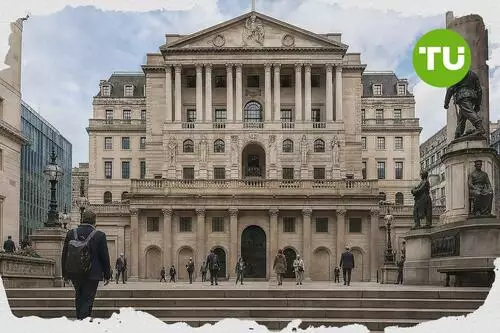
Britain is on course for its longest stretch of inflation staying at or above 2% since the early 1990s, raising questions about confidence in the Bank of England's ability to restore price stability. The central bank's forecasts indicate inflation does not return to target until the third quarter of 2028, while economists warn that prolonged overshoots can start to reshape wage and pricing behaviour.
Highlights
- Bank of England forecasts UK inflation will remain at or above 2% until end-2028, the longest period since the 1994 stretch.
- BoE raised interest rates to 4% in response to renewed energy price surges related to the war in Iran, projecting inflation close to 5% by mid-2027.
- BoE's Inflation Attitudes Survey shows median long-term inflation expectation rose to a record 3.9% in Q2, indicating persistent public concern over price stability.
Inflation path extends beyond target horizon
As reported by Reuters, Bank of England forecasts imply UK inflation remains at or above 2% until the end of 2028, marking the longest such run since a 27-year stretch ended in 1994. The current outlook follows a period in which British consumer prices have risen 44% since mid-2016, more than in any other Western European country.The BoE raises interest rates to 4% this month and says a renewed surge in energy prices linked to the war in Iran pushes inflation close to 5% by mid-2027. Official data published on Wednesday show inflation rises to 3.6% in October, its highest level in a year, though slightly below the central bank's forecast.
Michael Saunders, a senior adviser at Oxford Economics and a former BoE rate-setter, says there is a real risk that the public starts to doubt inflation will return to 2%. He argues the BoE accepts repeated shocks are now part of the economy, but has been slower to adjust its policy approach to counter their inflationary effects more promptly.
Governor Andrew Bailey says the BoE could not have foreseen the wars in Ukraine and Iran, both of which drive up energy prices. Still, some Monetary Policy Committee members, including Chief Economist Huw Pill, criticise the bank for adopting a wait-and-see tone rather than a stronger anti-inflation message.
Expectations and policy credibility in focus
Economists say inflation expectations matter because they influence wage demands and businesses' pricing decisions, which can make inflation harder to bring down. While market-based measures of long-term inflation expectations and business price expectations remain broadly stable, the BoE's Inflation Attitudes Survey points to more persistent concern among households.The survey shows the median expectation for long-term inflation rises to 3.9% in the second quarter, a record high, although a change in pollster may affect the latest reading. Over the past year, nearly half of respondents giving a view expect inflation of 4% or more, up from about a third in 2020 and 2021, and above the share seen at the peak of the 2022 cost-of-living crisis.
Rob Wood, chief UK economist at Pantheon Macroeconomics, says the de-anchoring of expectations goes beyond a risk and is already happening. He forecasts inflation averages above 4% between 2021 and 2028, arguing it is unsurprising if households expect price growth to stay above the BoE's 2% target.
Saunders says the BoE has only one effective tool, higher interest rates, and should use it even if the adjustment is painful. Other MPC members remain concerned that rate rises are a blunt response to supply shocks such as higher energy import costs, although the central bank signals a firmer communications stance by issuing a statement after Wednesday's inflation data and says it will continue to set rates to ensure inflation returns to target and stays there.
We have also looked at October inflation jump to 3.6% as higher energy bills squeezed UK households.






Latest Bank of England News



-
 Afghanistan
-
 Albania
-
 Algeria
-
 Angola
-
 Argentina
-
 Armenia
-
 Australia
-
 Austria
-
 Azerbaijan
-
 Bahamas
-
 Bahrain
-
 Bangladesh
-
 Belarus
-
 Belgium
-
 Bolivia
-
 Botswana
-
 Brazil
-
 Brunei
-
 Bulgaria
-
 Cambodia
-
 Cameroon
-
 Canada
-
 Chile
-
 China
-
 Colombia
-
 Congo
-
 Costa Rica
-
 Cote d'Ivoire
-
 Croatia
-
 Cuba
-
 Cyprus
-
 Czechia
-
 DR Congo
-
 Denmark
-
 Dominican Republic
-
 Ecuador
-
 Egypt
-
 El Salvador
-
 Estonia
-
 Eswatini
-
 Ethiopia
-
 Finland
-
 France
-
 Georgia
-
 Germany
-
 Ghana
-
 Greece
-
 Haiti
-
 Hong Kong
-
 Hungary
-
 India
-
 Indonesia
-
 Iran, Islamic republic
-
 Iraq
-
 Ireland
-
 Israel
-
 Italy
-
 Jamaica
-
 Japan
-
 Jordan
-
 Kazakhstan
-
 Kenya
-
 Korea
-
 Kuwait
-
 Kyrgyzstan
-
 Laos
-
 Latvia
-
 Lebanon
-
 Lesotho
-
 Libya
-
 Lithuania
-
 Luxembourg
-
 Madagascar
-
 Malaysia
-
 Malta
-
 Mauritius
-
 Mexico
-
 Moldova
-
 Mongolia
-
 Montenegro
-
 Morocco
-
 Mozambique
-
 Myanmar
-
 Namibia
-
 Nepal
-
 Netherlands
-
 New Zealand
-
 Nigeria
-
 North Macedonia
-
 Norway
-
 Oman
-
 Pakistan
-
 Palestine
-
 Panama
-
 Papua New Guinea
-
 Paraguay
-
 Peru
-
 Philippines
-
 Poland
-
 Portugal
-
 Puerto Rico
-
 Qatar
-
 Reunion
-
 Romania
-
 Rwanda
-
 Saudi Arabia
-
 Serbia
-
 Singapore
-
 Slovakia
-
 Slovenia
-
 Somalia
-
 South Africa
-
 Spain
-
 Sri Lanka
-
 Sweden
-
 Switzerland
-
 Syria
-
 Taiwan
-
 Tajikistan
-
 Tanzania
-
 Thailand
-
 Trinidad and Tobago
-
 Tunisia
-
 Turkey
-
 UAE
-
 Uganda
-
 Ukraine
-
 United Kingdom
-
United States
-
 Uruguay
-
 Uzbekistan
-
 Venezuela
-
 Vietnam
-
 Yemen
-
 Zambia
-
 Zimbabwe
- Forex
- Crypto












