

Philippines pushes to improve governance to revive investment

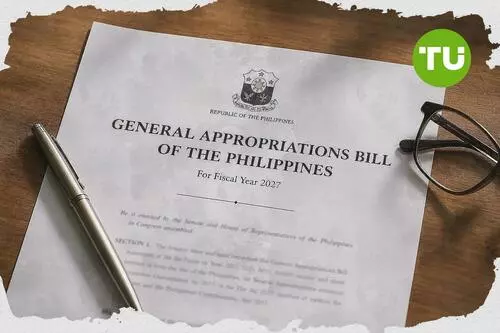
Amid persistent economic uncertainty and high operating costs, business groups and economists are urging the Philippine government to strengthen governance and maintain a stable regulatory environment to help revive investment. They say stronger policy consistency, transparency in the proposed 2027 budget and lower business costs are critical to turning investment commitments into actual projects and jobs.
Highlights
- Approved foreign investments reached P166 billion in July-September, but actual FDI inflows dropped 23.9% year-on-year in January-July, signaling weak project conversion.
- Gross capital formation fell 4.4% and economic growth hit only 2.5% in the first nine months of 2026, below the 3.5%-4.5% government target.
- Business leaders highlight policy inconsistency, regulatory uncertainty, high costs, slow infrastructure spending, and governance concerns as key barriers to reviving private investment and job creation.
Calls for policy stability and budget transparency
As reported by BusinessWorld Online, business leaders say restoring investor confidence in the Philippines depends on better governance, transparent public spending and respect for existing contracts. Makati Business Club Chairman Edgar O. Chua says improved governance should begin with a 2027 national budget focused on priority projects with full documentation, rather than questionable or low-priority insertions.Chua also calls for the prosecution of corrupt public officials and their private-sector accomplices, while stressing that investors need a predictable regulatory environment that does not alter agreed contract provisions. He says high inflation, elevated interest rates and sluggish economic growth continue to make investors cautious.
Former Management Association of the Philippines President Rene D. Almendras says domestic and external uncertainties are reinforcing a perception of instability in the economy. He says investors need a clear and executable fiscal plan, backed by competent officials who can deliver results.
Federation of Philippine Industries Chair Elizabeth H. Lee says the country is still able to attract investment commitments, pointing to P166 billion in approved foreign investments in the July-to-September period. However, she says the larger problem is converting those pledges into concrete projects, noting that jobs are created only when commitments turn into factories and operating businesses.
Lee adds that actual foreign direct investment inflows remain below year-earlier levels despite higher approvals. She says confidence ultimately depends on consistent policies, transparent regulations and institutions that uphold accountability and the rule of law.
Investment slowdown weighs on growth outlook
Philippine Chamber of Commerce and Industry President Ferdinand A. Ferrer says many companies are delaying expansion because of elevated operating costs, especially fuel and imported raw materials. He says private investment could start recovering next year if economic conditions become more stable, particularly in the Middle East, helping reduce fuel costs.Economists warn that a prolonged investment slowdown is limiting both growth and job creation. Ser Percival K. Peña-Reyes of the Ateneo Center for Economic Research and Development says weaker investment reduces construction activity, slows business expansion and cuts employment opportunities, especially in manufacturing, construction and related services.
He adds that weak capital formation also constrains productivity gains, technology adoption and the creation of higher-paying jobs. The Philippine economy grows by 2.5% in the first nine months of 2026, while gross capital formation contracts by 4.4%, leaving growth below the government’s 3.5% to 4.5% full-year target.
Peña-Reyes says governance concerns, policy uncertainty, high electricity and financing costs, infrastructure and logistics bottlenecks, and bureaucratic red tape remain major barriers to investment. He also points to a 23.9% drop in net FDI inflows in the January-to-July period, arguing that restoring confidence requires not only incentives but also consistent policies, stronger transparency, faster infrastructure execution and lower costs of doing business.
University of Asia and the Pacific economist Marco Antonio C. Agonia says investment formation remains weak because of the Middle East war, slow government infrastructure spending and elevated interest rates. He says faster infrastructure execution and stronger regulatory certainty could help support a recovery, with investment potentially beginning to improve by 2027 as public spending rises and macroeconomic conditions stabilize.
Previously, we outlined the main factors behind retail dollar bonds draining liquidity and pushing Philippine Treasury yields higher at auctions.






Latest Fiscal Data News



-
 Afghanistan
-
 Albania
-
 Algeria
-
 Angola
-
 Argentina
-
 Armenia
-
 Australia
-
 Austria
-
 Azerbaijan
-
 Bahamas
-
 Bahrain
-
 Bangladesh
-
 Belarus
-
 Belgium
-
 Bolivia
-
 Botswana
-
 Brazil
-
 Brunei
-
 Bulgaria
-
 Cambodia
-
 Cameroon
-
 Canada
-
 Chile
-
 China
-
 Colombia
-
 Congo
-
 Costa Rica
-
 Cote d'Ivoire
-
 Croatia
-
 Cuba
-
 Cyprus
-
 Czechia
-
 DR Congo
-
 Denmark
-
 Dominican Republic
-
 Ecuador
-
 Egypt
-
 El Salvador
-
 Estonia
-
 Eswatini
-
 Ethiopia
-
 Finland
-
 France
-
 Georgia
-
 Germany
-
 Ghana
-
 Greece
-
 Haiti
-
 Hong Kong
-
 Hungary
-
 India
-
 Indonesia
-
 Iran, Islamic republic
-
 Iraq
-
 Ireland
-
 Israel
-
 Italy
-
 Jamaica
-
 Japan
-
 Jordan
-
 Kazakhstan
-
 Kenya
-
 Korea
-
 Kuwait
-
 Kyrgyzstan
-
 Laos
-
 Latvia
-
 Lebanon
-
 Lesotho
-
 Libya
-
 Lithuania
-
 Luxembourg
-
 Madagascar
-
 Malaysia
-
 Malta
-
 Mauritius
-
 Mexico
-
 Moldova
-
 Mongolia
-
 Montenegro
-
 Morocco
-
 Mozambique
-
 Myanmar
-
 Namibia
-
 Nepal
-
 Netherlands
-
 New Zealand
-
 Nigeria
-
 North Macedonia
-
 Norway
-
 Oman
-
 Pakistan
-
 Palestine
-
 Panama
-
 Papua New Guinea
-
 Paraguay
-
 Peru
-
 Philippines
-
 Poland
-
 Portugal
-
 Puerto Rico
-
 Qatar
-
 Reunion
-
 Romania
-
 Rwanda
-
 Saudi Arabia
-
 Serbia
-
 Singapore
-
 Slovakia
-
 Slovenia
-
 Somalia
-
 South Africa
-
 Spain
-
 Sri Lanka
-
 Sweden
-
 Switzerland
-
 Syria
-
 Taiwan
-
 Tajikistan
-
 Tanzania
-
 Thailand
-
 Trinidad and Tobago
-
 Tunisia
-
 Turkey
-
 UAE
-
 Uganda
-
 Ukraine
-
 United Kingdom
-
United States
-
 Uruguay
-
 Uzbekistan
-
 Venezuela
-
 Vietnam
-
 Yemen
-
 Zambia
-
 Zimbabwe
- Forex
- Crypto












