
The tweet was deleted by the author.
But we saved everything 🙂.
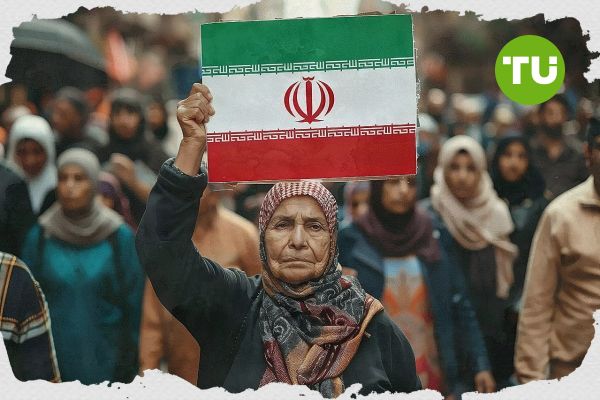
Iran has been swept by mass protests triggered by a deep economic crisis. The situation has escalated to the point where Donald Trump has openly spoken about the possibility of military intervention. But there is another factor in this story that has proven important both for those in power and for ordinary people: cryptocurrencies.
Iran is experiencing one of the most severe crises in recent decades. Protests that began in late December 2025 quickly turned into a nationwide movement, spreading across the entire country. Hundreds of thousands of people took to the streets of Tehran and dozens of other cities, despite harsh pressure from security forces, internet shutdowns, and disruptions to mobile communications.
The authorities’ response has been extremely brutal. According to human rights groups, the death toll has already reached the hundreds, with thousands of people arrested. The regime of Supreme Leader Ali Khamenei is trying to maintain control through force and information blackouts, but the protests have not subsided and continue to spread. The scale of the unrest is already being compared to the largest upheavals since the 1979 revolution.
The escalation has gone beyond Iran’s borders. U.S. President Donald Trump has publicly stated that he is considering “very tough options,” including military intervention, if Iranian authorities continue using lethal force against civilians. Washington is also discussing cyber operations, new sanctions, and ways to help protesters bypass censorship, including through satellite communications.
The protests in Iran did not start over politics, but over money. Over the past year, the Iranian rial has sharply depreciated, inflation has surged, and prices for food, fuel, and medicine have risen severalfold. For many families, this became the breaking point, turning daily life into a struggle for survival.
The economic crisis has been worsened by sanctions that have weighed on the country for years. They have restricted oil exports, access to foreign currency, and the functioning of the banking system. As a result, the state is running out of funds, businesses are shutting down, unemployment is rising, and real incomes continue to fall. At the same time, the authorities have offered no clear plan for overcoming the crisis.
Social tension had been building for years, but the current economic collapse became the trigger. People took to the streets not only because of rising prices, but also because of a sense of total hopelessness. The harsh response by security forces only fueled the protests, turning economic frustration into open confrontation with the regime.
It would be wrong to say that Iran’s authorities did nothing to prevent this outcome. Under sanctions and international isolation, they have long searched for ways to circumvent restrictions, and cryptocurrencies became one of those tools. State-linked entities, including the Islamic Revolutionary Guard Corps, used crypto exchanges and stablecoins to conduct cross-border payments, pay for supplies, and move funds outside the traditional banking system. Hundreds of millions of dollars reportedly passed through such schemes over several years.
However, these operations did not solve the core problems. Cryptocurrencies helped finance specific transactions and sustain shadow foreign trade, but they could not replace full access to the global financial system. Iran’s economy remained cut off from investment, exports, and stable foreign currency inflows, while the benefits of crypto-based schemes were concentrated in the hands of a narrow circle close to the authorities.
As a result, attempts to bypass sanctions using cryptocurrencies failed to produce a systemic effect. They did not stop the collapse of the rial, did not curb inflation, and did nothing to improve the lives of most Iranians.
If cryptocurrencies became a sanctions-evasion tool for the authorities, for ordinary Iranians they turned into a means of survival. As the national currency lost value, people looked for ways to preserve their savings. U.S. dollars and euros were largely inaccessible, and the banking system was unreliable, so part of the population began actively using bitcoin and stablecoins, primarily USDT.
Cryptocurrencies matter not only as money, but also as infrastructure for transfers and connectivity. Iranians use them to receive support from relatives abroad, pay for services, and bypass currency controls. During mass internet shutdowns and mobile network disruptions, this became critical: traditional banking channels simply stop working in such moments.
Against this backdrop, interest surged in BitChat, an encrypted messenger that works without the internet and relies on Bluetooth connections between devices. The app allows direct message transmission even during a complete blackout and has already been used during protests in other countries. Together with cryptocurrencies and Elon Musk’s Starlink satellite internet, such tools have become a way for Iranians to maintain communication, coordination, and at least some degree of financial freedom under harsh censorship.
In Iran, cryptocurrencies have become tools for different sides, but none of them found a “magic button.” For the authorities, digital assets helped bypass sanctions, but they did not stop the collapse of the rial or rising prices. These schemes worked in a limited way and in the interests of a small group, while the economic crisis and public anger only deepened.
For ordinary Iranians, cryptocurrencies proved to be practical: a way to store value in USDT or bitcoin, receive cross-border transfers, and pay for services when banking channels fail. And when the authorities shut down the internet, tools like BitChat move to the forefront. But even with all their usefulness, cryptocurrencies and such technologies do not address the root of the problem. They can help people survive chaos, but they cannot replace the political and economic changes that drove people into the streets.

 Afghanistan
 Albania
 Algeria
 Angola
 Argentina
 Armenia
 Australia
 Austria
 Azerbaijan
 Bahamas
 Bahrain
 Bangladesh
 Belarus
 Belgium
 Bolivia
 Botswana
 Brazil
 Brunei
 Bulgaria
 Cambodia
 Cameroon
 Canada
 Chile
Chile
 China
China
 Colombia
 Congo
Congo
 Costa Rica
 Cote d'Ivoire
 Croatia
 Cuba
Cuba
 Cyprus
 Czechia
 DR Congo
 Denmark
 Dominican Republic
 Ecuador
 Egypt
Egypt
 El Salvador
 Estonia
 Eswatini
 Ethiopia
 Finland
 France
 Georgia
 Germany
 Ghana
Ghana
 Greece
 Haiti
Haiti
 Hong Kong
 Hungary
 India
India
 Indonesia
 Iran, Islamic republic
 Iraq
Iraq
 Ireland
 Israel
 Italy
Italy
 Jamaica
 Japan
Japan
 Jordan
 Kazakhstan
 Kenya
Kenya
 Korea
Korea
 Kuwait
 Kyrgyzstan
 Laos
Laos
 Latvia
 Lebanon
 Lesotho
 Libya
Libya
 Lithuania
 Luxembourg
 Madagascar
 Malaysia
 Malta
Malta
 Mauritius
 Mexico
 Moldova
 Mongolia
 Montenegro
 Morocco
 Mozambique
 Myanmar
 Namibia
 Nepal
Nepal
 Netherlands
 New Zealand
 Nigeria
 North Macedonia
 Norway
 Oman
Oman
 Pakistan
 Palestine
 Panama
 Papua New Guinea
 Paraguay
 Peru
Peru
 Philippines
 Poland
 Portugal
 Puerto Rico
 Qatar
Qatar
 Reunion
 Romania
 Rwanda
 Saudi Arabia
 Serbia
 Singapore
 Slovakia
 Slovenia
 Somalia
 South Africa
 Spain
Spain
 Sri Lanka
 Sweden
 Switzerland
 Syria
Syria
 Taiwan
 Tajikistan
 Tanzania
 Thailand
 Trinidad and Tobago
 Tunisia
 Turkey
 UAE
UAE
 Uganda
 Ukraine
 United Kingdom
United States
United Kingdom
United States
 Uruguay
 Uzbekistan
 Venezuela
 Vietnam
 Yemen
Yemen
 Zambia
 Zimbabwe