
How Warner Bros bidding race turned into win for Netflix and Paramount

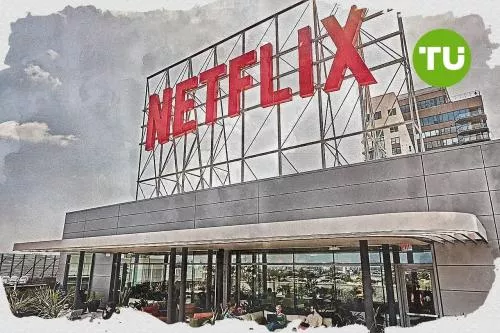
A true Hollywood drama has unfolded: streaming giant Netflix spent months trying to acquire Warner Bros. Discovery, but ultimately lost the prize to Paramount Skydance. The unexpected finale proved a win for both rivals, sending shares of Netflix and Paramount sharply higher.
Why Netflix stepped aside
Why did the battle for Warner Bros. Discovery (WBD) become so fierce? The answer lies in its unparalleled content library, built over decades. Acquiring WBD is not merely buying a company — it means gaining control over the DC Universe (Batman, Superman), the Harry Potter franchise, Game of Thrones, and the vast archives of Warner Bros. studio.
In a world where streaming platforms have exhausted most avenues of organic growth, ownership of such iconic intellectual property may be the only way to win the “war for viewer attention.” For Netflix, it was an opportunity to cement long-term dominance. For Paramount, it was a matter of survival and scale.
As recently as December 2025, Netflix was considered the frontrunner, offering approximately $83 billion for WBD assets ($27.75 per share). At that moment, it seemed that the fate of HBO Max and the legendary Hollywood studio was all but sealed.
However, Paramount Skydance, led by David Ellison, went all in. The company countered with a $31 per share all-cash offer, lifting WBD’s total valuation to a staggering $108–111 billion.
Warner Bros.’ board officially deemed Paramount’s terms more attractive, granting Netflix four days to respond. Yet by Thursday, February 26, Netflix co-CEOs Ted Sarandos and Greg Peters chose not to escalate the bidding war.
Warner Bros. Discovery and Paramount Skydance are now preparing final documentation, though the merger process is expected to be lengthy. Given the scale of the transaction, the deal will undergo close scrutiny by U.S. antitrust regulators — the FTC and the Department of Justice — which have taken an increasingly strict stance toward media consolidation. The parties expect all regulatory approvals and legal formalities to be completed no earlier than late 2026. Until then, both companies will continue operating independently, while markets closely monitor David Ellison’s steps toward building a new media empire.
Why both players are winning
The market’s reaction to the Hollywood finale was immediate. Once Netflix announced its withdrawal, its shares jumped 8–10%, while Paramount Skydance gained roughly 9%. Analysts quickly labeled the outcome a “win-win” scenario.
For Netflix, the real victory was walking away at the right moment. Investors — mindful of Disney’s past acquisition burdens — feared the streaming giant could load its balance sheet with more than $100 billion in additional debt. By refusing to pursue the deal at any cost, management demonstrated financial discipline and capital preservation rather than aggressive expansion.
The decision removed integration risks and delivered direct financial benefit: under the preliminary agreement, Warner Bros. will now pay Netflix a $2.8 billion breakup fee. These funds allow the company to focus on its core strengths — monetizing its 325 million subscribers, expanding gaming initiatives, and growing advertising — without the burden of a massive acquisition. As investor Gary Black noted, it was likely the best possible move for shareholders, potentially positioning the stock to revisit its previous highs.
Meanwhile, for Paramount Skydance, winning the auction represents entry into the top tier of media giants. Unlike Netflix, which sought primarily studio and streaming assets, Paramount is acquiring WBD in its entirety — including linear networks such as CNN, TBS, and Discovery. This significantly increased the deal’s price but also delivered enormous scale.
The merger of two legendary studios and the combination of HBO Max with Paramount+ creates a content powerhouse capable of competing head-to-head with Disney. Despite the substantial price tag and debt commitments, Paramount investors remain optimistic, supported by financing from Ellison Trust and a consortium of banks. For David Ellison, the acquisition marks a strategic breakthrough — and a bid for global dominance that markets appear willing to price in ahead of time.
In short, Netflix preserved capital and flexibility, while Paramount secured the scale necessary to survive the platform wars.
What traders should watch next
The key question for investors and traders now is whether the deal’s momentum can sustain itself over the long term.
For Netflix, future performance will depend on its ability to justify high expectations — including maintaining an operating margin around 31.5% and sustaining subscriber growth. The $2.8 billion windfall from WBD provides ample fuel for strategic initiatives, such as bidding for NFL broadcasting rights or expanding cloud gaming. If financial discipline continues, the stock has a credible path toward gradually reclaiming long-term highs.
For Paramount Skydance, however, the real obstacle course is just beginning. Traders should prepare for volatility driven by regulatory risks. U.S. antitrust authorities are already examining the deal closely. Any signs of delays or forced asset divestitures — such as a potential sale of CNN — could dampen investor enthusiasm.
That said, successful integration by the end of 2026 could transform the company into a full-fledged media titan, serving as a powerful long-term catalyst for share growth.
Ultimately, this saga proves that in modern Hollywood, victory does not belong to those who buy everything in sight — but to those who know when to step back or how to raise capital wisely. While Netflix preserves agility and Paramount builds muscle, investors will be watching closely to see how these strategies unfold.
For audiences, a new wave of content likely lies ahead — though the growing concentration of media power in fewer hands may be a conversation for another day.







-
 Afghanistan
-
 Albania
-
 Algeria
-
 Angola
-
 Argentina
-
 Armenia
-
 Australia
-
 Austria
-
 Azerbaijan
-
 Bahamas
-
 Bahrain
-
 Bangladesh
-
 Belarus
-
 Belgium
-
 Bolivia
-
 Botswana
-
 Brazil
-
 Brunei
-
 Bulgaria
-
 Cambodia
-
 Cameroon
-
 Canada
-
 Chile
Chile
-
 China
China
-
 Colombia
-
 Congo
Congo
-
 Costa Rica
-
 Cote d'Ivoire
-
 Croatia
-
 Cuba
Cuba
-
 Cyprus
-
 Czechia
-
 DR Congo
-
 Denmark
-
 Dominican Republic
-
 Ecuador
-
 Egypt
Egypt
-
 El Salvador
-
 Estonia
-
 Eswatini
-
 Ethiopia
-
 Finland
-
 France
-
 Georgia
-
 Germany
-
 Ghana
Ghana
-
 Greece
-
 Haiti
Haiti
-
 Hong Kong
-
 Hungary
-
 India
India
-
 Indonesia
-
 Iran, Islamic republic
-
 Iraq
Iraq
-
 Ireland
-
 Israel
-
 Italy
Italy
-
 Jamaica
-
 Japan
Japan
-
 Jordan
-
 Kazakhstan
-
 Kenya
Kenya
-
 Korea
Korea
-
 Kuwait
-
 Kyrgyzstan
-
 Laos
Laos
-
 Latvia
-
 Lebanon
-
 Lesotho
-
 Libya
Libya
-
 Lithuania
-
 Luxembourg
-
 Madagascar
-
 Malaysia
-
 Malta
Malta
-
 Mauritius
-
 Mexico
-
 Moldova
-
 Mongolia
-
 Montenegro
-
 Morocco
-
 Mozambique
-
 Myanmar
-
 Namibia
-
 Nepal
Nepal
-
 Netherlands
-
 New Zealand
-
 Nigeria
-
 North Macedonia
-
 Norway
-
 Oman
Oman
-
 Pakistan
-
 Palestine
-
 Panama
-
 Papua New Guinea
-
 Paraguay
-
 Peru
Peru
-
 Philippines
-
 Poland
-
 Portugal
-
 Puerto Rico
-
 Qatar
Qatar
-
 Reunion
-
 Romania
-
 Rwanda
-
 Saudi Arabia
-
 Serbia
-
 Singapore
-
 Slovakia
-
 Slovenia
-
 Somalia
-
 South Africa
-
 Spain
Spain
-
 Sri Lanka
-
 Sweden
-
 Switzerland
-
 Syria
Syria
-
 Taiwan
-
 Tajikistan
-
 Tanzania
-
 Thailand
-
 Trinidad and Tobago
-
 Tunisia
-
 Turkey
-
 UAE
UAE
-
 Uganda
-
 Ukraine
-
 United Kingdom
-
United States
-
 Uruguay
-
 Uzbekistan
-
 Venezuela
-
 Vietnam
-
 Yemen
Yemen
-
 Zambia
-
 Zimbabwe
- Forex
- Crypto












