The tweet was deleted by the author.
But we saved everything 🙂.
Almost five years ago, Mark Zuckerberg called the metaverse «the next version of the internet.» For the sake of this idea, Facebook rebranded as Meta, and Horizon Worlds was supposed to become its central platform. But in 2026, the project was effectively shut down. Why did one of the world’s largest tech companies make such a major miscalculation?
In March 2026, Meta officially confirmed what the market had expected for several years: the company is winding down the VR version of Horizon Worlds. The app will be removed from the Quest store at the end of March and will completely cease to function on VR devices by June. Only the mobile version of the product will remain available to users.
This decision became part of a broader strategy—to separate the metaverse from the VR direction and focus on formats with a wider audience. In effect, Meta acknowledged that its bet on VR as the main entry point into the metaverse did not pay off, and further growth is only possible beyond headsets. To understand why Meta ultimately made this move, it is important to go back five years—to the moment when Horizon Worlds was conceived not as an experiment but as a central element of the future internet.
The launch of Horizon Worlds in December 2021 was not just the release of a new social platform. It was a demonstration of Meta’s strategic pivot. The company was betting on the so-called embodied internet—an internet where the user does not look at a screen but «exists inside» a digital space. Around this idea, an entire ecosystem was built: Quest VR headsets, tools for creating user-generated worlds, and an internal economy. Horizon Worlds was meant to become for Web 2.0 what Facebook once was—a foundational social infrastructure.
The scale of investment matched the ambition. Reality Labs, the division responsible for the metaverse, has generated more than $70 billion in losses since 2021, according to Bloomberg. In 2023 alone, its operating loss reached about $16 billion. For comparison, that exceeds the annual profit of many major technology companies. The problem was that Meta was investing not in improving an existing product but in a hypothetical market that had yet to form.
The main mistake of Horizon Worlds was simple—the product did not meet a real market need. Despite billions in investment, the platform never became mainstream. In October 2022, The Wall Street Journal, citing internal Meta documents, reported that Horizon Worlds had fewer than 200,000 monthly active users.
The barrier to entry into the «new internet» turned out to be critically high. To access the metaverse, users needed a VR headset costing hundreds of dollars, as well as the willingness to put it on and spend time inside. This is fundamentally different from привычное поведение в интернете, where entry is just a single click.
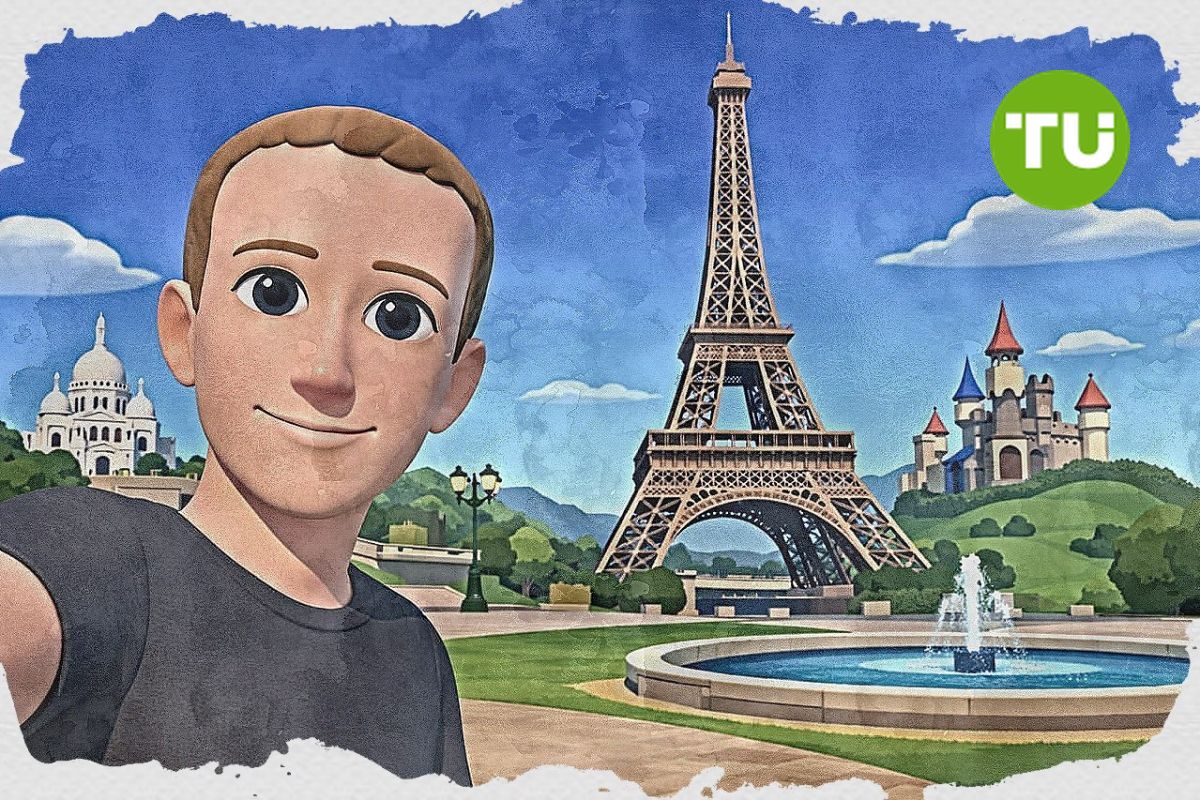
Even for those who made it in, the experience often fell short. Horizon Worlds’ graphics became a frequent target of ridicule—especially after Mark Zuckerberg posted a screenshot of his avatar that looked like a character from early-2000s games. Limited use cases, «empty» worlds, and weak social dynamics reinforced the sense that this was not a new reality but a rough experiment.
Timing also mattered. While Meta was investing heavily in VR, the market sharply shifted toward artificial intelligence. User interest moved to tools that deliver immediate value—from content generation to workflow automation. Against this backdrop, the idea of «living in the metaverse» felt more imposed than organic. The contrast is especially clear in platforms like Roblox and VRChat, which grew organically by building on user behavior. Meta, by contrast, tried to build the infrastructure first and then bring users into it. That approach did not work.
Investors began to question Meta’s strategy almost immediately after it was announced. According to Financial Express, in 2022 the company’s stock fell by more than 60% from its peak, largely due to rising spending on the metaverse and the lack of a clear monetization model. The market’s signal was clear: investments in Reality Labs looked like capital burn without a visible path to returns.
The turning point came in 2023, when Meta declared a «year of efficiency» and began aggressively cutting costs. The company laid off more than 20,000 employees, reduced expenses, and shifted its focus back to advertising and AI. If Meta’s stock was trading around $90 at the end of 2022, by the end of 2023 it had surpassed $350, and in 2024 it reached new highs, exceeding the roughly $380 level last seen in 2021.
Notably, the subsequent rise in the stock price did not coincide successfully in the metaverse but with a gradual deprioritization of it. Cuts to Reality Labs spending and the pivot toward AI were received positively by the market. In effect, investors had «voted» against the metaverse long before it became очевидно на уровне продукта.
The story of Horizon Worlds is not proof that virtual worlds are unnecessary. On the contrary, they already exist and are developing successfully. Roblox, Fortnite, and other platforms show that users are willing to spend time in digital environments when those environments are integrated into their everyday experience.
What failed was the idea of a centralized metaverse. Meta tried to accelerate the arrival of the future while ignoring the key variable—user readiness. At the same time, the bet on VR as the primary interface turned out to be premature. The technology remains niche: devices are bulky, use cases are limited, and the value proposition is unclear for mass adoption.
Meanwhile, the next technological cycle has already begun to take shape around AI and augmented reality. If a new «metaverse» does emerge, it will likely appear not as a standalone product but as a layer on top of reality—through glasses, voice interfaces, and intelligent systems. The main conclusion is straightforward: Meta was not wrong in believing that virtual worlds have a future. It was wrong about when that future would arrive—and how users would get there.

 Afghanistan
 Albania
 Algeria
 Angola
 Argentina
 Armenia
 Australia
 Austria
 Azerbaijan
 Bahamas
 Bahrain
 Bangladesh
 Belarus
 Belgium
 Bolivia
 Botswana
 Brazil
 Brunei
 Bulgaria
 Cambodia
 Cameroon
 Canada
 Chile
Chile
 China
China
 Colombia
 Congo
Congo
 Costa Rica
 Cote d'Ivoire
 Croatia
 Cuba
Cuba
 Cyprus
 Czechia
 DR Congo
 Denmark
 Dominican Republic
 Ecuador
 Egypt
Egypt
 El Salvador
 Estonia
 Eswatini
 Ethiopia
 Finland
 France
 Georgia
 Germany
 Ghana
Ghana
 Greece
 Haiti
Haiti
 Hong Kong
 Hungary
 India
India
 Indonesia
 Iran, Islamic republic
 Iraq
Iraq
 Ireland
 Israel
 Italy
Italy
 Jamaica
 Japan
Japan
 Jordan
 Kazakhstan
 Kenya
Kenya
 Korea
Korea
 Kuwait
 Kyrgyzstan
 Laos
Laos
 Latvia
 Lebanon
 Lesotho
 Libya
Libya
 Lithuania
 Luxembourg
 Madagascar
 Malaysia
 Malta
Malta
 Mauritius
 Mexico
 Moldova
 Mongolia
 Montenegro
 Morocco
 Mozambique
 Myanmar
 Namibia
 Nepal
Nepal
 Netherlands
 New Zealand
 Nigeria
 North Macedonia
 Norway
 Oman
Oman
 Pakistan
 Palestine
 Panama
 Papua New Guinea
 Paraguay
 Peru
Peru
 Philippines
 Poland
 Portugal
 Puerto Rico
 Qatar
Qatar
 Reunion
 Romania
 Rwanda
 Saudi Arabia
 Serbia
 Singapore
 Slovakia
 Slovenia
 Somalia
 South Africa
 Spain
Spain
 Sri Lanka
 Sweden
 Switzerland
 Syria
Syria
 Taiwan
 Tajikistan
 Tanzania
 Thailand
 Trinidad and Tobago
 Tunisia
 Turkey
 UAE
UAE
 Uganda
 Ukraine
 United Kingdom
United States
United Kingdom
United States
 Uruguay
 Uzbekistan
 Venezuela
 Vietnam
 Yemen
Yemen
 Zambia
 Zimbabwe