
The tweet was deleted by the author.
But we saved everything 🙂.
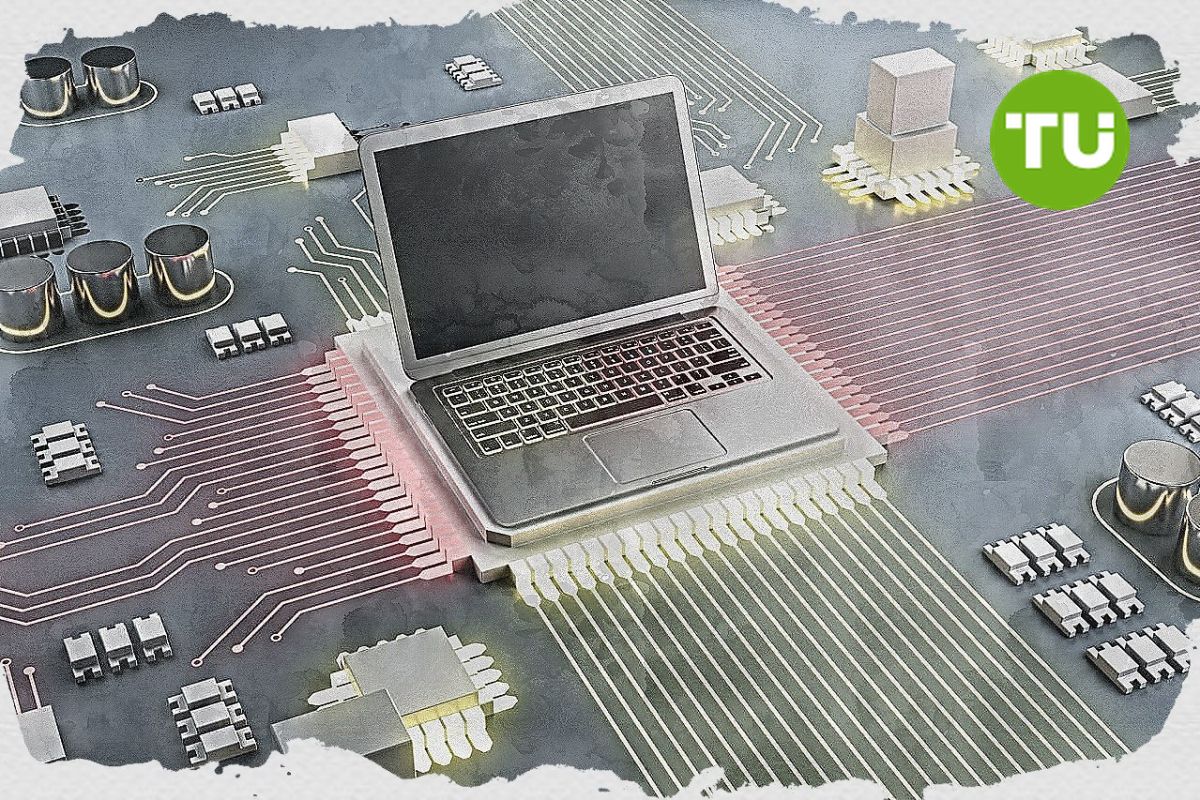
Today marks World Quantum Day — a date that until recently was seen as a celebration of science. However, it is increasingly signaling the changes ahead. The development of quantum computing is calling into question the reliability of modern cryptography, including the systems on which Bitcoin is built.
World Quantum Day is observed on April 14, and the date was chosen deliberately. It refers to the number 4.14 — the first digits of Planck’s constant, one of the key values in quantum physics. Originally, the day was created to popularize science and draw attention to research that long seemed far removed from everyday life.
But by 2026, the meaning of this date has changed significantly. It is no longer just a reason to talk about laboratories, formulas, and academic projects. Quantum technologies have become part of a broader agenda: they are discussed by governments, tech corporations, and cybersecurity experts because their development is directly tied to data protection, economic competition, and digital infrastructure.
According to industry estimates, quantum computers capable of breaking current encryption standards (such as RSA) could emerge before 2030. This means that companies and governments have only a few years to prepare and rebuild their data security systems.
The main risk of quantum computing lies in cryptography — the foundation of nearly all digital infrastructure. Banking transactions, cloud services, corporate databases, and government systems are protected by algorithms that are considered secure only against classical computers. Quantum machines could change this, as they can solve factorization and key-recovery problems much faster.
Another risk is the “harvest now, decrypt later” scenario. This means encrypted data can already be collected and stored today with the intention of decrypting it in the future. Once sufficiently powerful quantum computers become available, that information could be exposed. This applies not only to financial data, but also to medical, corporate, and government records that must remain confidential for years.
Bitcoin is one of the most illustrative examples in this context. Its security is based on elliptic curve cryptography, and in theory, a quantum computer could derive a private key from a wallet. Following recent Google research, a scenario is being discussed where this could take around 9 minutes — less than the average block time in the network (10 minutes). This remains a theoretical model, but it shows how such an attack could work in practice.
Despite this, part of the market believes that a quantum computer will not threaten Bitcoin anytime soon. At the same time, Bernstein analysts argue that this risk may already be partially priced into BTC: a nearly 50% drop from the $126,200 all-time high in October 2025 reflects multiple risks, including the acceleration of AI and quantum technologies. In their view, developers have several years to implement post-quantum solutions, and that is sufficient at the current pace.
A similar view is shared by Michael Saylor, The Block reports. He believes the quantum threat will grow gradually, meaning the network will have time to adapt. According to him, Bitcoin has already gone through complex upgrades, and its open architecture allows new security standards to be introduced without critical disruptions. In addition, major players — ETF funds and companies holding Bitcoin reserves — are interested in ensuring such changes are adopted and implemented.
However, there is also a more cautious perspective. After publications from Google Quantum AI, some experts said progress is moving faster than expected. The focus is on reduced hardware requirements: instead of millions of qubits, some estimates now point to hundreds of thousands. Under these conditions, the idea of cracking a private key in minutes no longer seems unrealistic.
While most discussions focus on Bitcoin, some experts point to a more vulnerable area — the Lightning Network. This is a second-layer solution used for fast and low-cost transactions, but it operates under different security assumptions.
In the base Bitcoin network, users can reduce risk by avoiding address reuse and not exposing public keys early. In Lightning, this is not possible: participants must exchange public keys to open and maintain payment channels. As a result, these keys are inherently exposed and can be collected by third parties.
According to Taproot developer Udi Wertheimer, this makes Lightning more vulnerable in a post-quantum scenario. An attack would not require intercepting transactions in real time — existing public data would be sufficient. In theory, an attacker could work offline and attempt to derive private keys once the necessary computational power becomes available.
The key issue is that this cannot be solved at the Lightning layer. Even if new protection methods are introduced, they would require changes at the base Bitcoin protocol level. This again becomes a coordination problem — agreement between developers, miners, and users — which could take years.
Quantum technologies are no longer a theoretical threat — they have become a factor already considered by markets and industry. Bitcoin is no exception: its security, like that of the entire digital infrastructure, depends on cryptography that may need to be upgraded in the future. At the same time, the network still has time to adapt, and key players — from developers to institutional investors — are interested in finding solutions.
The main challenge lies not in the technology itself, but in the ability to coordinate and implement changes in time. Today, World Quantum Day is no longer seen only as a scientific date, but also as a reminder of risks that require early preparation. How smoothly Bitcoin adapts to this new technological era will depend on how quickly these changes can be agreed upon and implemented.

 Afghanistan
 Albania
 Algeria
 Angola
 Argentina
 Armenia
 Australia
 Austria
 Azerbaijan
 Bahamas
 Bahrain
 Bangladesh
 Belarus
 Belgium
 Bolivia
 Botswana
 Brazil
 Brunei
 Bulgaria
 Cambodia
 Cameroon
 Canada
 Chile
Chile
 China
China
 Colombia
 Congo
Congo
 Costa Rica
 Cote d'Ivoire
 Croatia
 Cuba
Cuba
 Cyprus
 Czechia
 DR Congo
 Denmark
 Dominican Republic
 Ecuador
 Egypt
Egypt
 El Salvador
 Estonia
 Eswatini
 Ethiopia
 Finland
 France
 Georgia
 Germany
 Ghana
Ghana
 Greece
 Haiti
Haiti
 Hong Kong
 Hungary
 India
India
 Indonesia
 Iran, Islamic republic
 Iraq
Iraq
 Ireland
 Israel
 Italy
Italy
 Jamaica
 Japan
Japan
 Jordan
 Kazakhstan
 Kenya
Kenya
 Korea
Korea
 Kuwait
 Kyrgyzstan
 Laos
Laos
 Latvia
 Lebanon
 Lesotho
 Libya
Libya
 Lithuania
 Luxembourg
 Madagascar
 Malaysia
 Malta
Malta
 Mauritius
 Mexico
 Moldova
 Mongolia
 Montenegro
 Morocco
 Mozambique
 Myanmar
 Namibia
 Nepal
Nepal
 Netherlands
 New Zealand
 Nigeria
 North Macedonia
 Norway
 Oman
Oman
 Pakistan
 Palestine
 Panama
 Papua New Guinea
 Paraguay
 Peru
Peru
 Philippines
 Poland
 Portugal
 Puerto Rico
 Qatar
Qatar
 Reunion
 Romania
 Rwanda
 Saudi Arabia
 Serbia
 Singapore
 Slovakia
 Slovenia
 Somalia
 South Africa
 Spain
Spain
 Sri Lanka
 Sweden
 Switzerland
 Syria
Syria
 Taiwan
 Tajikistan
 Tanzania
 Thailand
 Trinidad and Tobago
 Tunisia
 Turkey
 UAE
UAE
 Uganda
 Ukraine
 United Kingdom
United States
United Kingdom
United States
 Uruguay
 Uzbekistan
 Venezuela
 Vietnam
 Yemen
Yemen
 Zambia
 Zimbabwe