The tweet was deleted by the author.
But we saved everything 🙂.
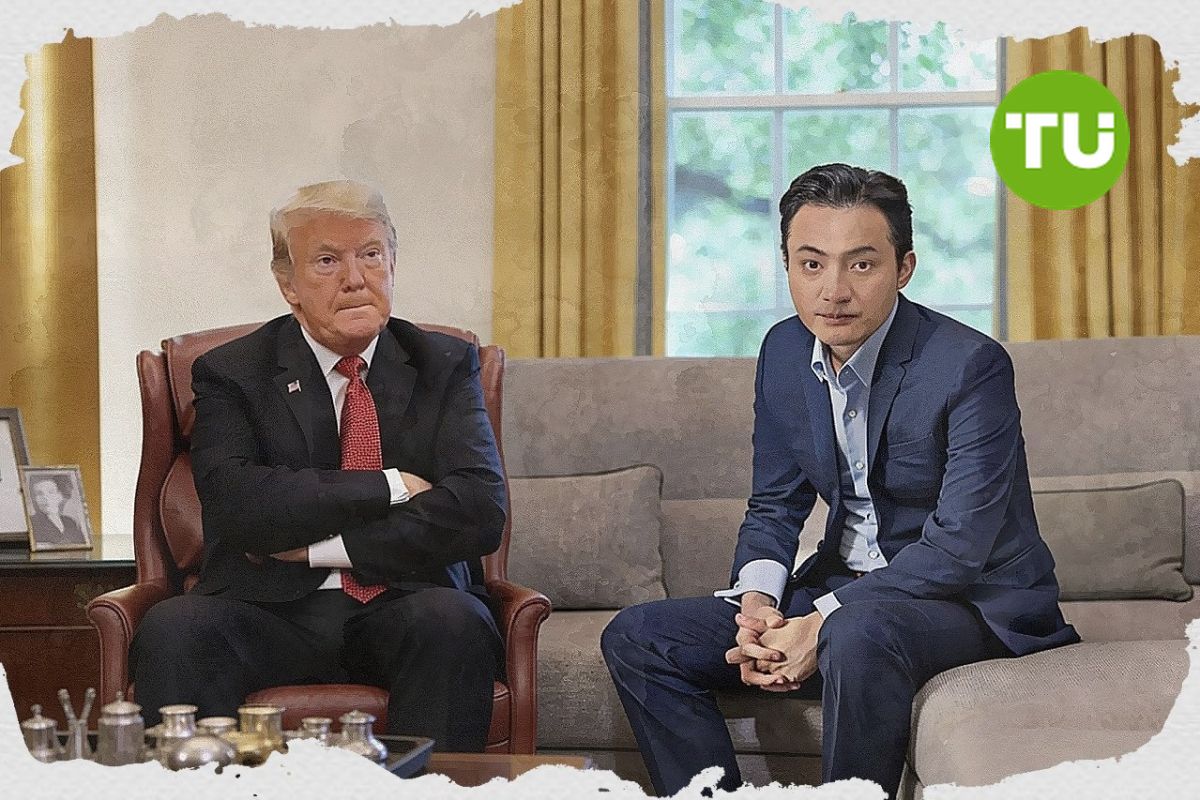
Justin Sun has filed a lawsuit against World Liberty Financial, a company linked to Donald Trump’s family. The Tron founder invested tens of millions of dollars into crypto projects tied to the White House, but ultimately faced a freeze of his assets. This could be a signal that the alliance between one of the most active crypto investors and the U.S. president has effectively come to an end.
Justin Sun’s lawsuit has been filed in a California federal court. According to the Tron founder, the project team froze all of his WLFI tokens, threatened to burn them without explanation, and stripped him of his voting rights. Sun says he tried to resolve the issue directly but was refused, leaving him no choice but to go to court.
The sums involved are significant. Sun initially invested around $30 million in World Liberty Financial and later increased his stake to approximately $75 million. According to Bubblemaps, about 545 million WLFI tokens are currently locked, now valued at roughly $45 million after a price drop — more than $80 million below their previous valuation.
But the conflict did not start yesterday. Back in 2025, World Liberty blocked a wallet linked to Sun after he moved around $9 million worth of WLFI tokens. Since then, he has publicly accused the project of embedding hidden control mechanisms — specifically, a function that allows the team to freeze and effectively seize user tokens. In response, the project has called these claims “baseless” and said it is ready to defend its position in court.
The relationship between the businessman and the politician goes back several years. Justin Sun began actively supporting Donald Trump during the presidential campaign. When the crypto community saw Trump as a candidate with pro-crypto rhetoric, Sun became one of his most vocal supporters. He publicly backed this agenda and took part in initiatives promoting the future U.S. president.
After Trump’s victory, Sun moved from words to major investments. In addition to backing World Liberty Financial, he invested around $100 million in the TRUMP memecoin — a token directly tied to Donald Trump’s brand and political capital.
In effect, Sun was betting on Trump as the central figure of a new crypto policy in the United States. He invested across multiple направления and tried to secure a position within this ecosystem, expecting a long-term partnership.
Sun’s logic was clear. Ahead of the election, much of the crypto community rallied behind Trump. Many market participants expected that under his leadership, the U.S. would strengthen its position in the industry and adopt consistent pro-crypto policies.
Expectations were high. There was talk of clear regulation, a national Bitcoin reserve, and turning the U.S. into a global crypto hub. After years of stricter oversight, these promises were seen as a complete policy reversal.
In reality, the changes have been far more limited. One of the few notable moves was the release of Ross Ulbricht — a figure long regarded as symbolic within the Bitcoin community. However, broader systemic changes that could reshape the market have not materialized. The U.S. has not become a global crypto hub, and the idea of a state-backed Bitcoin reserve remains largely theoretical.
It is at this point that Sun’s position began to deteriorate. Despite his public support for Trump, involvement in his crypto initiatives, and tens of millions of dollars in investments, he eventually found himself treated not as an ally but as a problematic investor.
Formally, Sun still avoids direct confrontation with Trump. Even while suing World Liberty Financial, he emphasizes that he continues to support the president and his crypto agenda. His criticism is aimed not at Trump personally, but at “certain individuals” within the project who he claims are acting against the president’s values.
But the facts suggest otherwise. The largest external investor in World Liberty has lost voting rights, had his tokens frozen, and is now seeking legal protection in court. For someone who aimed to become part of Trump’s crypto ecosystem, this looks less like a temporary dispute and more like a clear signal: his role in that system is over.
That is why Sun’s story goes beyond a typical corporate conflict. It shows that even large investments, political loyalty, and public support do not guarantee a place within Trump’s inner circle. And while Sun was once a valuable ally, he now appears to be someone the system is willing to leave behind.

 Afghanistan
 Albania
 Algeria
 Angola
 Argentina
 Armenia
 Australia
 Austria
 Azerbaijan
 Bahamas
 Bahrain
 Bangladesh
 Belarus
 Belgium
 Bolivia
 Botswana
 Brazil
 Brunei
 Bulgaria
 Cambodia
 Cameroon
 Canada
 Chile
Chile
 China
China
 Colombia
 Congo
Congo
 Costa Rica
 Cote d'Ivoire
 Croatia
 Cuba
Cuba
 Cyprus
 Czechia
 DR Congo
 Denmark
 Dominican Republic
 Ecuador
 Egypt
Egypt
 El Salvador
 Estonia
 Eswatini
 Ethiopia
 Finland
 France
 Georgia
 Germany
 Ghana
Ghana
 Greece
 Haiti
Haiti
 Hong Kong
 Hungary
 India
India
 Indonesia
 Iran, Islamic republic
 Iraq
Iraq
 Ireland
 Israel
 Italy
Italy
 Jamaica
 Japan
Japan
 Jordan
 Kazakhstan
 Kenya
Kenya
 Korea
Korea
 Kuwait
 Kyrgyzstan
 Laos
Laos
 Latvia
 Lebanon
 Lesotho
 Libya
Libya
 Lithuania
 Luxembourg
 Madagascar
 Malaysia
 Malta
Malta
 Mauritius
 Mexico
 Moldova
 Mongolia
 Montenegro
 Morocco
 Mozambique
 Myanmar
 Namibia
 Nepal
Nepal
 Netherlands
 New Zealand
 Nigeria
 North Macedonia
 Norway
 Oman
Oman
 Pakistan
 Palestine
 Panama
 Papua New Guinea
 Paraguay
 Peru
Peru
 Philippines
 Poland
 Portugal
 Puerto Rico
 Qatar
Qatar
 Reunion
 Romania
 Rwanda
 Saudi Arabia
 Serbia
 Singapore
 Slovakia
 Slovenia
 Somalia
 South Africa
 Spain
Spain
 Sri Lanka
 Sweden
 Switzerland
 Syria
Syria
 Taiwan
 Tajikistan
 Tanzania
 Thailand
 Trinidad and Tobago
 Tunisia
 Turkey
 UAE
UAE
 Uganda
 Ukraine
 United Kingdom
United States
United Kingdom
United States
 Uruguay
 Uzbekistan
 Venezuela
 Vietnam
 Yemen
Yemen
 Zambia
 Zimbabwe