The tweet was deleted by the author.
But we saved everything 🙂.


The clothing market is going through a difficult period: consumers are cutting back, while competition between brands is becoming tougher. But Inditex, the owner of Zara, continues to increase both sales and profit. While other retailers are searching for stability, the Spanish group keeps growing with confidence.
In the first half of 2026, Inditex increased sales by 7.6% to $23 billion, according to the group’s website. Excluding currency fluctuations, sales rose 9.2%. Zara, Zara Home and Lefties accounted for around $16 billion of revenue. Inditex also owns Pull&Bear, Massimo Dutti, Bershka, Stradivarius and Oysho.
View post on X Loading...
The group’s net income rose 6.8% in the first half to $3.5 billion. Operating profit increased 7.6% to $4.4 billion. Free cash flow grew even faster, nearly doubling from $1.4 billion to $2.7 billion.
Growth continued after the reporting period ended. Between August 1 and September 7, store and online sales increased another 9% compared with the same period a year earlier. By the end of July, Inditex operated 5,444 stores worldwide.
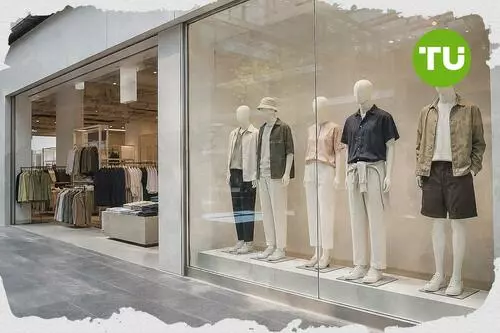
Inditex continues to invest in positioning Zara as a more premium and high-profile brand. The company is opening large flagship stores, upgrading key locations and working with prominent designers. This year, for example, Zara brought in former Dior creative director John Galliano as a guest designer, with his first collection set to launch in September, Bloomberg reported.
View post on X Loading...
At the same time, the company is not abandoning mass-market shoppers. According to Barclays, most Zara products still cost less than $58. For more price-sensitive consumers, Inditex is expanding Lefties, the group’s cheapest brand, which competes with Shein and Primark. In August, Lefties opened its first store in Liverpool, while Inditex plans to launch the brand in Germany next year.
Another advantage of Inditex is its ability to adjust its assortment during the season. The company controls a large part of the chain from design and sourcing to logistics and sales, allowing it to respond more quickly to changes in demand and fashion trends. In the first half of the year, Inditex carried out store openings, relocations, expansions and refurbishments across 51 markets.
At the same time, Inditex continues to invest heavily in stores and logistics. In 2026, the company plans to spend around $2.7 billion on development, plus another roughly $230 million on upgrading its corporate infrastructure. According to RBC, Inditex’s annual capital expenditure is about three times higher than H&M’s.
The resilience of the business is also reflected in its share price. Over the past 12 months, Inditex shares have gained around 34% and reached an all-time high in August. The group’s market capitalization climbed to roughly $205 billion and, for a time, surpassed that of Hermès.
Against this backdrop, some rivals look weaker. Inditex continues to grow faster than H&M while investing about three times more each year than the Swedish company. Shein is facing an even more difficult situation: its sales growth slowed ahead of its stock market debut, while its valuation came in far below the peak levels seen in 2022.
The company founded by Amancio Ortega is now led by a new generation: his daughter Marta Ortega serves as chair of Inditex. Another daughter, Sandra Ortega, remains a major shareholder in the group. But the basic model has stayed the same — adjusting assortments quickly, serving different price segments and continuing to invest heavily in stores and logistics.
Inditex is not delivering double-digit profit growth or trying to surprise the market with record numbers every quarter. But at a time when consumers are spending more cautiously, the group is still increasing sales, generating more free cash flow and investing billions of dollars in further expansion.
Amancio Ortega stepped away from day-to-day management long ago, but the system he created has survived a generational transition and continues to work. For Inditex, the current difficult market has so far been less of a brake than an opportunity to show how resilient the business has become beyond Zara alone.



 Afghanistan
 Albania
 Algeria
 Angola
 Argentina
 Armenia
 Australia
 Austria
 Azerbaijan
 Bahamas
 Bahrain
 Bangladesh
 Belarus
 Belgium
 Bolivia
 Botswana
 Brazil
 Brunei
 Bulgaria
 Cambodia
 Cameroon
 Canada
 Chile
 China
 Colombia
 Congo
 Costa Rica
 Cote d'Ivoire
 Croatia
 Cuba
 Cyprus
 Czechia
 DR Congo
 Denmark
 Dominican Republic
 Ecuador
 Egypt
 El Salvador
 Estonia
 Eswatini
 Ethiopia
 Finland
 France
 Georgia
 Germany
 Ghana
 Greece
 Haiti
 Hong Kong
 Hungary
 India
 Indonesia
 Iran, Islamic republic
 Iraq
 Ireland
 Israel
 Italy
 Jamaica
 Japan
 Jordan
 Kazakhstan
 Kenya
 Korea
 Kuwait
 Kyrgyzstan
 Laos
 Latvia
 Lebanon
 Lesotho
 Libya
 Lithuania
 Luxembourg
 Madagascar
 Malaysia
 Malta
 Mauritius
 Mexico
 Moldova
 Mongolia
 Montenegro
 Morocco
 Mozambique
 Myanmar
 Namibia
 Nepal
 Netherlands
 New Zealand
 Nigeria
 North Macedonia
 Norway
 Oman
 Pakistan
 Palestine
 Panama
 Papua New Guinea
 Paraguay
 Peru
 Philippines
 Poland
 Portugal
 Puerto Rico
 Qatar
 Reunion
 Romania
 Rwanda
 Saudi Arabia
 Serbia
 Singapore
 Slovakia
 Slovenia
 Somalia
 South Africa
 Spain
 Sri Lanka
 Sweden
 Switzerland
 Syria
 Taiwan
 Tajikistan
 Tanzania
 Thailand
 Trinidad and Tobago
 Tunisia
 Turkey
 UAE
 Uganda
 Ukraine
 United Kingdom
United States
 Uruguay
 Uzbekistan
 Venezuela
 Vietnam
 Yemen
 Zambia
 Zimbabwe