The tweet was deleted by the author.
But we saved everything 🙂.


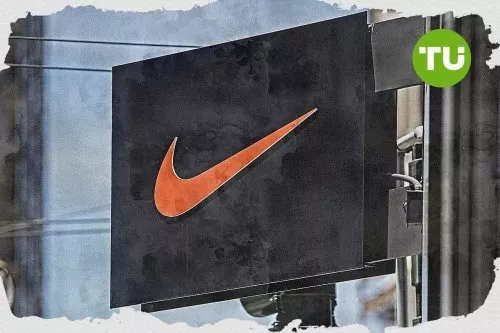
Sportswear maker Nike is going through one of the worst periods in its history. The brand’s shares are at a multi-year low, while the company is being removed from the S&P 100. But these are only the visible signs of much deeper problems.
On September 21, Nike will be removed from the S&P 100, an index that includes some of the largest U.S. companies. The brand had been part of it since late 2008, for almost 18 years. Nike will, however, remain in the S&P 500.
View post on X Loading...
The reason is the stock’s prolonged decline. As of September 11, Nike shares trade at around $36. They have fallen nearly 43% since the start of 2026, more than 51% over the past year and almost 78% over five years. The stock is now trading near its 2014 low.
Nike’s market capitalization has fallen to around $55 billion. For comparison, at its peak in November 2021, the company was worth about $281 billion.
Nike and three other companies will be replaced in the S&P 100 by Dell Technologies, Palo Alto Networks, Arista Networks and SanDisk. All four are technology companies. Following the rebalancing, funds that track the S&P 100 will have to sell Nike shares and buy shares of the new index members.
The problems began to build under former CEO John Donahoe, who led Nike from January 2020 to October 2024. The company focused heavily on direct sales through its own stores and website while cutting supplies to third-party retailers. Competitors quickly filled the shelf space Nike left behind.
At the same time, Nike became too dependent on a handful of popular models, particularly the Air Force 1 and Dunk. They generated strong sales for years, but the company failed to produce new hits on the same scale. During Donahoe’s tenure, Nike shares lost around 20%, while the S&P 500 gained roughly 80%.
Nike lost particularly noticeable ground in running shoes. On and Hoka, owned by Deckers Outdoor, grew rapidly in this segment. Problems have also emerged at Jordan, one of Nike’s best-known businesses, with sales of Jordan-branded products declining in 2026.
China is another weak spot. After several years of missteps, Nike began restructuring its local distribution network and cutting ties with thousands of online sellers. The move is intended to give the company greater control over sales, but it also increases the risk of further market share losses.
Elliott Hill took over as CEO in October 2024 after spending more than 30 years at Nike and returning from retirement. The stock jumped 7% on news of his appointment. But since he took charge, the shares have lost around half their value, while the company’s market capitalization has fallen by more than $60 billion.
Hill has focused on the Win Now strategy. It calls for renewed emphasis on basketball and running, rebuilding relationships with major retailers and speeding up the development of new products. The company is also trying to reduce its dependence on older bestsellers and return more products to third-party store shelves.
Investors and analysts are still not convinced that Hill’s plan is working. According to Bloomberg, as of late August only 16 analysts recommended buying Nike shares. Another 24 rated the stock a hold, while four recommended selling. At least 12 brokerages have also downgraded their ratings on the stock since the beginning of 2026.
In just a few years, Nike has gone from an undisputed leader to a company trying to win back lost ground. Distribution mistakes, dependence on aging product lines and weaker positions in running cannot be fixed by simply changing the CEO.
Elliott Hill is trying to restore Nike’s focus on sports and accelerate product development, but the market wants concrete results. If sales fail to recover and new models do not become hits, removal from the S&P 100 may prove to be far from the most painful episode in the company’s current crisis.



 Afghanistan
 Albania
 Algeria
 Angola
 Argentina
 Armenia
 Australia
 Austria
 Azerbaijan
 Bahamas
 Bahrain
 Bangladesh
 Belarus
 Belgium
 Bolivia
 Botswana
 Brazil
 Brunei
 Bulgaria
 Cambodia
 Cameroon
 Canada
 Chile
 China
 Colombia
 Congo
 Costa Rica
 Cote d'Ivoire
 Croatia
 Cuba
 Cyprus
 Czechia
 DR Congo
 Denmark
 Dominican Republic
 Ecuador
 Egypt
 El Salvador
 Estonia
 Eswatini
 Ethiopia
 Finland
 France
 Georgia
 Germany
 Ghana
 Greece
 Haiti
 Hong Kong
 Hungary
 India
 Indonesia
 Iran, Islamic republic
 Iraq
 Ireland
 Israel
 Italy
 Jamaica
 Japan
 Jordan
 Kazakhstan
 Kenya
 Korea
 Kuwait
 Kyrgyzstan
 Laos
 Latvia
 Lebanon
 Lesotho
 Libya
 Lithuania
 Luxembourg
 Madagascar
 Malaysia
 Malta
 Mauritius
 Mexico
 Moldova
 Mongolia
 Montenegro
 Morocco
 Mozambique
 Myanmar
 Namibia
 Nepal
 Netherlands
 New Zealand
 Nigeria
 North Macedonia
 Norway
 Oman
 Pakistan
 Palestine
 Panama
 Papua New Guinea
 Paraguay
 Peru
 Philippines
 Poland
 Portugal
 Puerto Rico
 Qatar
 Reunion
 Romania
 Rwanda
 Saudi Arabia
 Serbia
 Singapore
 Slovakia
 Slovenia
 Somalia
 South Africa
 Spain
 Sri Lanka
 Sweden
 Switzerland
 Syria
 Taiwan
 Tajikistan
 Tanzania
 Thailand
 Trinidad and Tobago
 Tunisia
 Turkey
 UAE
 Uganda
 Ukraine
 United Kingdom
United States
 Uruguay
 Uzbekistan
 Venezuela
 Vietnam
 Yemen
 Zambia
 Zimbabwe