The tweet was deleted by the author.
But we saved everything 🙂.

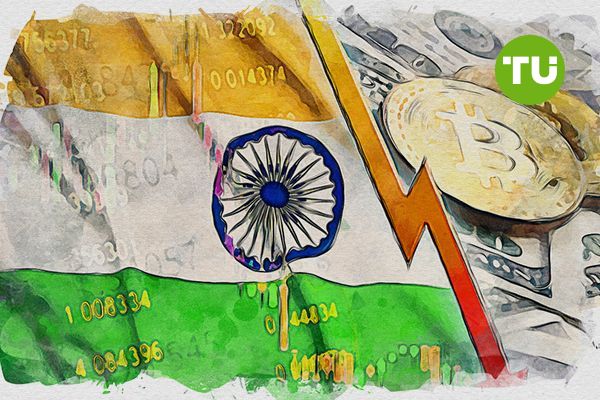
Amid shifting global crypto rhetoric, Pradeep Bhandari — spokesperson for India’s ruling party — has proposed a pilot program to establish a national Bitcoin reserve. His statement sparked widespread debate: is a country with such an ambivalent crypto stance truly ready to take a strategic step toward digital assets?
Bhandari’s proposal didn’t come out of nowhere. In January 2025, the United States launched a strategic Bitcoin reserve, leveraging over 200,000 confiscated BTC as a hedge against inflation. The initiative was reaffirmed during the White House Crypto Summit, where officials outlined plans to continue building reserves in a budget-neutral way. At least three U.S. states have already authorized the use of public funds to purchase and hold Bitcoin.
View post on X Loading...
These moves support a growing thesis: Bitcoin is no longer viewed as a speculative asset. Instead, it's increasingly treated as a tool for macro-financial resilience.
Bhutan offers another notable example. Since 2021, the country has been mining Bitcoin using hydroelectric power. By May 2025, its reserves had surpassed $1 billion worth of BTC. What began as a response to a post-tourism economic slump has evolved into a mechanism for funding public services and green infrastructure.
View post on X Loading...
All of these stands in contrast to the situation in India. Cryptocurrencies are taxed — a flat 30% on profits and a 1% TDS (Tax Deducted at Source) on all transactions exceeding ₹10,000 (roughly $115). Yet there is still no clear regulatory framework. There are no formal rules governing the circulation, custody, or use of digital assets.
This legal ambiguity continues to hinder market development. As Bhandari notes, without transparent regulation, it’s difficult to build institutional trust. And while India led the G20 crypto policy group alongside the IMF during its 2023 presidency, in practice, other countries — including the U.S., China, and Brazil — are moving ahead faster.
Still, Bhandari acknowledges that India won’t be the first. But it could chart an alternative path — one that is resilient, transparent, and focused on renewable energy. The country has immense potential in solar, wind, and hydropower. Against this backdrop, a Bitcoin reserve pilot program could take shape.«This isn’t a reckless pivot; it’s a calculated step toward embracing the legitimacy of digital assets,» Bhandari writes.
He adds that even a limited pilot could send a strong market signal: that India is ready to explore its own way forward — without waiting for global consensus.
Bhandari also draws attention to the nature of Bitcoin itself. It is not a debt instrument, a security, or a fiat currency. It is a digital asset with a fixed supply of 21 million, a transparent public blockchain, and global liquidity. Furthermore, it combines the properties of gold with the advantages of digital mobility.That’s why it is increasingly referred to as “digital gold.” And it’s also why the U.S. has not only recognized Bitcoin’s value — it is actively building strategic reserves.
India, meanwhile, is one of the largest crypto markets in the world. According to various estimates, over 100 million people in the country already have access to digital assets. This creates a vast base of users, investors, and potential taxpayers — giving the state a unique lever of both economic and political influence.
Even a limited pilot could instantly position India as a player of global significance. Its example could influence not only neighboring countries like Pakistan, Bangladesh, and Indonesia, but also global Web3 companies. That’s why Bhandari’s proposal is more than a local political gesture — if embraced, it could trigger a broader wave of state-level crypto adoption.
India stands at a crossroads. It can remain a bystander while others shape the next phase of crypto strategy — or it can launch its own experiment with a Bitcoin reserve and test whether this asset can bolster economic resilience without compromising national priorities.
Even if Bhandari’s initiative does not translate into official policy, its presence in public discourse is a signal in itself. Bitcoin is no longer just a topic for enthusiasts. It’s a macro-level issue — and India must now decide whether it wants to join the race or remain on the sidelines.


 Afghanistan
 Albania
 Algeria
 Angola
 Argentina
 Armenia
 Australia
 Austria
 Azerbaijan
 Bahamas
 Bahrain
 Bangladesh
 Belarus
 Belgium
 Bolivia
 Botswana
 Brazil
 Brunei
 Bulgaria
 Cambodia
 Cameroon
 Canada
 Chile
Chile
 China
China
 Colombia
 Congo
Congo
 Costa Rica
 Cote d'Ivoire
 Croatia
 Cuba
Cuba
 Cyprus
 Czechia
 DR Congo
 Denmark
 Dominican Republic
 Ecuador
 Egypt
Egypt
 El Salvador
 Estonia
 Eswatini
 Ethiopia
 Finland
 France
 Georgia
 Germany
 Ghana
Ghana
 Greece
 Haiti
Haiti
 Hong Kong
 Hungary
 India
India
 Indonesia
 Iran, Islamic republic
 Iraq
Iraq
 Ireland
 Israel
 Italy
Italy
 Jamaica
 Japan
Japan
 Jordan
 Kazakhstan
 Kenya
Kenya
 Korea
Korea
 Kuwait
 Kyrgyzstan
 Laos
Laos
 Latvia
 Lebanon
 Lesotho
 Libya
Libya
 Lithuania
 Luxembourg
 Madagascar
 Malaysia
 Malta
Malta
 Mauritius
 Mexico
 Moldova
 Mongolia
 Montenegro
 Morocco
 Mozambique
 Myanmar
 Namibia
 Nepal
Nepal
 Netherlands
 New Zealand
 Nigeria
 North Macedonia
 Norway
 Oman
Oman
 Pakistan
 Palestine
 Panama
 Papua New Guinea
 Paraguay
 Peru
Peru
 Philippines
 Poland
 Portugal
 Puerto Rico
 Qatar
Qatar
 Reunion
 Romania
 Rwanda
 Saudi Arabia
 Serbia
 Singapore
 Slovakia
 Slovenia
 Somalia
 South Africa
 Spain
Spain
 Sri Lanka
 Sweden
 Switzerland
 Syria
Syria
 Taiwan
 Tajikistan
 Tanzania
 Thailand
 Trinidad and Tobago
 Tunisia
 Turkey
 UAE
UAE
 Uganda
 Ukraine
 United Kingdom
United States
United Kingdom
United States
 Uruguay
 Uzbekistan
 Venezuela
 Vietnam
 Yemen
Yemen
 Zambia
 Zimbabwe