
Nvidia stock falls below $183 despite Jensen Huang bullish on AI infrastructure

As of December 8, Nvidia stock is trading at $182.36, down 0.6% over the last 24 hours. Despite the minor decline, Nvidia remains above its 50-day and 200-day SMAs, signaling continued trend strength.
Highlights
- Nvidia remains in a strong technical uptrend despite short-term resistance near $195.
- CEO Jensen Huang dismissed AI doomsday concerns, emphasizing long-term growth in AI infrastructure.
- Price action suggests a potential breakout, with support holding firm around $175.
Over the past month, Nvidia (NVDA) has consolidated between $175 and $190, forming a temporary range-bound structure. Resistance near $190–$195 has proven sticky, with multiple failed breakouts. However, volume has remained relatively steady, and volatility has contracted, often a precursor to a breakout move. A decisive break above $195 could open the way for a rally toward the $210–$220 zone in the coming weeks.
Support on the downside remains well-defined around $170–$175, coinciding with a prior breakout level in October. Momentum indicators such as RSI are neutral (hovering around 55), suggesting room for upside without entering overbought territory. Short-term sentiment has turned cautiously optimistic, with traders looking for either a bullish breakout or a continuation of the consolidation pattern ahead of the next earnings cycle.

Nvidia stock price dynamics (October 2025 - December 2025). Source: TradingView
Options flow also reflects this wait-and-see positioning. Open interest is building around the $190 and $200 strike calls for the January 2026 expiry, indicating that institutional traders are anticipating a possible upside breakout but hedging for near-term volatility. Put-call ratios remain balanced, which suggests neutral to mildly bullish sentiment rather than overly aggressive positioning.
AI skepticism dismissed as Nvidia reaffirms structural demand for compute power
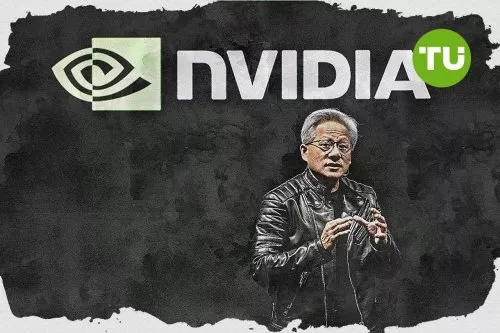
Nvidia CEO Jensen Huang addressed growing concerns in some quarters about the potential risks of artificial general intelligence (AGI) and the possibility of an "AI doomsday" scenario. In a direct response to fears stoked by prominent voices in the tech sector, Huang stated unequivocally that such fears are unfounded, and that runaway AI is “extremely unlikely.” His remarks serve as a timely reminder of Nvidia’s pragmatic approach to AI development and deployment.
Huang reiterated his long-standing belief that AI should be viewed not as a threat, but as a tool that enhances human productivity across industries. This statement aligns closely with Nvidia’s business strategy, which is focused on building the infrastructure — from GPUs to full-stack AI systems — that powers everything from large language models to robotics and autonomous vehicles.
Furthermore, Nvidia's recent financial performance validates the company’s bullish outlook. In its latest quarterly earnings report, the company posted record data center revenue, driven by soaring demand for its H100 and A100 chips used in generative AI workloads. Gross margin expanded significantly, and forward guidance was raised — a rare event in the current interest-rate-driven macro environment.
Breakout likely into Q1 2026 with $220 target in play
In the base case, the stock breaks out above the $190–$195 resistance level in December or early January. This move, supported by seasonal strength and ongoing AI demand, could push NVDA toward the $210–$220 range by Q1 2026. The likelihood of this scenario is high if upcoming macro data supports a more dovish Fed tone, reducing pressure on growth stocks.
In the bullish scenario, Nvidia announces new partnerships, ramps production of next-gen AI chips, or benefits from an expansion of AI demand into sectors like healthcare or robotics. In this case, the stock could rally further to $230–$240 by mid-2026.
Nvidia’s rebound is largely driven by political relief, as U.S. lawmakers excluded the GAIN AI Act from the final defense bill. This decision avoids new export restrictions on Nvidia’s key AI chips, including the H100 and A100.









-
 Afghanistan
-
 Albania
-
 Algeria
-
 Angola
-
 Argentina
-
 Armenia
-
 Australia
-
 Austria
-
 Azerbaijan
-
 Bahamas
-
 Bahrain
-
 Bangladesh
-
 Belarus
-
 Belgium
-
 Bolivia
-
 Botswana
-
 Brazil
-
 Brunei
-
 Bulgaria
-
 Cambodia
-
 Cameroon
-
 Canada
-
 Chile
Chile
-
 China
China
-
 Colombia
-
 Congo
Congo
-
 Costa Rica
-
 Cote d'Ivoire
-
 Croatia
-
 Cuba
Cuba
-
 Cyprus
-
 Czechia
-
 DR Congo
-
 Denmark
-
 Dominican Republic
-
 Ecuador
-
 Egypt
Egypt
-
 El Salvador
-
 Estonia
-
 Eswatini
-
 Ethiopia
-
 Finland
-
 France
-
 Georgia
-
 Germany
-
 Ghana
Ghana
-
 Greece
-
 Haiti
Haiti
-
 Hong Kong
-
 Hungary
-
 India
India
-
 Indonesia
-
 Iran, Islamic republic
-
 Iraq
Iraq
-
 Ireland
-
 Israel
-
 Italy
Italy
-
 Jamaica
-
 Japan
Japan
-
 Jordan
-
 Kazakhstan
-
 Kenya
Kenya
-
 Korea
Korea
-
 Kuwait
-
 Kyrgyzstan
-
 Laos
Laos
-
 Latvia
-
 Lebanon
-
 Lesotho
-
 Libya
Libya
-
 Lithuania
-
 Luxembourg
-
 Madagascar
-
 Malaysia
-
 Malta
Malta
-
 Mauritius
-
 Mexico
-
 Moldova
-
 Mongolia
-
 Montenegro
-
 Morocco
-
 Mozambique
-
 Myanmar
-
 Namibia
-
 Nepal
Nepal
-
 Netherlands
-
 New Zealand
-
 Nigeria
-
 North Macedonia
-
 Norway
-
 Oman
Oman
-
 Pakistan
-
 Palestine
-
 Panama
-
 Papua New Guinea
-
 Paraguay
-
 Peru
Peru
-
 Philippines
-
 Poland
-
 Portugal
-
 Puerto Rico
-
 Qatar
Qatar
-
 Reunion
-
 Romania
-
 Rwanda
-
 Saudi Arabia
-
 Serbia
-
 Singapore
-
 Slovakia
-
 Slovenia
-
 Somalia
-
 South Africa
-
 Spain
Spain
-
 Sri Lanka
-
 Sweden
-
 Switzerland
-
 Syria
Syria
-
 Taiwan
-
 Tajikistan
-
 Tanzania
-
 Thailand
-
 Trinidad and Tobago
-
 Tunisia
-
 Turkey
-
 UAE
UAE
-
 Uganda
-
 Ukraine
-
 United Kingdom
-
United States
-
 Uruguay
-
 Uzbekistan
-
 Venezuela
-
 Vietnam
-
 Yemen
Yemen
-
 Zambia
-
 Zimbabwe
- Forex
- Crypto











