
Microsoft beats earnings, but shares slide on cloud growth concerns
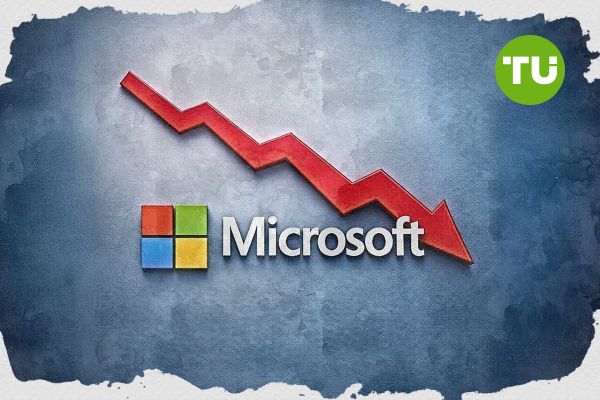
Microsoft delivered a solid second-quarter earnings report, beating Wall Street expectations on both revenue and earnings, but that was not enough to reassure investors.
Earnings per share came in at $5.16 on revenue of $81.27 billion, topping consensus forecasts, while Microsoft Cloud revenue exceeded $50 billion for the first time, reports Yahoo Finance.
Despite those milestones, shares fell more than 11% as markets focused on signs that cloud growth may be slowing. Investors also appeared uneasy about the scale of Microsoft’s spending tied to artificial intelligence. CEO Satya Nadella acknowledged that the company is still in the early stages of AI adoption, even as Microsoft has already built a sizeable AI business. The reaction highlights how expectations for growth have risen alongside Microsoft’s valuation. For the market, strong numbers alone were not enough without clearer acceleration ahead.
AI demand collides with capacity and spending pressures
Microsoft remains one of the biggest beneficiaries of the AI boom, supported by its deep partnership with OpenAI and strong Azure momentum. Intelligent Cloud revenue reached $32.9 billion, while Productivity and Business Processes revenue rose to $34.1 billion, both above expectations. Remaining performance obligations climbed to $625 billion, with nearly half linked to OpenAI, underscoring the scale of future AI-related demand.
However, Microsoft continues to face capacity constraints, meaning demand for AI services is exceeding what it can currently supply. To address this, capital expenditures surged to $37.5 billion in the quarter, sharply higher than a year earlier. That level of spending has become a growing concern for investors worried about near-term margins. The balance between capturing AI growth and managing costs is now a central question for the stock.
Competitive landscape shifts investor focus
While Microsoft’s fundamentals remain strong, its stock performance has lagged some key peers over the past year. Shares are now down on a 12-month basis, trailing Amazon and significantly underperforming Alphabet. Google’s stock has surged roughly 69% over the same period, driven largely by enthusiasm around its Gemini 3 AI model.
That shift has intensified comparisons between Big Tech players as investors reassess long-term AI leadership. Microsoft’s More Personal Computing segment delivered in-line results, but it offered little to offset broader concerns. The market reaction suggests investors are rotating attention toward relative growth momentum rather than absolute scale. For Microsoft, the next challenge will be proving that massive AI investment can translate into sustained, accelerating returns.
Recently we wrote Microsoft Corporation (MSFT) is sharply below its key moving averages, trading at $432.18 versus the MA-20 at $470.48 and MA-50 at $479.20, both of which now act as overhead resistance.


Latest Microsoft News





-
 Afghanistan
-
 Albania
-
 Algeria
-
 Angola
-
 Argentina
-
 Armenia
-
 Australia
-
 Austria
-
 Azerbaijan
-
 Bahamas
-
 Bahrain
-
 Bangladesh
-
 Belarus
-
 Belgium
-
 Bolivia
-
 Botswana
-
 Brazil
-
 Brunei
-
 Bulgaria
-
 Cambodia
-
 Cameroon
-
 Canada
-
 Chile
Chile
-
 China
China
-
 Colombia
-
 Congo
Congo
-
 Costa Rica
-
 Cote d'Ivoire
-
 Croatia
-
 Cuba
Cuba
-
 Cyprus
-
 Czechia
-
 DR Congo
-
 Denmark
-
 Dominican Republic
-
 Ecuador
-
 Egypt
Egypt
-
 El Salvador
-
 Estonia
-
 Eswatini
-
 Ethiopia
-
 Finland
-
 France
-
 Georgia
-
 Germany
-
 Ghana
Ghana
-
 Greece
-
 Haiti
Haiti
-
 Hong Kong
-
 Hungary
-
 India
India
-
 Indonesia
-
 Iran, Islamic republic
-
 Iraq
Iraq
-
 Ireland
-
 Israel
-
 Italy
Italy
-
 Jamaica
-
 Japan
Japan
-
 Jordan
-
 Kazakhstan
-
 Kenya
Kenya
-
 Korea
Korea
-
 Kuwait
-
 Kyrgyzstan
-
 Laos
Laos
-
 Latvia
-
 Lebanon
-
 Lesotho
-
 Libya
Libya
-
 Lithuania
-
 Luxembourg
-
 Madagascar
-
 Malaysia
-
 Malta
Malta
-
 Mauritius
-
 Mexico
-
 Moldova
-
 Mongolia
-
 Montenegro
-
 Morocco
-
 Mozambique
-
 Myanmar
-
 Namibia
-
 Nepal
Nepal
-
 Netherlands
-
 New Zealand
-
 Nigeria
-
 North Macedonia
-
 Norway
-
 Oman
Oman
-
 Pakistan
-
 Palestine
-
 Panama
-
 Papua New Guinea
-
 Paraguay
-
 Peru
Peru
-
 Philippines
-
 Poland
-
 Portugal
-
 Puerto Rico
-
 Qatar
Qatar
-
 Reunion
-
 Romania
-
 Rwanda
-
 Saudi Arabia
-
 Serbia
-
 Singapore
-
 Slovakia
-
 Slovenia
-
 Somalia
-
 South Africa
-
 Spain
Spain
-
 Sri Lanka
-
 Sweden
-
 Switzerland
-
 Syria
Syria
-
 Taiwan
-
 Tajikistan
-
 Tanzania
-
 Thailand
-
 Trinidad and Tobago
-
 Tunisia
-
 Turkey
-
 UAE
UAE
-
 Uganda
-
 Ukraine
-
 United Kingdom
-
United States
-
 Uruguay
-
 Uzbekistan
-
 Venezuela
-
 Vietnam
-
 Yemen
Yemen
-
 Zambia
-
 Zimbabwe
- Forex
- Crypto











