
The oil market is still in a “geopolitical‑crisis with signs of normalization” phase: WTI holds around and above 100 dollars after spikes toward 119 at the peak of panic over the U.S.–Iran war and the blockade of the Strait of Hormuz, which carries about 20% of global seaborne oil trade. This structural risk premium is embedded in the price, but futures now suggest that a sustained move to 150 dollars is unlikely, and analysts are pricing a more moderate level if transit flows through the Strait gradually stabilize.
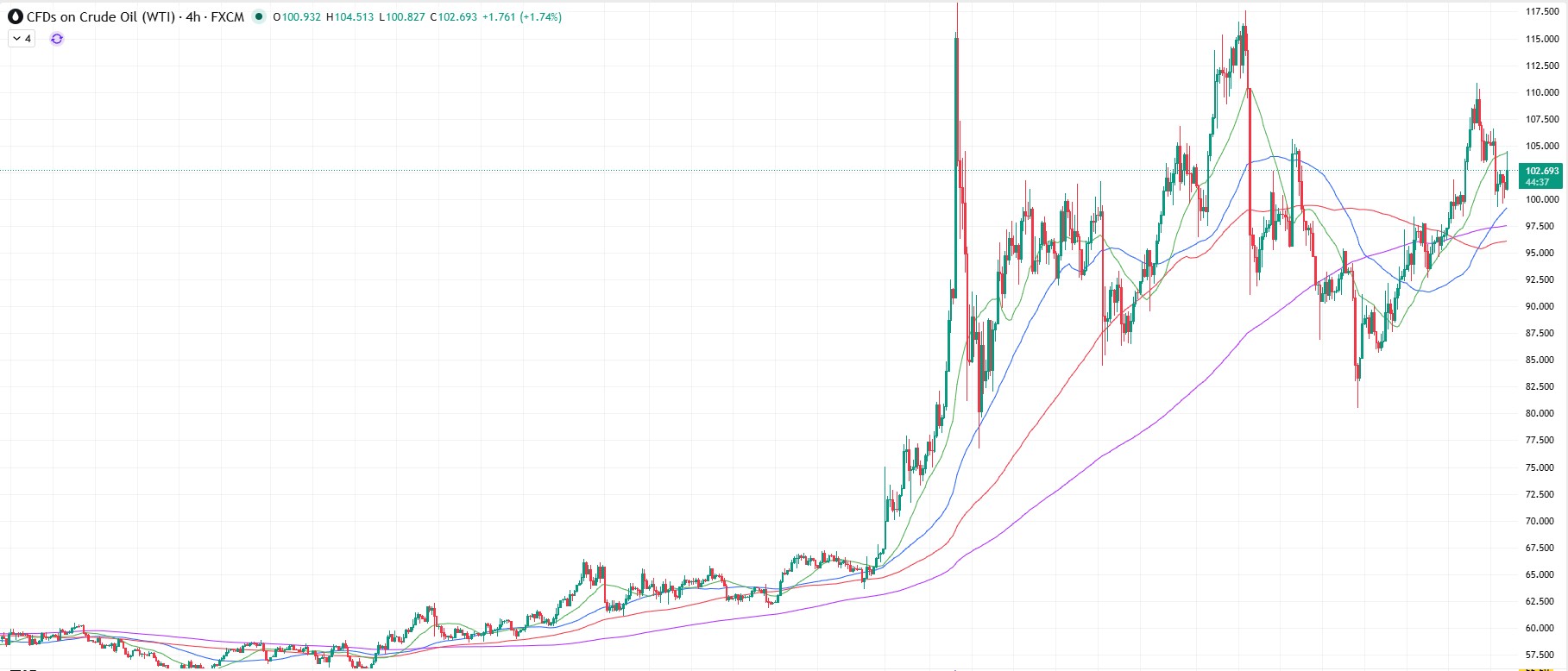
The market is now operating in a classic “risk vs. de‑escalation” pattern: any headlines about negotiations, even hints of a peace initiative or easing pressure on Hormuz, trigger sharp pullbacks toward the 95–100 dollar range, while fresh escalations push prices back toward 105–110 and higher. In this setup, crude trades in extreme volatility, driven by both the current physical supply tightness and disrupted logistics, as well as by expectations for how the crisis could either intensify or slowly unwind.
OPEC+ is also losing tight control over the market: its decision to raise output by 188 thousand barrels per day looks more symbolic than meaningful against the scale of the geopolitical shock, and the UAE’s exit from the cartel further weakens its coordination power. Combined with rising U.S. exports and potential additional supply outside OPEC, the market is no longer a one‑way “panic‑only” rally; investors are starting to price both new escalation risks and a gradual return of flows through Hormuz with a moderated risk premium.
Over the coming weeks, a two‑sided range around 95–110 dollars is taking shape: a move toward 110–120+ is possible on fresh escalation and real supply disruptions, while a return toward 85–95 would likely follow the reopening of the Strait, de‑escalation, and higher supply. In the long run, expensive oil accelerates the energy transition and adds a structurally bearish bias to demand for “black gold,” but for now, geopolitics remains the key driver, turning the market from a one‑sided panic rally into a highly volatile, balancing environment.
As already mentioned earlier, U.S. crude remains under a “war premium” as Iran and the Strait of Hormuz continue to dominate the market, and elevated volatility is likely to persist in the near term.




Latest WTI News






-
 Afghanistan
-
 Albania
-
 Algeria
-
 Angola
-
 Argentina
-
 Armenia
-
 Australia
-
 Austria
-
 Azerbaijan
-
 Bahamas
-
 Bahrain
-
 Bangladesh
-
 Belarus
-
 Belgium
-
 Bolivia
-
 Botswana
-
 Brazil
-
 Brunei
-
 Bulgaria
-
 Cambodia
-
 Cameroon
-
 Canada
-
 Chile
Chile
-
 China
China
-
 Colombia
-
 Congo
Congo
-
 Costa Rica
-
 Cote d'Ivoire
-
 Croatia
-
 Cuba
Cuba
-
 Cyprus
-
 Czechia
-
 DR Congo
-
 Denmark
-
 Dominican Republic
-
 Ecuador
-
 Egypt
Egypt
-
 El Salvador
-
 Estonia
-
 Eswatini
-
 Ethiopia
-
 Finland
-
 France
-
 Georgia
-
 Germany
-
 Ghana
Ghana
-
 Greece
-
 Haiti
Haiti
-
 Hong Kong
-
 Hungary
-
 India
India
-
 Indonesia
-
 Iran, Islamic republic
-
 Iraq
Iraq
-
 Ireland
-
 Israel
-
 Italy
Italy
-
 Jamaica
-
 Japan
Japan
-
 Jordan
-
 Kazakhstan
-
 Kenya
Kenya
-
 Korea
Korea
-
 Kuwait
-
 Kyrgyzstan
-
 Laos
Laos
-
 Latvia
-
 Lebanon
-
 Lesotho
-
 Libya
Libya
-
 Lithuania
-
 Luxembourg
-
 Madagascar
-
 Malaysia
-
 Malta
Malta
-
 Mauritius
-
 Mexico
-
 Moldova
-
 Mongolia
-
 Montenegro
-
 Morocco
-
 Mozambique
-
 Myanmar
-
 Namibia
-
 Nepal
Nepal
-
 Netherlands
-
 New Zealand
-
 Nigeria
-
 North Macedonia
-
 Norway
-
 Oman
Oman
-
 Pakistan
-
 Palestine
-
 Panama
-
 Papua New Guinea
-
 Paraguay
-
 Peru
Peru
-
 Philippines
-
 Poland
-
 Portugal
-
 Puerto Rico
-
 Qatar
Qatar
-
 Reunion
-
 Romania
-
 Rwanda
-
 Saudi Arabia
-
 Serbia
-
 Singapore
-
 Slovakia
-
 Slovenia
-
 Somalia
-
 South Africa
-
 Spain
Spain
-
 Sri Lanka
-
 Sweden
-
 Switzerland
-
 Syria
Syria
-
 Taiwan
-
 Tajikistan
-
 Tanzania
-
 Thailand
-
 Trinidad and Tobago
-
 Tunisia
-
 Turkey
-
 UAE
UAE
-
 Uganda
-
 Ukraine
-
 United Kingdom
-
United States
-
 Uruguay
-
 Uzbekistan
-
 Venezuela
-
 Vietnam
-
 Yemen
Yemen
-
 Zambia
-
 Zimbabwe
- Forex
- Crypto











