
AMD retreats as AI rally cools and investors take profits
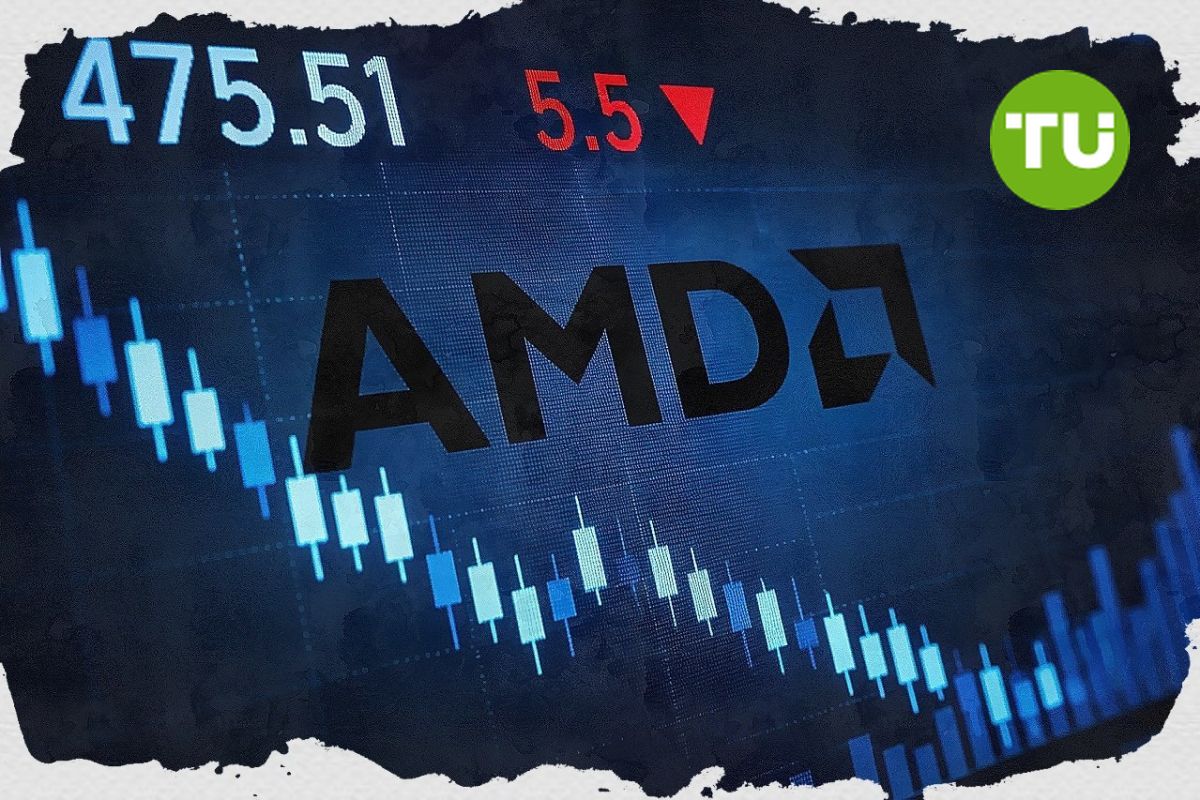
Investors have become noticeably more cautious after AMD’s sharp rally and the stock’s move to the new highs. The market has started locking in profits across the semiconductor sector.
As noted earlier, a bearish RSI divergence began forming on AMD’s chart several weeks ago, warning of the risk of a local correction. This scenario is now gradually playing out.
The latest wave of selling is linked less to AMD itself and more to a broader reassessment of expectations around artificial intelligence companies.
After months of gains, investors are beginning to question whether current sector valuations are justified by future financial results. This is especially relevant for companies where a significant portion of market capitalization is based on expectations of future growth.
Additional pressure is coming from rising U.S. Treasury yields and fading expectations for Federal Reserve rate cuts. For growth companies, this is a particularly sensitive factor, as higher funding costs reduce the appeal of future cash flows.
In this environment, capital is gradually rotating out of the most overheated AI assets and into more defensive market segments.

AMD faces another volatile session after support break
Yesterday’s trading session was extremely volatile. AMD dropped as much as 13% intraday, but closed the day down around 5.5%.
After the stock broke below $461, where an important local support level was located, trading volume increased sharply. This signals the activation of stop-loss orders from short-term traders, which helped accelerate the decline to yesterday’s intraday low.
Today’s session is also expected to be volatile. If the price holds below $461 after the market open, AMD is likely to test $451.20, the gap-up level from May 26.
Traders should also pay attention to the short-term trendline. A break below it would be a strong signal for a medium-term move toward $400.
The nearest resistance is located around $480, and an intraday test of this level cannot be ruled out.
Hawkish Fed becomes a risk for AMD
Federal Reserve policy remains one of the key external risks for AMD.
If U.S. inflation continues to rise, the Fed may be forced to keep interest rates elevated or even raise them further. This would negatively affect growth stocks, as investors become less willing to pay high multiples for future earnings.
In addition, tighter financial conditions usually lead to lower risk appetite and reduced exposure to the most expensive technology stocks.





Latest AMD News









-
 Afghanistan
-
 Albania
-
 Algeria
-
 Angola
-
 Argentina
-
 Armenia
-
 Australia
-
 Austria
-
 Azerbaijan
-
 Bahamas
-
 Bahrain
-
 Bangladesh
-
 Belarus
-
 Belgium
-
 Bolivia
-
 Botswana
-
 Brazil
-
 Brunei
-
 Bulgaria
-
 Cambodia
-
 Cameroon
-
 Canada
-
 Chile
Chile
-
 China
China
-
 Colombia
-
 Congo
Congo
-
 Costa Rica
-
 Cote d'Ivoire
-
 Croatia
-
 Cuba
Cuba
-
 Cyprus
-
 Czechia
-
 DR Congo
-
 Denmark
-
 Dominican Republic
-
 Ecuador
-
 Egypt
Egypt
-
 El Salvador
-
 Estonia
-
 Eswatini
-
 Ethiopia
-
 Finland
-
 France
-
 Georgia
-
 Germany
-
 Ghana
Ghana
-
 Greece
-
 Haiti
Haiti
-
 Hong Kong
-
 Hungary
-
 India
India
-
 Indonesia
-
 Iran, Islamic republic
-
 Iraq
Iraq
-
 Ireland
-
 Israel
-
 Italy
Italy
-
 Jamaica
-
 Japan
Japan
-
 Jordan
-
 Kazakhstan
-
 Kenya
Kenya
-
 Korea
Korea
-
 Kuwait
-
 Kyrgyzstan
-
 Laos
Laos
-
 Latvia
-
 Lebanon
-
 Lesotho
-
 Libya
Libya
-
 Lithuania
-
 Luxembourg
-
 Madagascar
-
 Malaysia
-
 Malta
Malta
-
 Mauritius
-
 Mexico
-
 Moldova
-
 Mongolia
-
 Montenegro
-
 Morocco
-
 Mozambique
-
 Myanmar
-
 Namibia
-
 Nepal
Nepal
-
 Netherlands
-
 New Zealand
-
 Nigeria
-
 North Macedonia
-
 Norway
-
 Oman
Oman
-
 Pakistan
-
 Palestine
-
 Panama
-
 Papua New Guinea
-
 Paraguay
-
 Peru
Peru
-
 Philippines
-
 Poland
-
 Portugal
-
 Puerto Rico
-
 Qatar
Qatar
-
 Reunion
-
 Romania
-
 Rwanda
-
 Saudi Arabia
-
 Serbia
-
 Singapore
-
 Slovakia
-
 Slovenia
-
 Somalia
-
 South Africa
-
 Spain
Spain
-
 Sri Lanka
-
 Sweden
-
 Switzerland
-
 Syria
Syria
-
 Taiwan
-
 Tajikistan
-
 Tanzania
-
 Thailand
-
 Trinidad and Tobago
-
 Tunisia
-
 Turkey
-
 UAE
UAE
-
 Uganda
-
 Ukraine
-
 United Kingdom
-
United States
-
 Uruguay
-
 Uzbekistan
-
 Venezuela
-
 Vietnam
-
 Yemen
Yemen
-
 Zambia
-
 Zimbabwe
- Forex
- Crypto












