

Texas cattle sector faces screwworm return as containment system breaks down
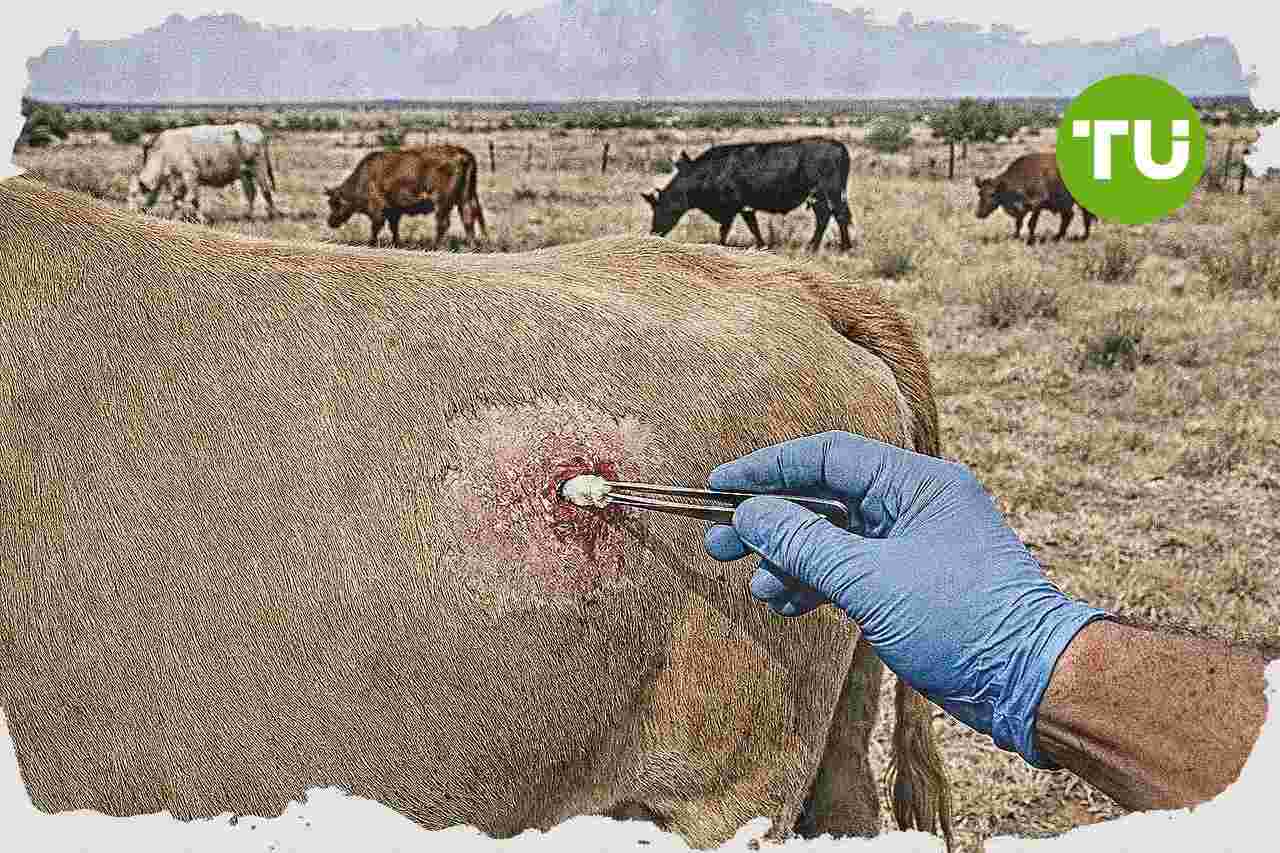
After decades of keeping screwworm south of the U.S. border, the flesh-eating parasite is now reappearing in Texas livestock and raising new risks for a $15bn cattle industry. The outbreak follows a surge in cases in Panama from 2023 and a steady northward spread through Central America and Mexico despite long-running sterilisation and import controls.
Highlights
- Screwworm containment in Panama failed by 2023 due to livestock expansion, migration, and weaker sterile-fly strains, enabling parasite movement northward toward Texas.
- Confirmed Texas screwworm cases and a related New Mexico case increase labour and cost burdens for ranchers amid record beef prices, a decades-low U.S. cattle herd, and suspended Mexican cattle imports.
- USDA reports about $1.3bn allocated for screwworm surveillance, sterile-fly production, and research, while APHIS frontline staff in Texas has dropped over 50% since 2016, intensifying political scrutiny.
Containment failures drive parasite north
As reported by Financial Times, the return of screwworm to the U.S. follows the erosion of a containment strategy that had largely held since the late 1980s, when authorities established a barrier zone in Panama after eradicating the pest from the United States in 1966. The programme relied on releasing large numbers of sterile male flies because female screwworms typically mate only once, sharply reducing reproduction when they paired with sterile insects.That system began to weaken around 2023, when infections in Panama rose sharply. Experts cited in the report point to expanding livestock production in former buffer zones, heavier animal movement, unprecedented human migration through the Darién Gap and possible weaknesses in the sterile-fly programme, including ageing strains that were becoming less competitive and were not replaced quickly enough.
Once the parasite moved beyond the Panama barrier, it advanced through Central America into Mexico. By late 2024 it had reached southern Mexican states, and by 2025 U.S. officials had suspended live cattle imports from Mexico and begun preparing for a possible re-entry of the parasite into the United States.
Costs rise for ranchers and animal health agencies
The confirmed cases in Texas, along with a case in a dog in neighbouring New Mexico, are now intensifying pressure on ranchers already dealing with tight beef supplies and record-high prices. The national cattle herd is at its lowest level in decades after years of drought-driven liquidation, while Mexican cattle imports have already been halted for months because of the advancing threat.Screwworm is not described as a food-safety issue, and infestations do not automatically require herds to be destroyed. The main burden instead falls on livestock operators, who need to inspect animals for wounds, monitor them frequently, collect larvae for testing, administer treatment and comply with movement controls when infestations are found. For large ranches spread across wide areas, those labour demands can increase quickly.
The outbreak is also feeding a political dispute over whether the federal response has been strong enough. Senate Democrats cite an analysis saying the frontline workforce of APHIS, the USDA agency responsible for animal disease threats, has fallen by more than half in Texas during the Trump administration, while the administration rejects that criticism and says the core failure predates its term. USDA says about $1.3bn has been committed to surveillance, sterile-fly production, research and infrastructure, and Agriculture Secretary Brooke Rollins says the Centers for Disease Control and Prevention has activated contingency planning for possible human infestations, although such cases remain rare.
Our earlier coverage of the Senate Democrats’ report on federal contracting showed small businesses have seen a sharp decline in contract awards since January 2025, with minority-owned firms among the hardest hit. The report also pointed to a surge in contract terminations and a drop in overall small-business participation in federal procurement, raising concerns about how current policy choices are affecting on-the-ground capacity and economic stability.





Latest Mexico News






-
 Afghanistan
-
 Albania
-
 Algeria
-
 Angola
-
 Argentina
-
 Armenia
-
 Australia
-
 Austria
-
 Azerbaijan
-
 Bahamas
-
 Bahrain
-
 Bangladesh
-
 Belarus
-
 Belgium
-
 Bolivia
-
 Botswana
-
 Brazil
-
 Brunei
-
 Bulgaria
-
 Cambodia
-
 Cameroon
-
 Canada
-
 Chile
Chile
-
 China
China
-
 Colombia
-
 Congo
Congo
-
 Costa Rica
-
 Cote d'Ivoire
-
 Croatia
-
 Cuba
Cuba
-
 Cyprus
-
 Czechia
-
 DR Congo
-
 Denmark
-
 Dominican Republic
-
 Ecuador
-
 Egypt
Egypt
-
 El Salvador
-
 Estonia
-
 Eswatini
-
 Ethiopia
-
 Finland
-
 France
-
 Georgia
-
 Germany
-
 Ghana
Ghana
-
 Greece
-
 Haiti
Haiti
-
 Hong Kong
-
 Hungary
-
 India
India
-
 Indonesia
-
 Iran, Islamic republic
-
 Iraq
Iraq
-
 Ireland
-
 Israel
-
 Italy
Italy
-
 Jamaica
-
 Japan
Japan
-
 Jordan
-
 Kazakhstan
-
 Kenya
Kenya
-
 Korea
Korea
-
 Kuwait
-
 Kyrgyzstan
-
 Laos
Laos
-
 Latvia
-
 Lebanon
-
 Lesotho
-
 Libya
Libya
-
 Lithuania
-
 Luxembourg
-
 Madagascar
-
 Malaysia
-
 Malta
Malta
-
 Mauritius
-
 Mexico
-
 Moldova
-
 Mongolia
-
 Montenegro
-
 Morocco
-
 Mozambique
-
 Myanmar
-
 Namibia
-
 Nepal
Nepal
-
 Netherlands
-
 New Zealand
-
 Nigeria
-
 North Macedonia
-
 Norway
-
 Oman
Oman
-
 Pakistan
-
 Palestine
-
 Panama
-
 Papua New Guinea
-
 Paraguay
-
 Peru
Peru
-
 Philippines
-
 Poland
-
 Portugal
-
 Puerto Rico
-
 Qatar
Qatar
-
 Reunion
-
 Romania
-
 Rwanda
-
 Saudi Arabia
-
 Serbia
-
 Singapore
-
 Slovakia
-
 Slovenia
-
 Somalia
-
 South Africa
-
 Spain
Spain
-
 Sri Lanka
-
 Sweden
-
 Switzerland
-
 Syria
Syria
-
 Taiwan
-
 Tajikistan
-
 Tanzania
-
 Thailand
-
 Trinidad and Tobago
-
 Tunisia
-
 Turkey
-
 UAE
UAE
-
 Uganda
-
 Ukraine
-
 United Kingdom
-
United States
-
 Uruguay
-
 Uzbekistan
-
 Venezuela
-
 Vietnam
-
 Yemen
Yemen
-
 Zambia
-
 Zimbabwe
- Forex
- Crypto












