
Morgan Stanley sees sodium-ion batteries driving salt demand growth
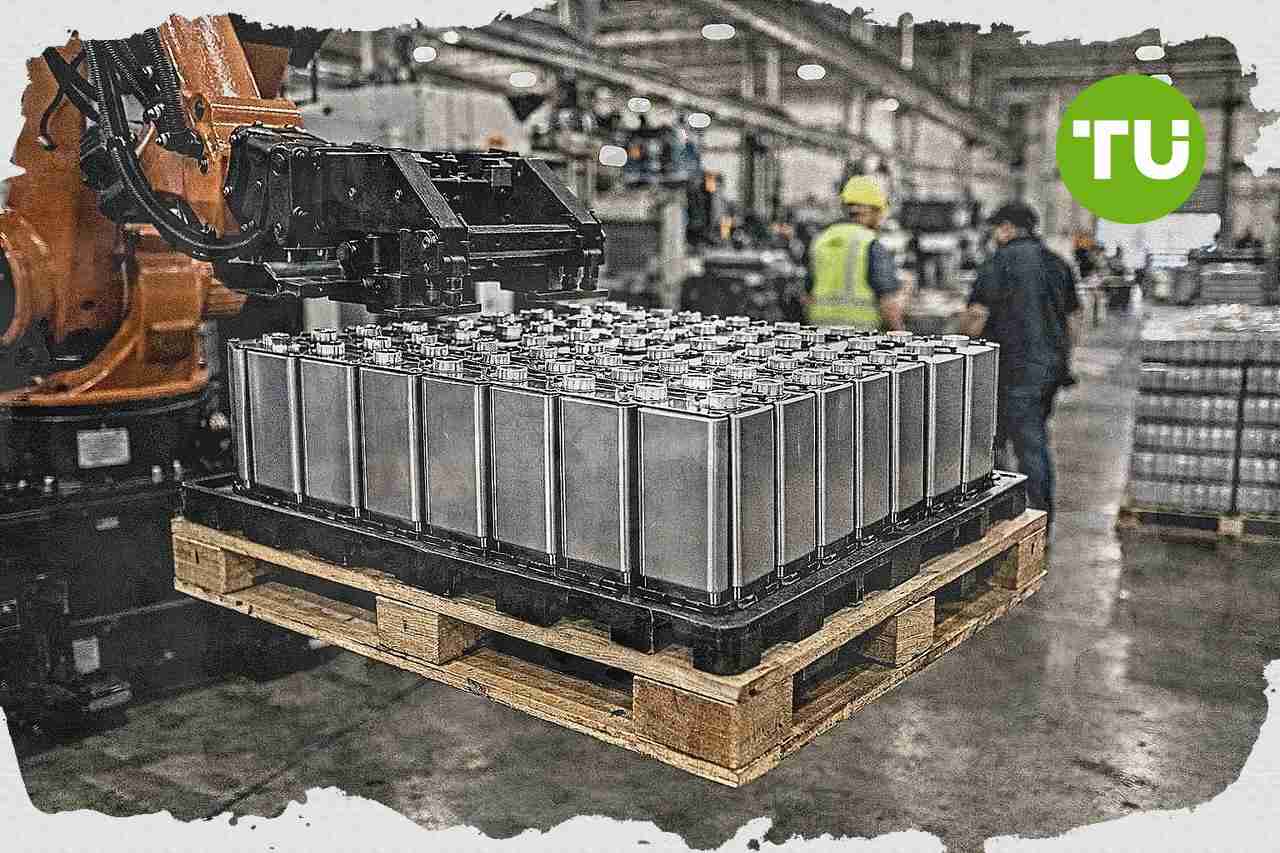
Rising interest in lower-cost energy storage is pushing salt into focus as sodium-ion batteries move beyond early pilot projects. Morgan Stanley says the chemistry could take a much larger share of global battery deployments by 2030 and 2035, with implications for U.S. manufacturing and energy security.
Highlights
- Morgan Stanley forecasts sodium-ion batteries will reach 20% market share by 2030 and 37% by 2035, up from about 2% in 2025.
- Sodium-ion batteries are 30%-40% cheaper than lithium iron phosphate options, with global market size expected to hit 830 GWh by 2030 and 2.4 TWh by 2035, requiring $800 billion in investment.
- General Motors secured exclusive U.S. sodium-ion manufacturing rights via Peak Energy partnership, targeting grid-scale deployment post-2028, despite shares falling nearly 4% year-to-date.
Sodium-ion outlook and investment case
As reported by CNBC, Morgan Stanley analyst Jack Lu and his team say sodium-ion batteries could account for 20% of total battery deployment market share by 2030 and 37% by 2035, up from an expected roughly 2% next year. Lu writes that the emerging sodium-ion battery era represents a "New Oil Age" because salt-based inputs could become strategically important as demand accelerates.Lu says sodium-ion batteries are gaining traction because they are 30% to 40% cheaper than lithium iron phosphate batteries and perform better in cold weather. He expects the market to expand from its current pilot stage to an annual global market of 830 gigawatt hours by 2030, then grow to 2.4 terawatt hours by 2035.
Morgan Stanley also estimates that about $800 billion in new investment will be needed by 2035 to support that buildout. Lu says the technology addresses a critical link between energy security and rising power demand in an AI-driven world, while giving established industry players room to use existing customer ties, global capacity and research depth to capture early market share.
U.S. manufacturing and GM positioning
Andrew Percoco, another Morgan Stanley analyst, says sodium is abundant and low-cost in the U.S., which could help companies bring part of battery production back onto domestic soil. He points to General Motors as having an early foothold through its partnership with Peak Energy to develop next-generation sodium-ion batteries.According to Percoco, the agreement gives GM exclusive manufacturing rights in the U.S., with an additional option to license production to a contract manufacturer. He notes that GM expects deployment in grid-scale energy storage projects to begin after 2028, while the sodium-iron technology may also have uses in defense and mobility applications.
General Motors shares are down nearly 4% this year after gains of more than 52% in 2025 and 48% in 2024. Even so, LSEG data show the average Wall Street analyst rates the stock a buy and expects about 20% upside.
In our earlier coverage of U.S. grid strain, Exelon warned that rapidly rising electricity demand—driven in part by AI and data centers—could outpace supply and raise the risk of outages in the north-east and Midwest. The piece also highlighted PJM’s projected supply shortfalls and the growing push to raise rates to fund needed network and generation investment amid political backlash over higher bills.





Latest Taurex News








-
 Afghanistan
-
 Albania
-
 Algeria
-
 Angola
-
 Argentina
-
 Armenia
-
 Australia
-
 Austria
-
 Azerbaijan
-
 Bahamas
-
 Bahrain
-
 Bangladesh
-
 Belarus
-
 Belgium
-
 Bolivia
-
 Botswana
-
 Brazil
-
 Brunei
-
 Bulgaria
-
 Cambodia
-
 Cameroon
-
 Canada
-
 Chile
Chile
-
 China
China
-
 Colombia
-
 Congo
Congo
-
 Costa Rica
-
 Cote d'Ivoire
-
 Croatia
-
 Cuba
Cuba
-
 Cyprus
-
 Czechia
-
 DR Congo
-
 Denmark
-
 Dominican Republic
-
 Ecuador
-
 Egypt
Egypt
-
 El Salvador
-
 Estonia
-
 Eswatini
-
 Ethiopia
-
 Finland
-
 France
-
 Georgia
-
 Germany
-
 Ghana
Ghana
-
 Greece
-
 Haiti
Haiti
-
 Hong Kong
-
 Hungary
-
 India
India
-
 Indonesia
-
 Iran, Islamic republic
-
 Iraq
Iraq
-
 Ireland
-
 Israel
-
 Italy
Italy
-
 Jamaica
-
 Japan
Japan
-
 Jordan
-
 Kazakhstan
-
 Kenya
Kenya
-
 Korea
Korea
-
 Kuwait
-
 Kyrgyzstan
-
 Laos
Laos
-
 Latvia
-
 Lebanon
-
 Lesotho
-
 Libya
Libya
-
 Lithuania
-
 Luxembourg
-
 Madagascar
-
 Malaysia
-
 Malta
Malta
-
 Mauritius
-
 Mexico
-
 Moldova
-
 Mongolia
-
 Montenegro
-
 Morocco
-
 Mozambique
-
 Myanmar
-
 Namibia
-
 Nepal
Nepal
-
 Netherlands
-
 New Zealand
-
 Nigeria
-
 North Macedonia
-
 Norway
-
 Oman
Oman
-
 Pakistan
-
 Palestine
-
 Panama
-
 Papua New Guinea
-
 Paraguay
-
 Peru
Peru
-
 Philippines
-
 Poland
-
 Portugal
-
 Puerto Rico
-
 Qatar
Qatar
-
 Reunion
-
 Romania
-
 Rwanda
-
 Saudi Arabia
-
 Serbia
-
 Singapore
-
 Slovakia
-
 Slovenia
-
 Somalia
-
 South Africa
-
 Spain
Spain
-
 Sri Lanka
-
 Sweden
-
 Switzerland
-
 Syria
Syria
-
 Taiwan
-
 Tajikistan
-
 Tanzania
-
 Thailand
-
 Trinidad and Tobago
-
 Tunisia
-
 Turkey
-
 UAE
UAE
-
 Uganda
-
 Ukraine
-
 United Kingdom
-
United States
-
 Uruguay
-
 Uzbekistan
-
 Venezuela
-
 Vietnam
-
 Yemen
Yemen
-
 Zambia
-
 Zimbabwe
- Forex
- Crypto











