
U.S. quantum sector needs federal buyer to scale domestic capacity
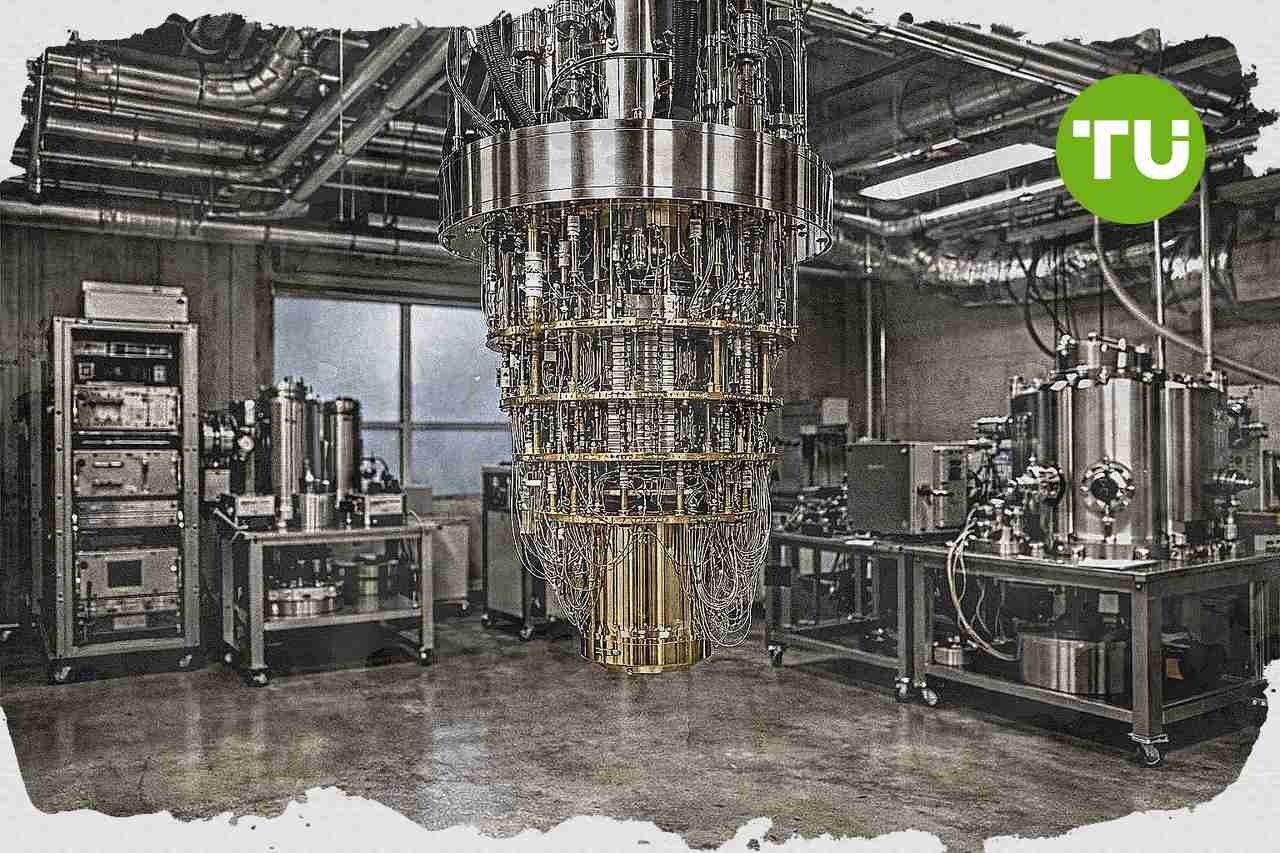
U.S. leadership in quantum computing research is not yet translating into the industrial base needed to secure production and supply chains. The argument gains urgency as Washington issues executive orders aimed at accelerating procurement, cybersecurity preparedness and domestic investment in the technology.
Highlights
- Two executive orders direct the Department of Energy to act as an early quantum computer purchaser and urge the Department of Commerce to pursue advance market commitments.
- The Department of Commerce has signed letters of intent to invest $2 billion in nine quantum companies for minority equity stakes, with the framework now covering about 15 firms.
- Maintaining U.S. quantum leadership requires a domestic, allied supply chain excluding Beijing, especially for critical components like cryogenic systems, rare earths, and wafer fabrication.
Federal procurement push and market signal
As argued in Financial Times, the central policy gap in U.S. quantum computing is not scientific discovery but the absence of a reliable national customer that can help turn laboratory advances into commercial-scale capacity.The case rests on the view that America risks repeating its semiconductor experience, where early invention did not prevent manufacturing from shifting to Asia. In quantum computing, the same dynamic could leave the U.S. dependent on externally built capabilities despite foundational breakthroughs originating in American labs, including the transistor, the transmon superconducting qubit and Shor’s algorithm.
Two executive orders signed by President Donald Trump earlier this year are presented as a turning point. One identifies quantum technologies as a transformational capability for American innovation, while the other addresses the need to strengthen defences against threats to sensitive encrypted systems as adversaries collect data in anticipation of future decryption by sufficiently powerful quantum machines.
The policy aim is to spur development of a fault-tolerant, utility-scale quantum computer that can support scientific discovery and industrial uses in areas such as materials science, drug discovery, finance and logistics. While current systems remain too small and too error-prone to deliver on that promise, the orders direct the Department of Energy to act as an early purchaser of scientifically relevant quantum computers and ask the Department of Commerce to consider advance market commitments.
Supply chain strategy and industry impact
Private capital is already backing the sector, with quantum companies reaching public markets at valuations that would have appeared unlikely only a few years ago. Alongside large technology groups such as Google, Microsoft and IBM, newer entrants including IonQ and Quantinuum are competing across differing technical designs involving ions, atoms, photons and superconducting circuits.The broader industrial argument is that public procurement and targeted investment can draw in more private funding while anchoring manufacturing on home soil. The Department of Commerce has already signed letters of intent to invest $2 billion in nine quantum companies in exchange for minority, non-controlling equity stakes, and that framework has since been extended across about 15 companies spanning semiconductors, critical minerals and defence.
Quantum leadership also depends on securing components and capabilities that no single country fully controls, including cryogenic cooling systems, rare earth inputs for qubits and wafer fabrication capacity. A U.S.-led allied technology and trade framework, built around domestic production and excluding Beijing from key supply chains, is described as essential if America is to retain the industry it helped create.
Our earlier analysis of Rigetti Computing (RGTI) focused on the stock’s sharp pullback and persistent selling pressure, with price trading below key moving averages and momentum indicators staying bearish despite oversold readings. We also highlighted the $15.55 support area as a pivotal level, noting that without a clear catalyst, downside risks could remain elevated even as traders watch for a potential technical bounce.


Latest Quantum Computing News





-
 Afghanistan
-
 Albania
-
 Algeria
-
 Angola
-
 Argentina
-
 Armenia
-
 Australia
-
 Austria
-
 Azerbaijan
-
 Bahamas
-
 Bahrain
-
 Bangladesh
-
 Belarus
-
 Belgium
-
 Bolivia
-
 Botswana
-
 Brazil
-
 Brunei
-
 Bulgaria
-
 Cambodia
-
 Cameroon
-
 Canada
-
 Chile
Chile
-
 China
China
-
 Colombia
-
 Congo
Congo
-
 Costa Rica
-
 Cote d'Ivoire
-
 Croatia
-
 Cuba
Cuba
-
 Cyprus
-
 Czechia
-
 DR Congo
-
 Denmark
-
 Dominican Republic
-
 Ecuador
-
 Egypt
Egypt
-
 El Salvador
-
 Estonia
-
 Eswatini
-
 Ethiopia
-
 Finland
-
 France
-
 Georgia
-
 Germany
-
 Ghana
Ghana
-
 Greece
-
 Haiti
Haiti
-
 Hong Kong
-
 Hungary
-
 India
India
-
 Indonesia
-
 Iran, Islamic republic
-
 Iraq
Iraq
-
 Ireland
-
 Israel
-
 Italy
Italy
-
 Jamaica
-
 Japan
Japan
-
 Jordan
-
 Kazakhstan
-
 Kenya
Kenya
-
 Korea
Korea
-
 Kuwait
-
 Kyrgyzstan
-
 Laos
Laos
-
 Latvia
-
 Lebanon
-
 Lesotho
-
 Libya
Libya
-
 Lithuania
-
 Luxembourg
-
 Madagascar
-
 Malaysia
-
 Malta
Malta
-
 Mauritius
-
 Mexico
-
 Moldova
-
 Mongolia
-
 Montenegro
-
 Morocco
-
 Mozambique
-
 Myanmar
-
 Namibia
-
 Nepal
Nepal
-
 Netherlands
-
 New Zealand
-
 Nigeria
-
 North Macedonia
-
 Norway
-
 Oman
Oman
-
 Pakistan
-
 Palestine
-
 Panama
-
 Papua New Guinea
-
 Paraguay
-
 Peru
Peru
-
 Philippines
-
 Poland
-
 Portugal
-
 Puerto Rico
-
 Qatar
Qatar
-
 Reunion
-
 Romania
-
 Rwanda
-
 Saudi Arabia
-
 Serbia
-
 Singapore
-
 Slovakia
-
 Slovenia
-
 Somalia
-
 South Africa
-
 Spain
Spain
-
 Sri Lanka
-
 Sweden
-
 Switzerland
-
 Syria
Syria
-
 Taiwan
-
 Tajikistan
-
 Tanzania
-
 Thailand
-
 Trinidad and Tobago
-
 Tunisia
-
 Turkey
-
 UAE
UAE
-
 Uganda
-
 Ukraine
-
 United Kingdom
-
United States
-
 Uruguay
-
 Uzbekistan
-
 Venezuela
-
 Vietnam
-
 Yemen
Yemen
-
 Zambia
-
 Zimbabwe
- Forex
- Crypto











